Arsenal Women 25/26 Season Review: So Close Yet So Far

Arsenal Women finished last season only four points behind Manchester City and five points off the title - a gap that feels painfully small when you replay the year in your mind. It wasn’t a campaign where Arsenal drifted; we were right in the mix until fine margins and bad luck swung things away at critical moments.
A season defined by fine margins
Across the big fixtures, Arsenal were rarely outclassed - they were edged. Key games turned on single moments: an injury at the wrong time, a missed chance, or a lapse in concentration that became the difference between three points and one, or one and none. When you look at the table and see the four‑point gap to City and the five‑point gap to the title, you’re not talking about a gulf in quality between those two teams; you’re talking about one more win here and one less slip there.
It’s the kind of season that leaves you both proud and frustrated. Proud, because Arsenal clearly belong at the top of the league. Frustrated, because you know that with just a bit more consistency, we could easily have swapped places with the champions.
Leah Williamson’s absence and the injury shadow
You can’t talk about last season without acknowledging how much Arsenal missed Leah Williamson. Her injuries and setbacks didn’t just take a world‑class defender off the pitch; they removed one of the key leaders and organisers in the spine of the team. For a side that was already operating in tight scoreline territory for many games, losing a player like Leah in crucial periods inevitably changed the outcome of some matches.
Reports around the England squad and Serena Wiegman’s cautious management of Leah’s hamstring and long‑term knee issues underlined how delicate her situation was. Muscular setbacks kept interrupting her attempts to build rhythm for both club and country, and Arsenal paid for that every time another small injury set her back and pulled her further away from full fitness.
When you remember that Arsenal ended up four points off City and five off the title, it becomes hard not to imagine how different those margins might have looked with a fully fit Leah Williamson anchoring the defence from August to May.
The crowd became part of the story
If there’s one thing that completely changed the feeling around Arsenal Women last season, it’s the crowd. Emirates attendances were consistently huge - Arsenal once again led the way for attendances in the WSL this season, accounting for 41% of all league attendance and attracting an average home crowd of 33,808. That’s not just a number - that’s a massive statement about where this club now sits in the women’s game.
The atmosphere at the Emirates is becoming a real pull for players looking at their next move. It’s not just about the noise on match day; it’s the sense that Arsenal Women are a proper club with a serious, passionate and engaged fanbase that turns up and cares. For many players abroad or in other WSL sides, those packed home crowds are part of the reason Arsenal is on their shortlist when they think about a Women's Super League switch.
Away from N5, the travelling support has turned heads as well. In that Chelsea game at Stamford Bridge, the away end sounded like it was the only section in the stadium alive; over television you’d have been forgiven for thinking the ground was full of Arsenal fans and nobody else. That kind of away following doesn’t just help the team on the day - it sends a message right across the league that Arsenal Women come with their own army and energy wherever they go.
A family‑friendly match‑day that still feels big
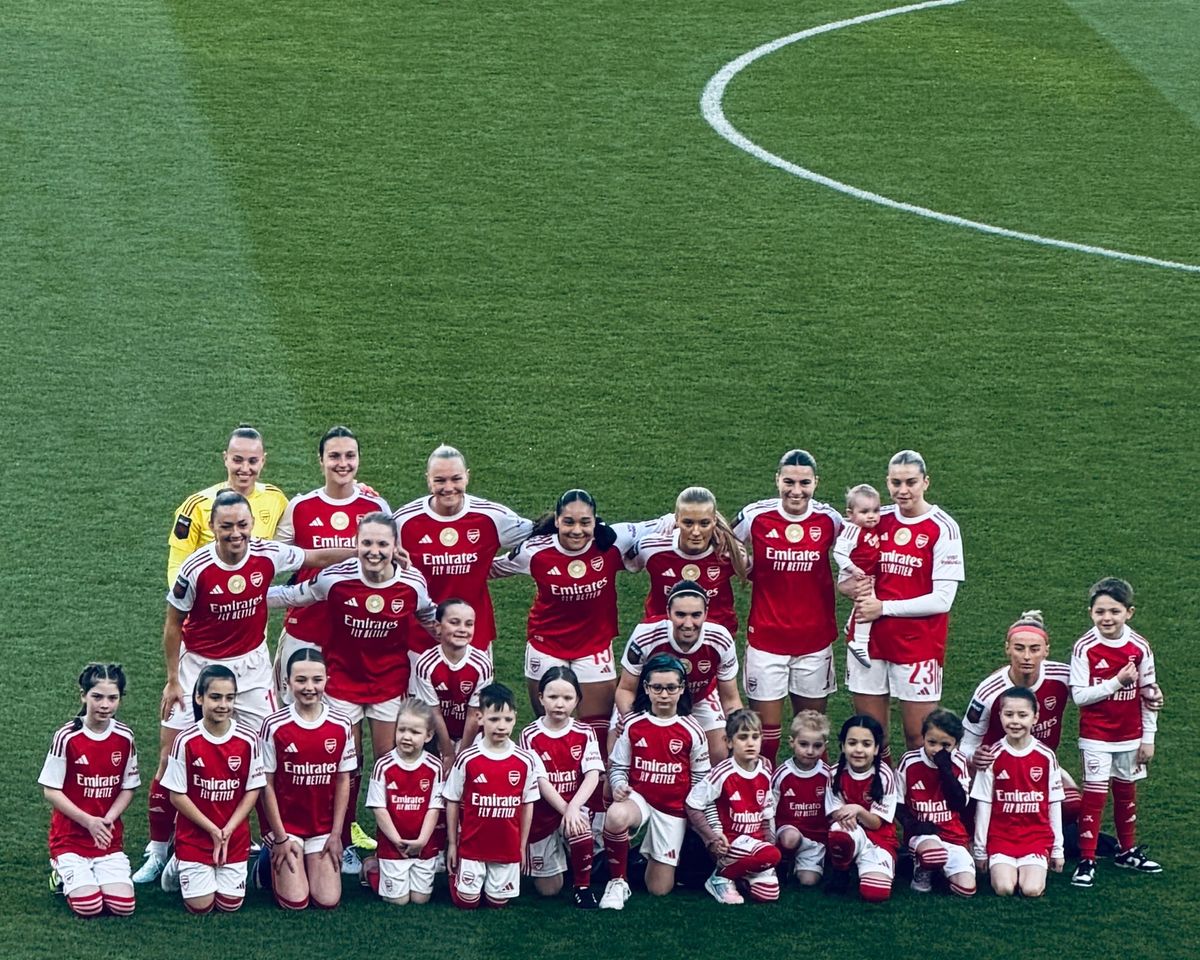
Another key part of last season’s story was the way Arsenal Women games have become a proper family outing without losing the sense of big‑time football. For parents who might hesitate to take younger kids to the men’s games - where the language and atmosphere can be a bit more intense - the women’s fixtures at the Emirates have felt welcoming and safe yet still full of passion.
From personal experience in Club level and around the stands, I've seen that it’s not just about watching the game; it’s about building relationships with the people around you, game after game. Over the season, I've started to know the faces in my block, to the point where “Roberto’s angels” - the three older ladies behind me -have become part of my match‑day checklist. This sort of thing holds a lot of fans in their seats year on year, and it’s exactly what turns a club into a community.
That match‑day environment has fed into season ticket growth. Existing season ticket holders have been renewing and, even at much higher prices in Club level, committing again for next year. New supporters are starting to look at Arsenal Women season tickets as the way to make regular football part of their family routine, which will only add more noise and colour to the stadium every time the team runs out.
A season that still hurts - and inspires
The departure of long‑serving fan favourites like Katie McCabe, Beth Mead and others has added a bittersweet note to my season review. McCabe’s move to Chelsea, after a decade at Arsenal and over 300 appearances, is the kind of storyline that hurts precisely because she’s been so central to the club’s identity. Seeing her in blue, especially with songs and media tropes that started in Arsenal hands, is tough to swallow.
But even that speaks to where Arsenal are now. Players who’ve won with the club and fallen short by only a few points are making decisions based on their own ambitions, and while you can disagree with how some of those moves have played out in public, the underlying truth is that Arsenal Women are now part of the top‑tier conversation where those decisions have a real social impact even beyond the game.
Through all of this, the message from looking back at least season is very clear: Arsenal were close. Very close. The gap to the title was small enough that it can be framed as “we were almost there”, rather than “we were miles off”. And that reality does two things: it hurts, because we know how reachable the trophy was, and it motivates, because we can see a path from last season’s version of Arsenal to the champions’ podium with some specific, fixable improvements to the squad and aspects of how we play the game.