Arsenal Women 1-0 Paris FC: What We Learned
Olivia Smith won it in the 91st minute, but Arsenal’s 1-0 victory over Paris FC revealed far more about Renée Slegers’ new-look side than the scoreline suggests.

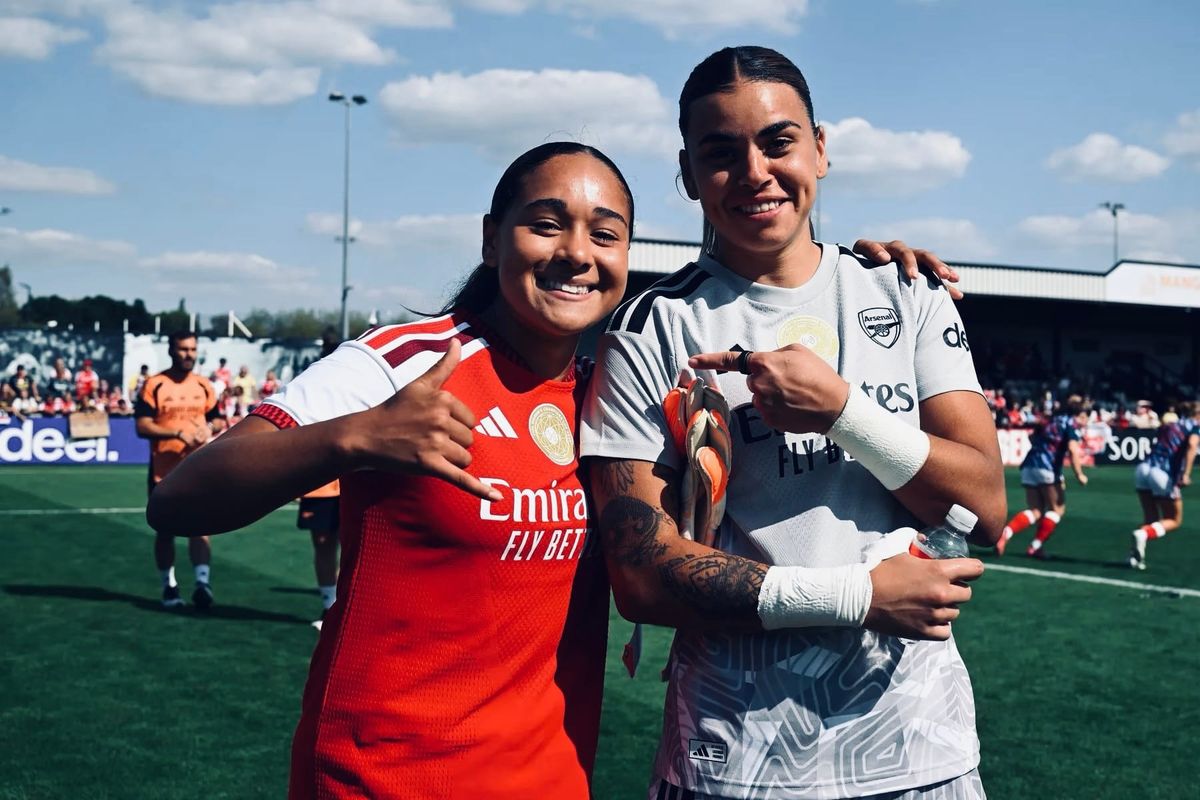
Arsenal spent ninety minutes trying to work out how to break Paris FC down, and Olivia Smith eventually seemed to decide everyone had had quite enough of that and sorted it herself in about three seconds.
Which was very efficient of her.
If you were at Borehamwood on Sunday and came away thinking, well, we won, we had most of the ball, Paris barely threatened us, so why did parts of that still feel a bit frustrating?, then I think you’re probably in the same place as quite a few people who messaged me afterwards, because the reactions I got were really mixed. There were questions about whether we were taking one touch too many around the box, why the substitutions seemed to make things look a little chaotic later on, why Géraldine Reuteler seemed almost invisible when she came on, whether Leah Williamson was playing enough of those incisive passes we know she can play, and then of course the completely reasonable question of why Caitlin Foord appeared to end the game at right-back, which isn’t a sentence I particularly expected to be writing before the season had even started.
So I watched the full match because I wanted to understand what people had actually been seeing rather than just take the 1-0 result, Olivia’s wonderful goal and the official match report and pretend that told us everything, and what I found quite interesting is that some of those concerns absolutely do hold up, but others look a little different once you stop following the ball all the time and start watching the spaces around it, because there was actually quite a lot of structure underneath what could sometimes look slightly messy from the outside.
The easiest way to describe the first half would be to say Arsenal controlled the game without creating enough clear chances, and that’s true, but I think it’s also a bit too simple because it makes the whole thing sound much flatter than it actually was. Paris FC had started pre-season before Arsenal, so they were further along physically; they were very combative, very disciplined, and they defended in exactly the sort of way that asks a lot of questions of a possession team because they weren’t charging around leaving enormous spaces behind them. They were happy to sit a bit deeper, protect the dangerous areas and basically say, fine, you can have the ball, now show us whether you can do something useful with it.
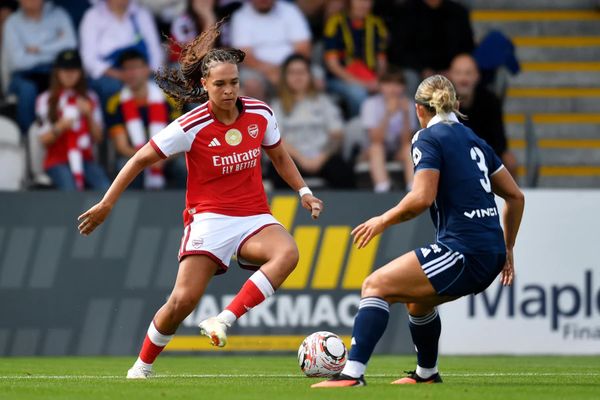
And what I noticed very quickly was that Arsenal weren’t just moving the ball around in front of them hoping something would eventually happen. The right-hand side in particular had a very clear idea behind it, and I think this is probably the bit that might help explain why parts of the first half looked odd if you were trying to keep everybody inside the position they were given on the team sheet, because Lisa Baum wasn’t really playing as a fixed right winger and Smilla Holmberg wasn’t playing as a fixed right-back either. They were moving around each other constantly. Sometimes Lisa held the width, and Smilla went beyond her; sometimes Smilla stayed outside, and Lisa came inside. Georgia Stanway kept drifting over towards that side to give them another option, and when Smilla went high, Leah Williamson would slide across behind her to protect the space she’d left.
Once you see that, quite a few things start making sense. Leah wasn’t wandering out towards right-back because something had gone wrong, she was covering the movement ahead of her. Smilla wasn’t abandoning the defence, she was being released to attack. Lisa coming inside wasn’t her drifting out of position, it was part of the same rotation, and Kim Little was often dropping in a little deeper underneath all of that while Georgia was given more freedom to go forward.
I think that relationship between Lisa, Smilla and Leah is probably one of the most interesting things to come out of the first half, because Renée has been talking all summer about connections and players understanding each other’s strengths, and there it was in front of us. One player goes, another fills the space, somebody else adjusts behind them, and when it worked, it made Arsenal quite difficult to pin down because Paris weren’t dealing with one winger and one overlapping full-back in the traditional sense; they were dealing with two players sharing that entire side between them.
Lisa Baum was probably the player who stood out most to me in that first half, not because she had one enormous moment, but because she kept appearing where Arsenal needed her. She could stay wide, she could come inside, she pressed hard, she was combative, she took set pieces, she combined well with Smilla and she struck the ball really cleanly whenever she passed it, and that’s one of those things that sounds slightly nerdy until you watch somebody do it and realise there’s just a crispness to the way they move the ball that makes everything around them happen a little quicker.
And she’s nineteen, which I keep forgetting.
On the other side, Emily Fox was doing something quite different because rather than constantly trying to go around Olivia Smith, she was often coming inside, and that made the whole shape asymmetrical, which I think was deliberate. Arsenal weren’t attacking both sides in the same way. On the right, Smilla pushed high, and Lisa moved around her; on the left, Fox stepped into more central areas, and Mariona had the freedom to roam wherever she thought she could cause a problem.
And Mariona really was everywhere. I’m not sure trying to give her a position in that first half is especially useful because she would be deep in midfield one minute, around the edge of the box the next, then suddenly pressing a defender on the opposite side, and that constant movement was part of the reason Paris had to keep adjusting rather than simply holding one compact shape and watching Arsenal pass around it.
The other thing I really liked, probably more than anything we did with the ball, was what happened whenever we lost it. Arsenal would immediately send two or three players after it, but the important bit was that the players behind them were adjusting as well, so it wasn’t just everyone sprinting towards the ball in a panic. They properly tried to lock Paris in, close the next pass, squeeze the space, and win the ball back before they could turn possession into an attack.
Paris found that really difficult. They had moments, obviously, because they’re a good side, but so many of their attacks seemed to run into a wall before they properly developed, and Lotte Wubben-Moy was particularly good at cleaning things up behind the press, while Leah was constantly reading what was happening around her and stepping into the right space when Smilla had gone forward or when Paris tried to break.
This is where I think one of the supporter observations needs a little qualification too, because I’d been told Leah didn’t seem to be playing those longer incisive passes we know she’s capable of, and watching the first half I didn’t really see that as a problem. The passes were there. She was trying to find Cerci over the top; she was looking for Smilla high on the right. Georgia was dropping back and trying similar balls herself, but Arsenal weren’t forcing them every time just because the option existed in theory.
And Cerci was giving them a reason to keep looking for it because her movement behind Paris was excellent. She was constantly looking over the shoulder of the defender, constantly threatening to run the other way, and there is something quite Stina-like about that instinct, not because Selina and Stina are the same player- they aren’t- but because both of them understand the value of making the pitch longer. Many players naturally come toward the ball. Selina was often doing the opposite, and that matters because even when she doesn’t receive it, the defender has to respect the run.
She was pressing hard as well, using her strength, linking play, and one of the clearest examples of what Arsenal were trying to do in that half came when Mariona drew a couple of players towards her, Lisa had moved inside again, Cerci connected the move, and Georgia ran through from midfield for one of the best chances of the half.
And that’s where I think I started to understand the difference between saying Arsenal had lots of possession and saying Arsenal were controlling the game. They weren’t just keeping the ball, they were moving Paris around. Kim was constantly probing for little gaps, Georgia was trying the riskier forward pass and then making runs beyond the forwards, Mariona was pulling people into different spaces, Lisa and Smilla were overloading the right, Fox was coming inside on the left, Cerci was stretching the pitch and the counter-press was making it very difficult for Paris to build anything once they won the ball back.
The frustrating bit was that the last action often didn’t arrive quickly enough, and I think this is where the people who said Arsenal were taking one touch too many were absolutely onto something, because there were moments where the movement had worked, Paris had been shifted, the space had opened and Arsenal hesitated just long enough for it to disappear again.
That doesn’t mean the attack wasn’t functioning. I think it just wasn’t sharp enough yet. There’s a difference.
Paris deserve credit for making that difference very small, because they got bodies into the box, they blocked shots, they closed the central areas very quickly and they made Arsenal make decision after decision after decision. Renée talked afterwards about how mentally demanding it is to play against a team who basically hands you responsibility for creating the whole game, and I think that describes it rather well. You don’t get to wait for them to make a mistake. You have to manufacture the mistake yourself.
So at half-time, I was actually more encouraged than the 0-0 score suggested. Not because Arsenal had been brilliant, because they hadn’t, and not because the lack of clear chances didn’t matter, because it did, but because I could see the shape of what Renée is trying to build. I could see the pressing, the rotations, the way the team was covering the spaces around those rotations, why Georgia is being given freedom to go higher, why Selina’s movement matters even when she doesn’t touch the ball, and Lisa Baum making it quite difficult not to get carried away with Lisa Baum.
The thing missing was the finish to all of that work, and that, I think, is a much more useful thing to be talking about than simply saying Arsenal had the ball and couldn’t score.
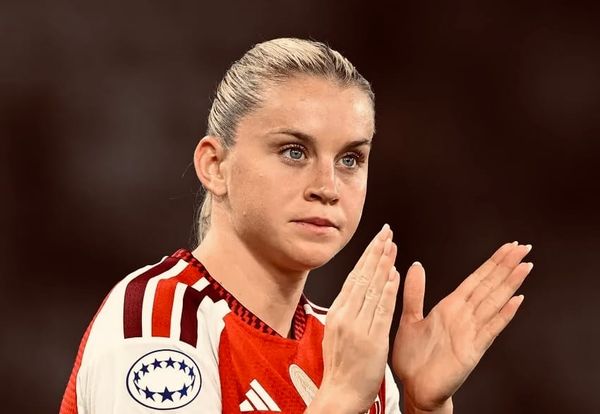
The second half changed the picture a little because Renée made two changes straight away, Alessia Russo replacing Selina Cerci and Taylor Hinds coming on for Smilla Holmberg, which also moved Emily Fox across to the right, and I think this is where we have to be slightly careful about judging a pre-season match as though Renée was simply trying to find the best eleven players on the day and win it, because she clearly wasn’t. She was giving people minutes, she was changing combinations, she’s still missing Ona Batlle, Chloe Kelly and Frida Maanum, Daphne van Domselaar isn’t available yet, Kyra Cooney-Cross is only just returning, and all of that means the team we were watching after half-time was partly about solving Paris FC and partly about getting Arsenal ready for what comes afterwards.
Alessia changed the centre-forward position almost immediately, and I think this is where having Selina, Alessia and Stina becomes really interesting because you could already see that replacing one with another doesn’t simply give Renée a fresh version of the same player. Selina had spent the first half threatening the space behind Paris and giving Leah and Georgia that longer pass to look for, whereas Alessia naturally became more involved in the football around her, coming towards it, connecting with people and then trying to get herself back into the box, and she actually had the ball in the net fairly quickly when Georgia found her through the middle, only for the offside flag to go up. The goal doesn’t count, obviously, but I don’t think we have to pretend the move didn’t happen either, because when we’re trying to work out whether Arsenal were actually capable of getting through this Paris defence, that’s useful information.
What I found reassuring was that the pressing survived the changes. That had been one of the strongest things about the first half, and it continued after the break, with Paris still struggling to play their way out and Arsenal still reacting really aggressively whenever possession changed hands, and I think that’s worth keeping an eye on as we move towards the competitive games because it looks increasingly like something Renée wants to become part of this team’s personality.
We’ve talked before about wanting Arsenal to play forwards more quickly when the opportunity is there, and winning the ball back high gives you exactly that opportunity because for a few seconds the opposition aren’t sitting in their lovely organised block anymore, they’re facing the wrong way, somebody has moved to receive a pass, somebody else has gone forward, and suddenly the spaces Arsenal have spent ten passes trying to manufacture are already there.
There were still occasions where we didn’t exploit those moments quickly enough, which brings us back to that extra touch again, but I’d rather be looking at a team that is consistently winning the ball in the right places and needs to sharpen what happens next than a team that can’t get the ball back in the first place. That distinction probably sounds rather obvious, but I think it matters when you’re deciding how concerned to be about a pre-season performance. Some things look quite established already, while others are clearly still being worked out, and the final action belongs much more in the second category.
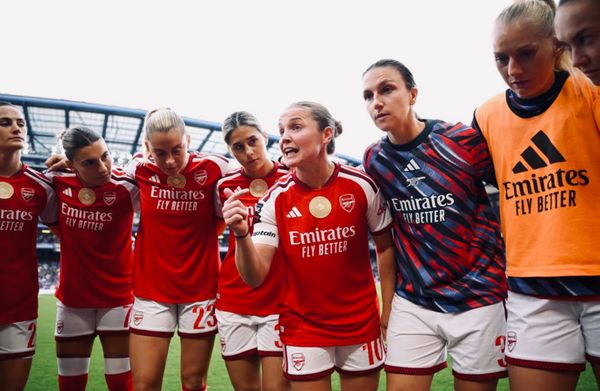
The game becomes harder to read once Renée makes the next group of changes because Kim, Georgia and Lotte all leave together and Kyra Cooney-Cross, Steph Catley and Géraldine Reuteler come on, and you’ve suddenly removed three players who had been quite important to the structure of the first hour. So I completely understand the supporter reaction that the substitutions made things feel a little chaotic, because they did, although I’m not sure chaos is necessarily evidence that anything had gone wrong. This is probably exactly the time to disrupt the relationships that have been working and see whether the next group can recreate them, because doing that against Paris FC in August is considerably cheaper than discovering you can’t do it against Chelsea in October.
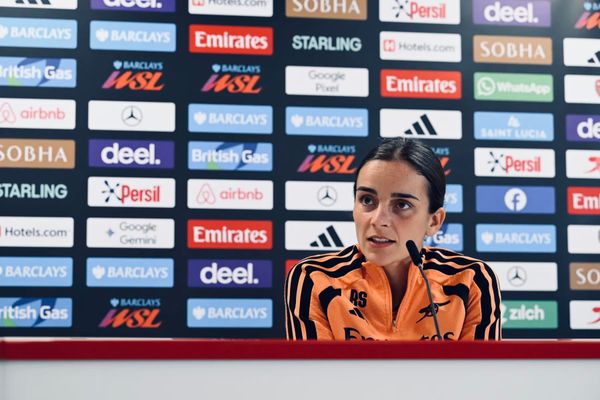
And it was lovely to see Kyra back, really. I’m not going to try to turn her return into a detailed assessment of where she sits in this midfield after one pre-season appearance, but she looked physically comfortable; she wanted the ball and almost immediately started carrying it forwards, which is such a recognisable part of her game. Steph looked comfortable too, which I was pleased to see after the issue she’d been managing, and then we come to Géraldine because I had several messages from people saying they barely noticed her when she came on, and having specifically watched what she was doing, I think there’s something worth separating there.
She was quieter than Mariona had been. That’s true. But Mariona had spent an hour roaming all over the place, so replacing her with somebody in a more fixed position through the middle was always going to look quieter. Géraldine wasn’t constantly chasing the ball or inserting herself into every passage of play; she was holding space and trying to connect from there, and I actually think this is something we might need a little time to understand because we’ve watched Mariona for two seasons now and we know what her movement means, whereas we’re still learning what Géraldine looks like in an Arsenal shirt.
And some of it plainly didn’t work yet. There was a combination with Alessia where the two of them seemed to have slightly different ideas about what was supposed to happen, there was another moment where Géraldine took an extra touch and Paris closed the opportunity and right near the end she wins the ball and gets herself into a position where Stina tries to find her again but the pass is overhit. I don’t want to explain those things away because this is precisely the final-detail problem Renée was talking about, but I also don’t think we should look at twenty-odd minutes from a new player in a team that has just changed three people simultaneously and decide we’ve learnt very much about her yet.
If anything, I think Géraldine is quite a good example of why pre-season requires a little patience from us because we’re going to recognise some players immediately. Lisa Baum has arrived, and within a few appearances you can already see certain things she wants to do because they’re very visible things: she runs at people, she presses, she moves inside, she combines, she gets crosses in. Géraldine may take longer because what she’s doing seems to depend much more on understanding where the people around her are going to be, and you can’t manufacture that understanding simply by introducing yourself at London Colney and spending a couple of weeks together.
Then Renée made another set of changes, and we arrived at perhaps the most important tactical question of the entire afternoon.
Caitlin Foord at right-back.
Yes, you did see it.
I’m not quite ready to begin the Caitlin Foord full-back era on the evidence of the closing stages of a pre-season friendly when Ona has had a knock, Smilla had already played the first half and Fox had done more than an hour. Sometimes the explanation really might be that Renée needed somebody to stand roughly over there for the remaining minutes and Caitlin happened to have legs.
Although even that became interesting because Caitlin didn’t suddenly turn into a conventional stay-at-home right-back. She got forward and started combining on that side, and Arsenal continued doing some of the same things we’d seen earlier with the full-back pushing up and somebody else adjusting around her, so while the personnel looked slightly bonkers by this stage, the underlying behaviour wasn’t completely different.
Stina came on at the same time and gave Paris another runner to worry about, Lisa was still causing problems, Olivia was becoming increasingly influential and Arsenal were still hunting the ball down with enormous intensity, and this is probably the period where I sympathised most with Paris FC because they’d spent most of the afternoon defending against one set of problems and Arsenal were now throwing Stina Blackstenius, Alessia Russo, Olivia Smith, Lisa Baum and Caitlin Foord at them while still pressing them whenever they tried to get out.
I wouldn’t particularly have wanted to be one of their defenders.
But the interesting contradiction is that Paris were coping with it. They were tired, Arsenal were pushing, the ball kept coming back, but they continued getting bodies into the way and Arsenal continued occasionally helping them by taking that extra touch, looking for one more pass or simply not doing the final thing quickly enough, and I think this is probably where I land on the biggest concern people had after the game because, yes, I saw it too.
There were times Arsenal needed to be more decisive. Stina has a moment where I thought she could probably have taken the shot herself and instead tries to bring Olivia into it, Alessia gets into a really good position late on and Paris manage to block her, Géraldine has that extra touch, and there were other little moments around the box where I found myself thinking, just do it now. Don’t wait for the perfect version of the chance because against a team defending like this, the perfect version may never arrive.
And perhaps that’s why I came away thinking Renée’s description of the “final detail” was more interesting than it initially sounded, because she wasn’t trying to pretend Arsenal had played perfectly and simply been unlucky. They hadn’t. There was a genuine problem in the match, but it was quite a specific one. Arsenal were getting the ball into useful areas, the midfield was functioning, the rotations were opening spaces, the counter-press was repeatedly getting possession back and Paris weren’t creating much at the other end, but when all that work finally produced the little opening they wanted, Arsenal sometimes wanted another half-second to think about it.
Paris weren’t giving them the half-second.
And then Olivia Smith scored, which rather wonderfully involved almost none of this because Stina found her out on the left, Olivia cut inside and put the ball into the top corner with about ten seconds of injury time remaining.
Problem solved.
I know it’s tempting to say individual brilliance rescued Arsenal there, but I’m not sure I’d describe it quite like that because having players capable of doing something individually brilliant is part of building an elite team. You can create all the clever movement you like, but there are going to be afternoons this season where somebody defends incredibly well, the spaces disappear, the final pass won’t quite come off and eventually you need somebody who can look at a situation that doesn’t really contain a chance and create one anyway.
Olivia can do that.
We already knew that, obviously, but I suspect there are going to be occasions this season where we’re extremely grateful for it.
And after watching the match, I think I’m actually less concerned about the 91st-minute winner than I expected to be. I don’t mean Arsenal should need 91 minutes to score every week because I’m not sure my nerves have agreed to those terms, but I can see enough underneath the result that I don’t think we were watching a team with no idea how to break Paris FC down. We were watching a team that understood quite a lot of what it wanted to do, executed a surprising amount of it well, and then repeatedly got to the final part of the move and found that the connection or decision wasn’t quite there yet.
That’s what I’ll be watching against Charlton because I don’t particularly care whether Arsenal win that game 1-0 or 5-0. I’m more interested in whether some of these relationships move forward again, whether the ball leaves the foot a little earlier around the box, whether we see Lisa and Smilla building on what they did here, what Géraldine looks like with more minutes, whether Georgia continues being given that freedom to attack from midfield and whether the press still looks this aggressive when another week of pre-season is in their legs.
And then, after Charlton, we stop saying pre-season.
Brighton is next.
I’m also really grateful to those of you who were at Borehamwood and messaged me afterwards, because what you noticed gave me a completely different way to watch this match. I specifically went looking for Leah’s passing because somebody raised it; I watched Géraldine because several people said they hadn’t noticed her; I was looking at whether Arsenal really were taking too many touches around the box; and, yes, I did eventually have to work out why Caitlin Foord was apparently our right-back.
I’d really like us to keep doing that this season, because one of the things I want Trailblazers to become is a place where you can come away from a match having noticed something, bring it here and then we can look at it together rather than everybody immediately having to decide whether Arsenal were brilliant or terrible. Football is much more interesting in the enormous space between those two things, and this match was a pretty good example because I think there were legitimate frustrations in it, but there were also things happening underneath those frustrations that I’m not sure were immediately obvious.
So if you watched the game, or you were there, come and tell me what you saw. Tell me whether any of this has changed the way you think about the performance, tell me what I’ve missed and tell me what you’re going to be watching for against Charlton, because I’d quite like to keep building these pieces around the things we’re all noticing rather than me simply sitting here pretending I have access to Renée Slegers’ tactical whiteboard.
And if you’d rather listen than read, there’s a much deeper conversation about the match on the latest episode of Arsenal Women: Trailblazers.