Chloe Kelly Deserves To Be Celebrated
Chloe Kelly’s journey from West London cages to Wembley and European glory is a story of resilience, homecoming and refusing to be finished.

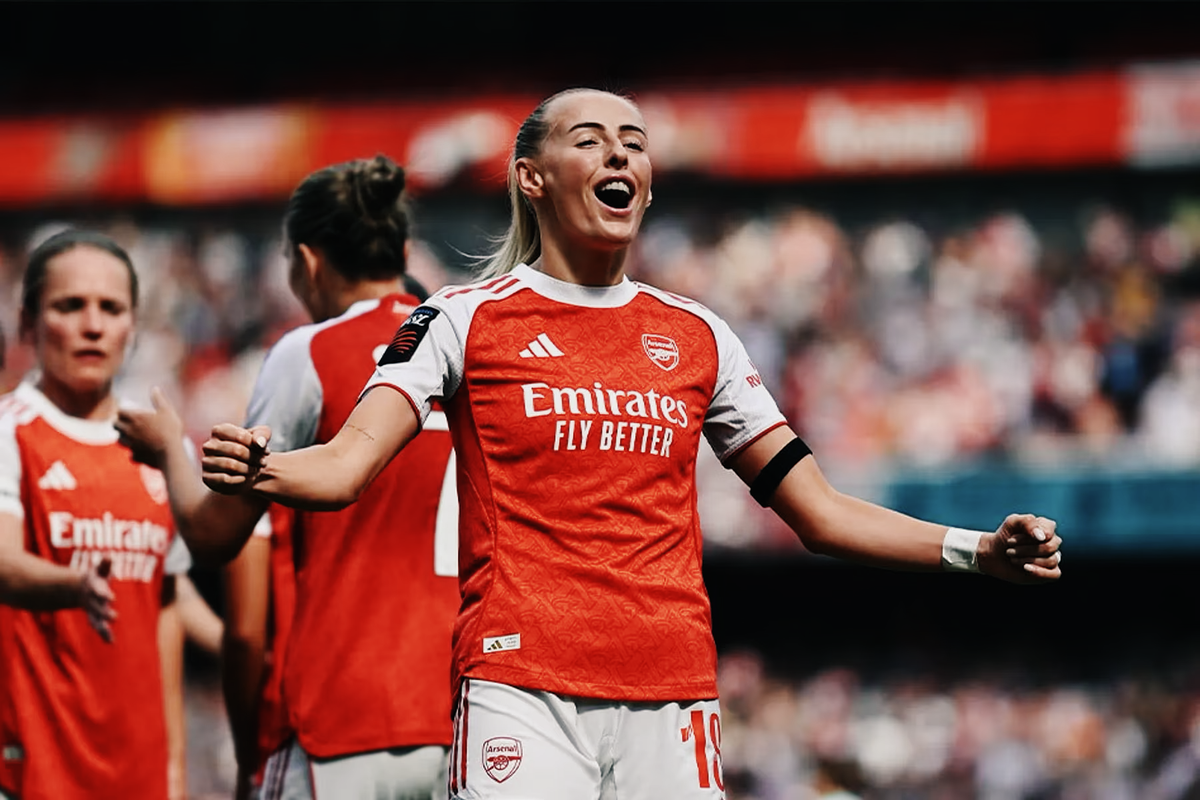
There are some players who seem to attract an extraordinary amount of criticism from both inside and outside their own club, and Chloe Kelly is one of them. In my opinion, she represents the values we keep talking about here at Trailblazers better than almost anyone else in this Arsenal squad, yet she also seems to receive an incredible amount of flak, often from people who have either forgotten what she has been through or never really taken the time to understand her story in the first place. That is why I wanted to slow things down for a moment, look past the headlines and the social-media noise, and give Chloe the celebration she deserves.
One of the things I have always admired about Chloe is that she never hides. Whether things are going brilliantly for her or life is throwing absolutely everything in her direction, she has always come across as somebody who wears her heart on her sleeve and keeps trying to put one foot in front of the other, regardless of what is going on around her. In the previous episode I talked about the interview she gave to the BBC, where she explained how much she needed this summer after an injury-hit season, not only as a physical reset but as a mental one too, and how much more settled she now feels as she prepares for the season ahead.
Then, over the last few days, something else was brought to my attention. Regular Trailblazers listener Badger sent me a video that had been circulating online and had already been copied by other YouTubers, with every chance that it had also spread to TikTok and several other platforms. The video was supposedly Chloe Kelly saying something along the lines of, “Name a better male player than me,” and the reaction in the comments was exactly what you would expect from content designed purely to provoke outrage. Within the first couple of seconds it was obvious to me that it was not Chloe. The mouth movement was wrong, the hair was wrong and the voice did not sound like her either. It was an AI-generated deepfake, completely fabricated and then shared as though it were a genuine interview clip of Chloe declaring herself the greatest footballer in the world.
I do not want to give that video, or any of the accounts creating and spreading that sort of content, any more attention than they have already received because attention is exactly what they want. What it does raise, though, is a much bigger question, and here at Trailblazers that is always what I want us to do. I want us to look beyond the immediate story and ask what it says about the game, the culture surrounding it and the kind of community we are trying to build. So the question I have for you is this: what sort of football community do we actually want?
Criticism is part of football and there is nothing wrong with that. Every supporter has the right to discuss performances, question tactics, disagree with team selections and say when they believe a player has not been good enough. That is part and parcel of following a football club. What is not an acceptable part of football is abuse, whether that comes through direct verbal attacks, comments about somebody’s appearance or fake content deliberately created to invite hatred towards them. I know the Trailblazers listening to the podcast or reading this article are not the people participating in that behaviour, but we still need to call it out when we see it. When Badger sent me the video, the first thing I did was report it as abusive and misleading content, and I would encourage anybody who comes across something similar to do the same rather than watching it, sharing it or helping it travel any further.
Whenever I talk about the sort of football community we want to create, I am always conscious that there are young supporters watching and listening. Some of them may only be twelve, fourteen or sixteen years old. Some may already be playing football and dreaming about where the game could take them, while others may simply see these players as examples of what women can achieve when they are given the opportunity. Female footballers deserve better than becoming targets for fabricated outrage, and Chloe Kelly deserves better too. There will still be some supporters who are not convinced by her, who do not rate her as highly as I do or who feel that she has not yet done enough in an Arsenal shirt to make herself indispensable, and that is fine. That is their opinion, based on what they have seen. What I think is important, though, is that we look beyond the image of the player who scored the winning goal in a European Championship final and took her shirt off at Wembley, because Chloe is a whole person with a story that stretches far beyond that one moment.
Chloe grew up in Ealing in West London as the youngest of seven children, with five older brothers, and that already tells you quite a lot about how her football education began. She learnt the game in cages and on concrete, playing with and against boys who were older, bigger and stronger than she was. Those games around places such as Windmill Park taught her how to protect the ball, ride tackles and be brave when she was the smallest person on the pitch. She started out at Queens Park Rangers before Arsenal spotted her at around twelve years old and brought her into the Centre of Excellence, which meant long journeys across London after school, sometimes spending two hours on trains because her parents did not drive and the family did not own a car.
She would get home late, go back into school the next morning and then do the same thing again and again because football mattered that much to her. That part of her story resonates with me because my own childhood also involved long hours, very little rest and having to keep going because there was no other option. My father ran his own business and worked three jobs, and after school I would often go with him and work until midnight, do my homework into the early hours of the morning, get almost no sleep and then go straight back to school the next day before repeating the whole process. I understand something of the determination that sort of routine builds in you, and I can imagine how much resilience Chloe developed during those years travelling across London to give herself a chance of becoming a footballer.
By the age of seventeen she was making her senior debut for Arsenal in the Continental Cup against Watford, and it took her just twenty-two minutes to score her first goal for the club. Across that first spell she made nineteen appearances and scored nine times, but the important point is not simply the numbers. It is that an Arsenal academy player who had learnt her football in cages and on the street made it onto the pitch for the first team and showed that she could influence senior matches. That foundation, the bravery, directness and refusal to be intimidated, is still at the heart of everything Chloe Kelly is as a footballer.
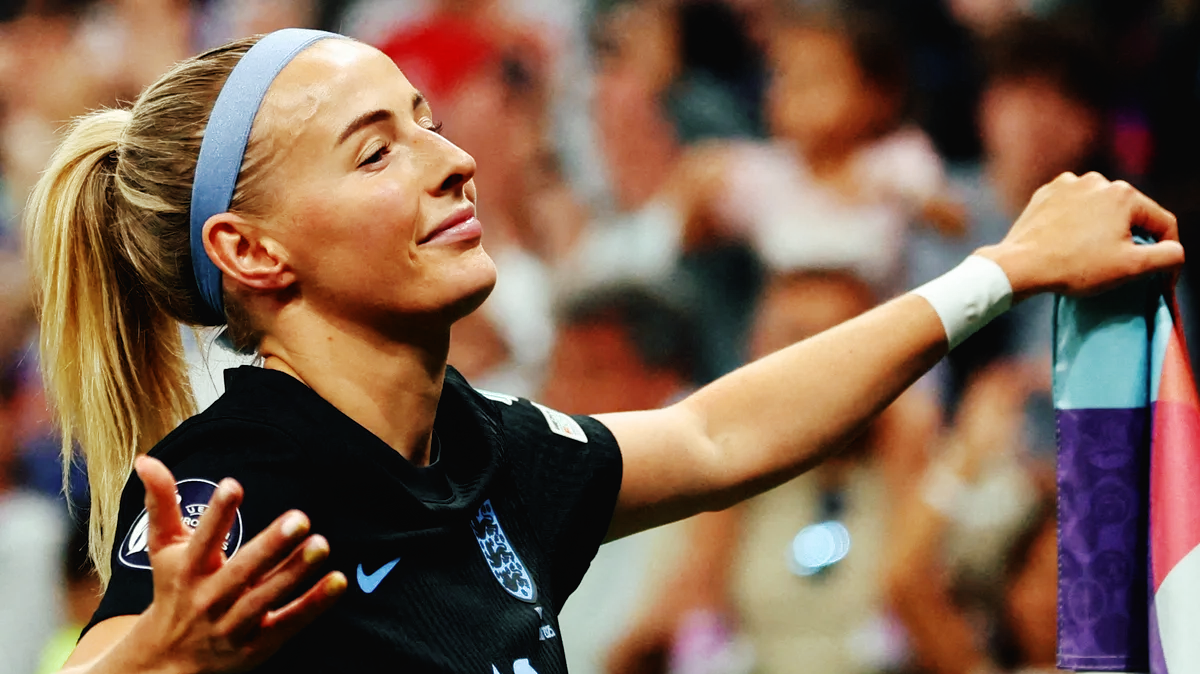
Fast-forward a little and we arrive at the version of Chloe that most people in this country recognise. She progressed through England’s youth age groups, representing the Under-17s, Under-19s and Under-20s, and helped England win a bronze medal at the Under-20 World Cup, which already suggested that she was comfortable performing on the biggest stages from a young age. Her senior England debut came in 2018 against Austria while she was still a teenager, and she scored her first senior international goal shortly before Euro 2022, setting herself up perfectly for what was about to happen.
Then came Wembley in July 2022. England against Germany in the European Championship final, extra time, an entire stadium holding its breath and millions of people watching around the world. It was Chloe, the girl who used to get the bus to Wembley simply to be close to the stadium, who reacted first inside the penalty area and forced the ball over the line. That goal gave England their first major trophy since 1966 and created one of the most recognisable images in the history of women’s football, Chloe spinning her shirt above her head in a moment of pure joy and release. For so many young girls watching that day, she became proof that somebody like them could step onto the biggest stage and change football history.
She later reinforced that reputation by scoring the decisive penalty against Spain at Euro 2025 as England successfully defended their title, so when Chloe Kelly is described as a big-moment player, it is not simply marketing language attached to a popular name. It is quite literally what she has done throughout her career. She has repeatedly been trusted in the most pressurised moments and found a way to deliver.
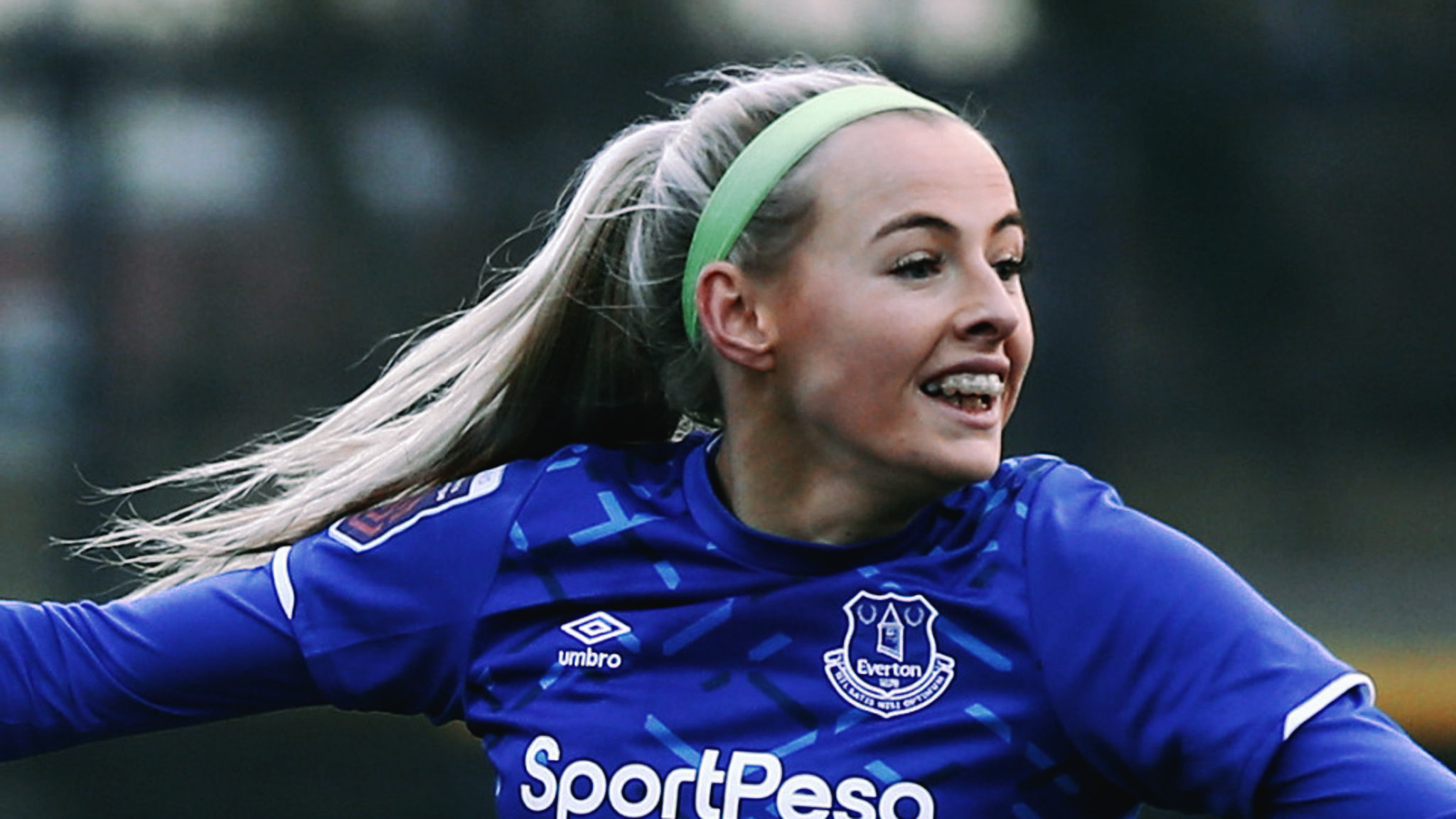
As much as I would love to tell a neat story where Chloe stayed at Arsenal and everything simply got better and better, that is not how her journey unfolded, and I think it is important that we talk about the period in between. Arsenal’s senior squad was packed with experienced internationals and meaningful minutes were extremely difficult to come by for young players. Chloe could have stayed, accepted a place on the bench and reassured herself that wearing the Arsenal shirt was enough, but she understood that she needed to play. She joined Everton on loan in 2016 before making the move permanent in 2018 because being on the pitch every week mattered more to her development than remaining attached to a bigger club without the opportunities she needed.
At Everton she scored eighteen goals in fifty-one appearances, became one of the team’s main attacking threats and proved that she could carry responsibility rather than simply arriving from the bench as an exciting young player. Sometimes leaving home is the only way to grow, even when doing so is frightening, and that is something I understand well from my own life. Chloe then earned a move to Manchester City in 2020 and initially it appeared to be exactly the right next step, offering Champions League football, a bigger stage and more opportunities to compete for major honours.
Then, in May 2021, everything changed. Chloe tore her anterior cruciate ligament, an injury that ruled her out of the Olympics and took her away from football for a significant period. She has spoken openly about how dark that time became, the relentless grind of rehabilitation, watching everybody else play while she was stuck in the gym and wondering whether she would ever feel like herself again. She did return and she did play for Manchester City again, but the road was not smooth. Her minutes fluctuated, her confidence had to be rebuilt and eventually she reached the point where she knew she needed a different environment if she was going to rediscover her best football.
It went even further than that because Chloe has admitted that she seriously considered walking away from football altogether after the injury and everything that followed at City. For somebody who had grown up living and breathing the game, travelling for hours to reach training and organising her whole childhood around football, that tells you just how difficult things had become. For any young player reading this who may be dealing with an injury, struggling with confidence or wondering whether they are good enough, I think it is worth remembering that even players who score winning goals in European Championship finals can reach moments where they are unsure whether they can continue. The important part of Chloe’s story is that she did not allow that moment to become the end.
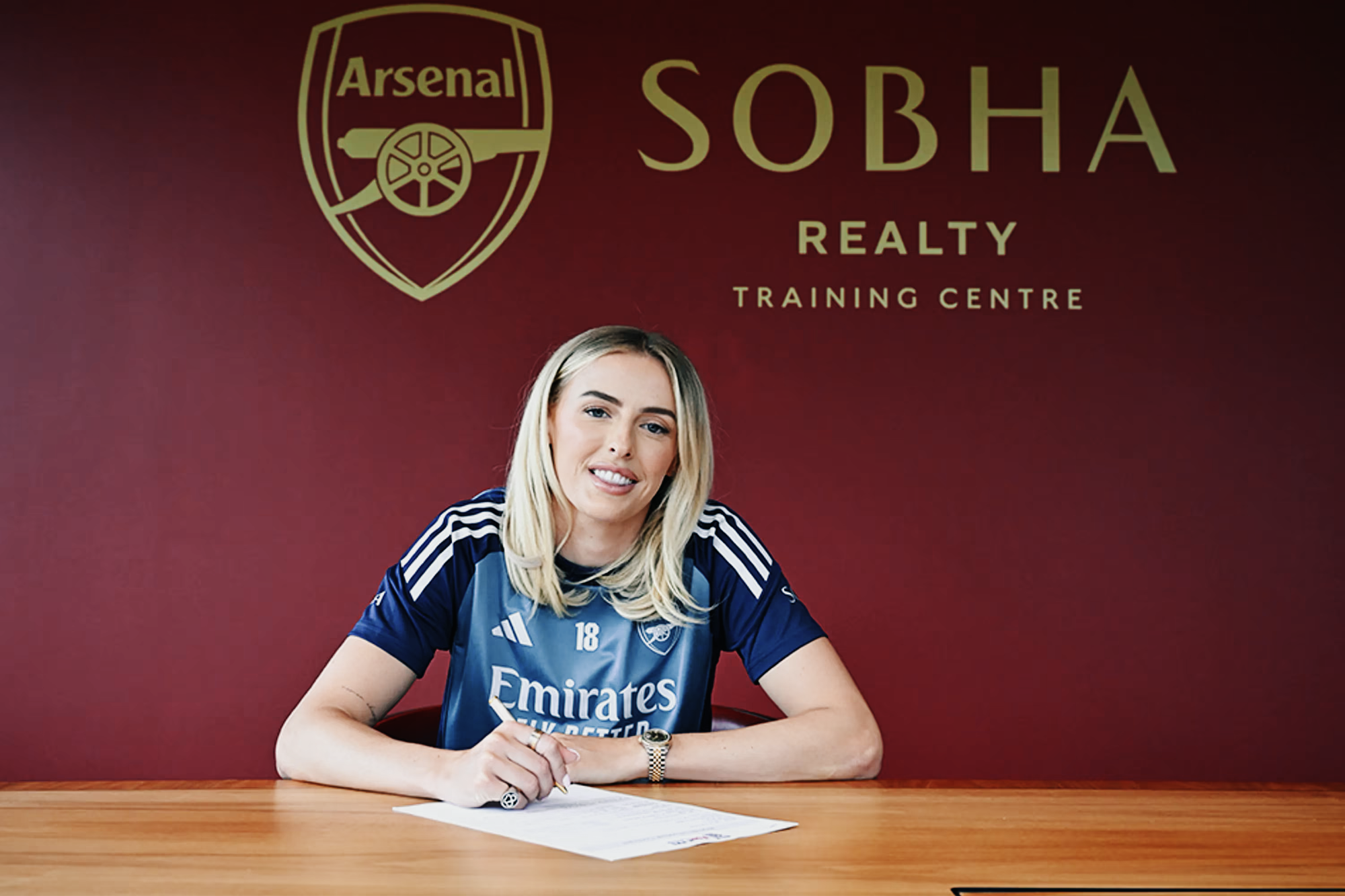
In January 2025, on transfer deadline day, Chloe Kelly came back to Arsenal Women on loan, and from the beginning that move felt like more than a standard transfer. It was a homecoming and a reset, an academy graduate returning to the club where she had scored on her debut, now as a fully established England international carrying years of experience, success, injury and disappointment with her. She put the number eighteen shirt back on, walked through the doors at London Colney and there was something noticeably different about her. In interviews she spoke about the move putting the smile back on her face, and you could see that freedom returning in the way she played, with more directness, more confidence and more of the cage-football Chloe Kelly that had first made her such an exciting young player.
Sometimes coming home is exactly what you need to remember who you are, and because this is Chloe Kelly we are talking about, that loan quickly became something even bigger. During that half-season she helped Arsenal win the UEFA Women’s Champions League for only the second time in the club’s history, defeating Barcelona in the final and ending an eighteen-year wait for Europe’s biggest trophy. Across those months she made thirteen appearances, scored twice, contributed assists and once again demonstrated that she could tilt major matches in Arsenal’s favour.
For me, that Champions League victory, the semi-final turnaround against Lyon and the quarter-final comeback against Real Madrid are every bit as much a part of Chloe Kelly’s story and legacy as the goal at Wembley. Those moments happened here, with Arsenal, in front of us at Emirates Stadium, and they reminded everybody of the player she could be when she felt trusted, supported and free to play.
Of course, football careers are never as perfect as the highlight reels make them appear. Chloe’s body still carries the history of that ACL injury, and since signing permanently for Arsenal she has endured more interruptions, more spells watching from the stands or the bench and more time working in the gym when all she wanted was to be starting every week. I cannot begin to imagine how frustrating that must have been for her, particularly when you know how badly she wants to contribute, not only for herself but for the club and the supporters. It is another reminder that careers are not simply made up of trophies, goals and smiling photographs on social media. They also contain setbacks, lonely rehabilitation sessions and days when progress feels painfully slow.
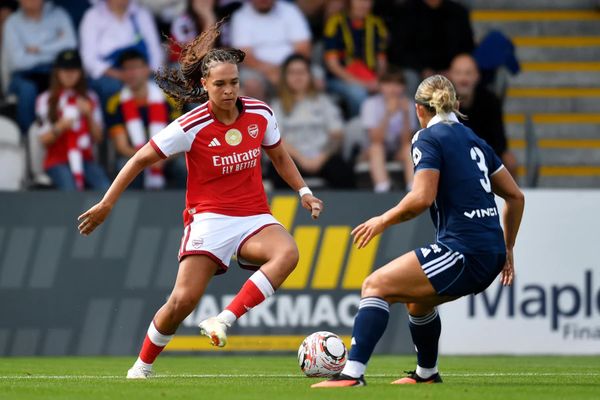
That is where we find ourselves now. Chloe Kelly is back at Arsenal permanently, wearing number eighteen and competing within a frontline that includes Alessia Russo, Stina Blackstenius, Selina Cerci, Michelle Agyemang, Olivia Smith, Caitlin Foord and Lisa Baum. She remains part of England’s plans and is still trusted as somebody capable of producing in major matches, while the last few years have given her some of the finest nights of her career and some of the most difficult days. More recently, though, she has spoken with renewed optimism, believing that Arsenal under Renée Slegers is the right place to build the next chapter.
For any young Arsenal supporter reading this, perhaps somebody playing on a small pitch somewhere and wondering whether football will ever truly belong to them, Chloe Kelly’s journey carries a very simple but powerful message. You can start in a cage playing street football with your brothers, take long train journeys to training, suffer a serious injury, lose confidence, almost give up, change clubs, come home and still end up scoring for your country at Wembley and lifting the Champions League with Arsenal.
That is why I wanted to celebrate Chloe today. Not simply because of one goal, one penalty or one trophy, but because she has shown over and over again that even when football throws everything it has at you, you can still decide that you are not finished and keep moving forward.
After everything she has already overcome, I cannot wait to see what her next big moment looks like.
Enjoyed this article? Listen to the latest episode of Arsenal Women: Trailblazers, subscribe wherever you get your podcasts and join the conversation on Instagram @arsenalwomentrailblazers.