Kim Little: The Story Behind Arsenal’s Number Ten
Kim Little has made more Arsenal appearances than anyone else in the club’s history. For our 50th episode, we trace the career that took her from Scotland to Arsenal legend.

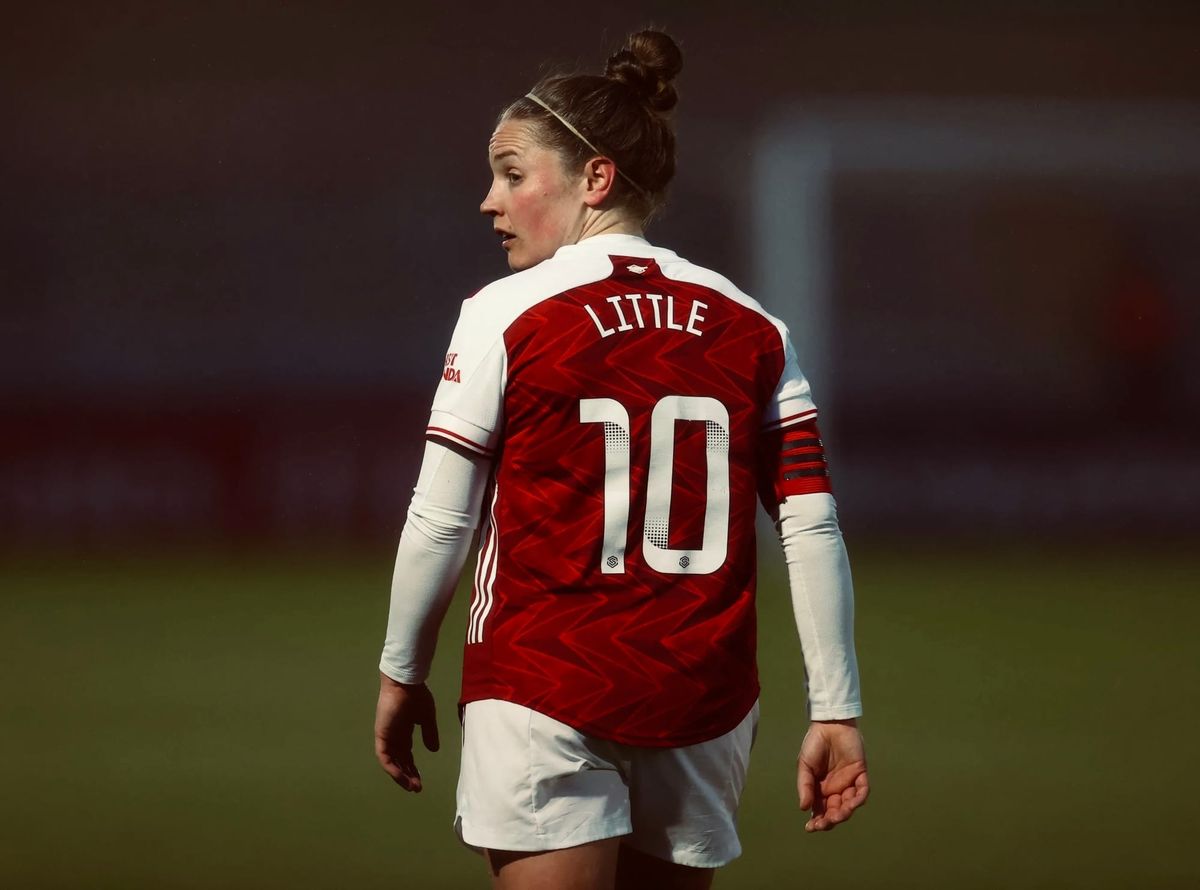
On the afternoon of Sunday 13th September 2026, Kim Little stepped onto the Emirates pitch for her 182nd Women’s Super League appearance for Arsenal, more than any other player has made for this club.
There was no big ceremony. Kim came on as a second-half substitute, took her place in midfield and immediately got on with trying to win the match.
Which, when you think about it, may be the most Kim Little way imaginable to make history.
Kim Little has been playing to level football for a long time! I didn't appreciate that when I decided she would be the next player to profile, given her now 20+ year career, but there was simply no other choice.
This is a special one, because somehow we reached the 50th episode of the Trailblazers podcast. When I started the podcast and this site, I didn't know if anyone would listen or read the articles. But you have — you've subscribed, shared, and joined the conversation.
There were plenty of other Arsenal players who could have marked this milestone, but once I thought about what the number 50 should represent rather than who'd get the most attention, the answer was obvious. It had to be Kim Little — not only because she's now made more WSL appearances for Arsenal than anyone else, has passed 400 appearances, has captained the club, and has finally lifted the Champions League trophy, but also because no player better represents what this podcast and website are trying to represent.
She arrived before the Women's Super League existed, before Emirates Stadium crowds and before players were recognized in the street. She left Britain to become one of the best players in America, played in Australia, won 140 caps for Scotland, then came home and became far more than the brilliant teenager who first arrived at Arsenal. But if all we do today is list her appearances, goals and trophies, we'll miss the most interesting part — because Kim Little has become one of the greatest players Arsenal have ever had without ever seeming interested in being treated like one. She doesn't demand attention, and she rarely turns an interview into some grand statement about leadership or legacy. She just keeps showing us what those things look like.
So today we're going back to the beginning — back to Mintlaw, where the story begins with a little girl, her big brother, and a football that was almost always close by.
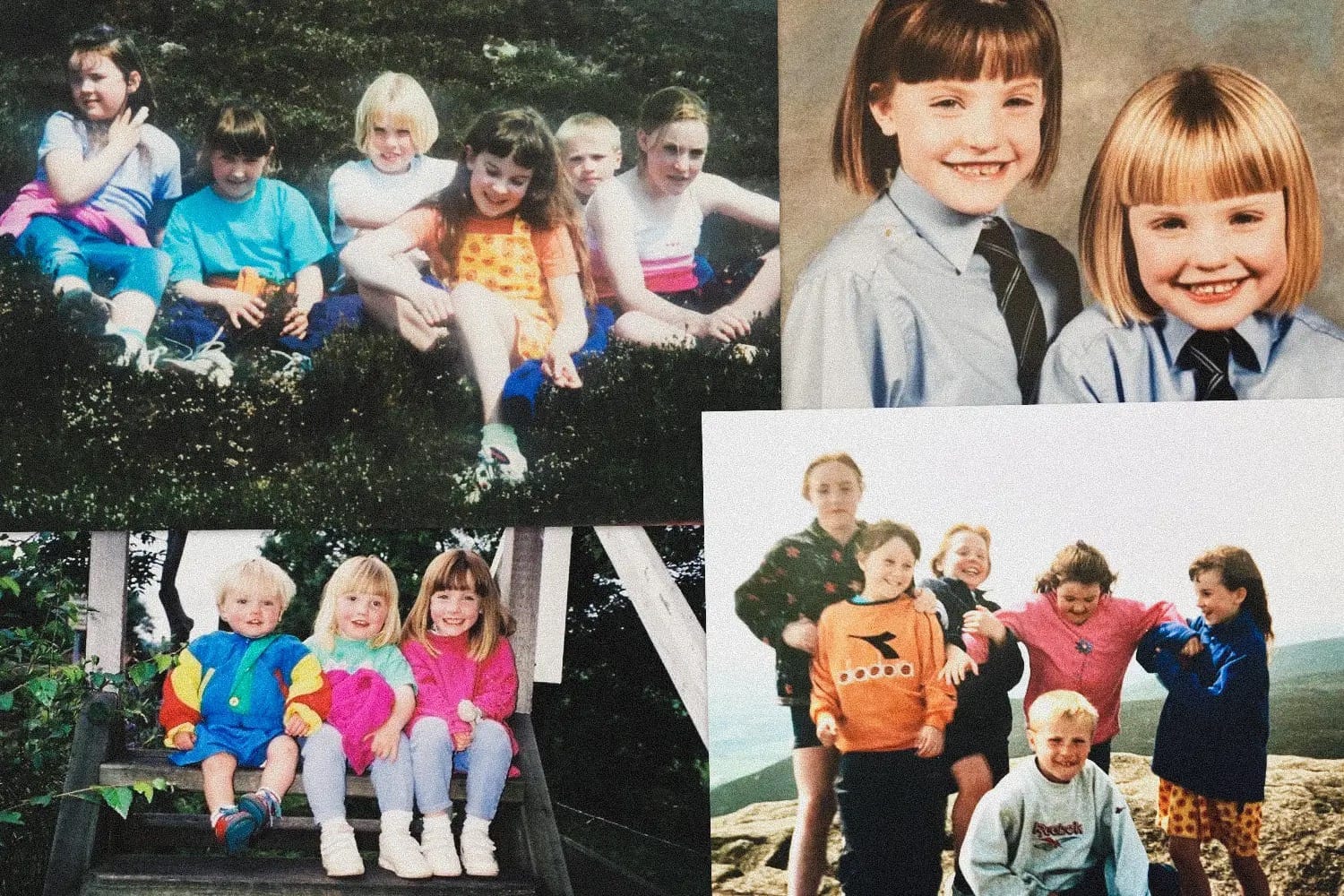
Mintlaw, the garage and one more lap
Kim Alison Little was born in Aberdeen on the 29th of June, 1990, but the place she really calls home is Mintlaw, a small village about 30 miles further north - around two and a half thousand people, two primary schools, one big roundabout, and not much else.
The Little family didn't take foreign holidays. They packed their bikes and a tent and went camping around Scotland instead — St Andrews, Dumfries and Galloway, the Trossachs — with Kim squeezed in the back seat between her brother Euan and sister Judith. They walked, cycled and kayaked all day, then cooked on a camping stove. It was a childhood built around movement, not organized training.
And running through almost all of it was football. Kim played in the garden and the fields with her dad and Euan, then for Mintlaw Primary School, Mintlaw Boys Club and, from around ten, Buchan Girls. She's never described playing in boys' teams as some dramatic battle — football was just what she loved doing, and she was very good at it, so she played wherever the opportunity existed.
What's interesting isn't that she'd already decided to become a professional, because professional women's football barely existed as a career back then. What's interesting is that long before any obvious reward was in sight, Kim was already behaving like someone determined to find out how good she could become — and for that, we need to go into her dad's garage.
It was a small space, maybe ten feet square, with a cold, red-painted concrete floor, full of bikes and ladders. Kim's dad was very active — rugby, running, homemade exercise stations — and Kim started by watching him, then joined in. When the Scottish winter made outdoor training unappealing, she'd clear space to practice keepy-uppies and dribbling drills. No coach stood beside her, and no schedule told her when to stop; she kept a list in her head of what she needed to complete, and sometimes refused to come in for dinner until she'd finished it — proof that she enjoyed the process of getting better, including the quiet part nobody's watching.
When the weather improved, she and her dad trained in the park next to their house, running three- or four-mile routes together. Kim remembers completing those in around 28 minutes, and as she entered her early teens, she reached the point where she could overtake her dad — and once ahead, she wouldn't slow down. One more lap. One more attempt before dinner. It's an instinct we'll see again and again in Kim's story: when faced with something difficult, her first response is rarely to put on a performance. She looks at where she is, decides what needs to be done next, and gets on with it.
That period also built another part of her personality: Kim's always been comfortable spending time alone, even now looking for small moments away from her Arsenal teammates to recover some energy. She isn't quiet because she's got nothing to say — she just thinks carefully about people, often long after everyone else has moved on.
At 13, Kim's football took a bigger step. In 2005, she joined Hibernian's youth set-up in Edinburgh, more than three hours from home, and her family made that journey twice a week so she could train with stronger footballers. There was still no guarantee of a professional career at the end of it, but Julie Fleeting, Scotland's top goalscorer, was already playing professionally in America and scoring goals for Arsenal — proof a girl from Scotland could build a life through football.
Kim wasn't publicly dreaming of becoming the next Julie Fleeting. She was just taking the next available step — from the garden to the boys' team, from Buchan Girls to Hibernian, from a freezing garage in Mintlaw to those long evenings crossing Scotland. And once Hibernian put her alongside senior players, it quickly became clear she wasn't just keeping up. At 16, she was about to start scoring goals at a rate that sounds slightly unreasonable even now.
Eighty-eight goals, Highers and the Tesco checkout
By the following summer, at only 16, Kim was moved into Hibernian's senior team — and her first appearance came not in a gentle friendly but in Europe, against Espanyol in the UEFA Women's Cup, with Hibs needing their younger players to step up after losing experienced players over the summer. That's quite a request for a 16-year-old, but throughout her career Kim rarely looked like someone who thought moving up a level meant becoming a different person.
In her first Scottish Women's Premier League appearance, she scored a hat-trick against Hutchison Vale, the start of a season that still looks slightly unbelievable on paper: 55 goals in 30 appearances during 2006-07. She was 16, playing her first season of senior football, and scoring almost two goals a match, as Hibernian won every league game to become Scottish champions and lift the Scottish Cup. Kim wasn't a centre-forward waiting for chances near goal — she was a midfielder who operated much closer to the attack than the Kim we now see controlling matches for Arsenal, carrying the ball past defenders and arriving inside the penalty area at exactly the right moment. There's a difference between running toward the box and knowing when to enter it, and Kim understood that difference almost immediately.
What makes the season even more striking is how little of her life resembled what a 16-year-old entering elite football would experience today. Kim was still at school studying for her Highers, and worked around 20 hours a week on the checkout at Tesco in Ellon while continuing to play — travelling enormous distances for training, then scoring goals in senior football on the weekend, without treating it as though a remarkable career had begun. Women's football was still largely amateur, so Kim just enjoyed playing, knew she wanted to improve, and kept taking whatever opportunity came next.
While all this was happening, Scotland called — Kim made her senior international debut against Japan in 2007, still only 16. One week she could be in a classroom at Mintlaw Academy or on a Tesco shift; the next, representing her country against one of the strongest women's football nations in the world.
Her second season at Hibernian produced another 33 goals in only 18 appearances — 88 goals across 48 matches for the club. Statistics from this period aren't always recorded as consistently as those from today, but the surviving records agree on the scale: Kim had become one of the most productive players in Scottish football before turning 18. And still, she wasn't assuming football would provide the rest of her life — she was considering university, because even a player as good as Kim couldn't count on the game to provide a secure career.
Then Arsenal contacted her. This wasn't the Arsenal Women we recognise now, but within women's football they were enormous — Vic Akers had built the dominant team in England, recently the first British side to win the UEFA Women's Cup and complete a domestic quadruple, with a squad including Rachel Yankey, Kelly Smith and Julie Fleeting, who was about to become Kim's teammate rather than just the Scottish player who'd shown her a career might be possible.
Kim was 17, still living at home and working at Tesco, when one of the world's strongest teams asked her to move to London. You might expect a dramatic family conversation, lists of reasons to go and stay, sleepless nights. Kim remembers it rather differently: Arsenal wanted her; playing for Arsenal was the obvious next step, so she'd leave Tesco, move south, continue her studies and play with some of the best players she'd ever seen. Decision made. That may sound like complete self-confidence, but she wasn't deciding she already belonged among those names — she trusted the work. If Arsenal represented a higher level, she'd train at that level and find out what else she needed to improve.
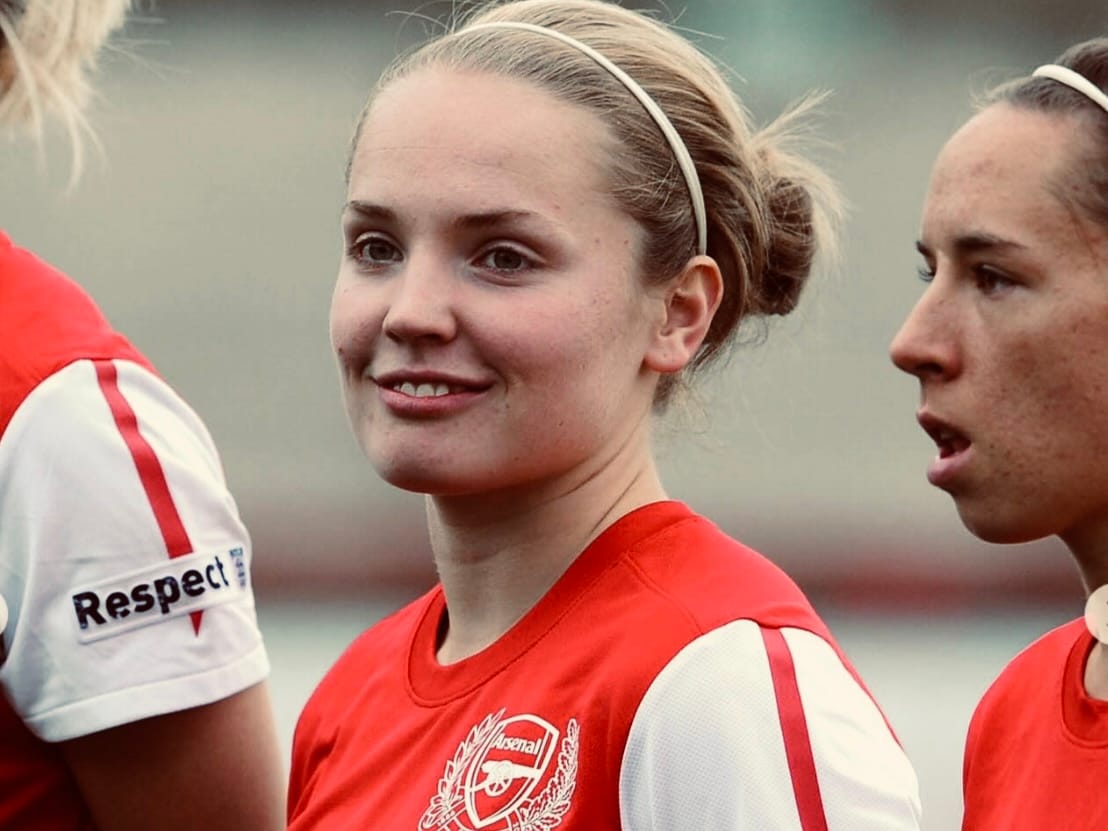
“Fleets’ mate can come back”
When Kim arrived for her first Arsenal match, nobody had told the Arsenal players they'd actually signed her.
Julie Fleeting had travelled down from Scotland with her husband and family. Kim and her mum came with them, and because she hadn't been given any kit yet, she walked into the dressing room wearing an ordinary tracksuit. She was 17, very quiet, and standing beside one of the most recognisable players in Scottish football — so the rest of the Arsenal team made what felt like a reasonable assumption. Julie had brought a friend with her.
Lianne Sanderson remembers looking across the dressing room and wondering why Fleeting's mate was sitting there. The confusion continued when Vic Akers began his team talk and this unknown teenager didn't leave. Who is she? Why is she still here?
Then Kim started changing into an Arsenal kit.
The simpler explanation is that communication had failed somewhere along the way. Kim was named among the substitutes and eventually came onto the pitch. Within minutes, the confusion disappeared. Julie remembers that Kim didn't lose the ball once — surrounded by established internationals, playing for one of the strongest teams in Europe, and looking completely comfortable as soon as the football reached her.
Afterwards, the verdict from the dressing room was simple. Fleets' mate could come back.
It's a lovely story because it gives us the two sides of Kim Little almost immediately. Away from the match, she could enter a dressing room so quietly that several players didn't realise she was part of the team. Once she stepped onto the pitch, there was no confusion about why she was there.
The daily reality of playing for even the best women's team in England looked very different from the professional world Arsenal's players know today. Kim remembers bringing her own food to training and carrying equipment out to the pitches. Arsenal trained only a couple of evenings a week, and Kim enrolled at the University of Hertfordshire to study Sports Studies alongside playing. At 17, she'd left her family, her village, her school and her job, and walked into a dressing room filled with players whose careers she'd followed from home — but when she's spoken about the move, she's never described feeling overwhelmed. The surroundings had changed, but the daily task hadn't: train properly, learn from the people nearby, be ready when the next match arrived.
Her first Arsenal goal came in April 2008, against Chelsea at the Emirates. Around 5,000 people watched Arsenal win 4-1, and afterwards Vic Akers told reporters to remember the teenager's name.
It didn't take long for that prediction to look rather safe. Kim's first full season was 2008-09, and she scored 24 goals in all competitions as Arsenal won the league, the Premier League Cup and the FA Cup to complete a domestic treble — including a goal in the final win over Sunderland at Pride Park in front of almost 25,000 people. The following season, she scored 47 goals in all competitions. Forty-seven, from midfield, in one campaign.
This version of Kim might surprise younger supporters who know her mainly as the midfielder controlling matches from deeper positions. She was an extraordinary goalscorer — she could pass through a defence, but was just as capable of running beyond it, finishing with either foot or from distance. You can see the player we know today in those performances, just used much closer to goal.
Her goals helped Arsenal retain the league title in 2009-10, and her fellow players voted her FA Women's Player of the Year. She was still only 19. There was disappointment too — Arsenal reached the FA Cup final hoping to win it for a fifth consecutive season, and Kim converted a penalty against Everton, but they lost 3-2 after extra time. Her early Arsenal career can look almost too smooth, reduced to a list of trophies, but dominance never meant every match went as expected.
The wider game was changing too. England was preparing to replace the old league with a new competition called the Women's Super League, and Arsenal would enter it as favourites. Kim entered it as one of the best young players in Britain — three years after arriving in London, with most of her teammates not knowing who she was.
A new league and a bigger world
In 2011, women's football in England resumed. The old Premier League National Division was replaced by the Women's Super League, a new eight-team competition — though much of the game remained semi-professional, and nobody knew exactly what it would become.
Arsenal entered as the team everybody wanted to catch, having won the previous seven English league titles. Kim, still only 20, had already scored more senior goals than many forwards manage across an entire career — and she kept winning. She scored nine times in 13 league appearances as Arsenal became the first WSL champions, losing only two matches, and also won the FA Cup, beating Bristol Academy 2-0 in the final. Kim scored the opening goal and was named Player of the Match. Afterwards, Laura Harvey called her world class — and she meant it literally, not as a compliment thrown around after a good final.
The following season strengthened the argument. Arsenal went unbeaten throughout the 2012 WSL campaign and won their ninth consecutive English league title, with Kim finishing as the competition's top goalscorer with 11 goals in 14 matches. The Kim Little younger supporters recognise today mostly starts attacks from deep. In 2012, she was still doing that, but also arriving inside the penalty area to finish moves herself — scoring twice against Chelsea in April, then twice more against Liverpool in May. That intelligence made her adaptable too: she could play as the most advanced midfielder, as a number ten, or from deeper when Scotland needed her to control the ball more.
Her world was getting bigger away from Arsenal too. Scotland still hadn't qualified for a major tournament, but the 2012 Olympics offered a different opportunity — Great Britain entered a team as hosts, drawing players from all four home nations. At 21, Kim became one of only two Scottish players selected for Hope Powell's squad. Team GB won their group, with Kim creating two goals in a 3-0 win over Cameroon, before Canada ended their run in the quarter-finals. There was no medal, but the experience put Kim in front of crowds, and attention women's football in Britain had rarely offered.
In April 2013, the Professional Footballers' Association included a women's award in its annual ceremony for the first time — the PFA Players' Player of the Year, voted for by other footballers. The first woman to receive it was Kim Little. For Kim, being chosen by the players who'd actually tried to stop her gave the honour its meaning. She didn't become an elite player because the PFA created an award; the award had finally caught up with players like her.
That period wasn't perfect for Arsenal. Laura Harvey left after the 2012 season to become head coach of a new American club, Seattle Reign, and Arsenal finished third in 2013, ending their run of nine consecutive league titles. For Kim, the question was no longer whether she could succeed in England — she'd won titles under two formats, scored in major finals, played in the Olympics and been named the best player in the country by her own opponents. She was 23, and had spent almost six years at Arsenal.
Then Laura Harvey called from Seattle. The National Women's Soccer League had begun in America, and Seattle were building a fully professional team around her. Kim later explained that the chance to play professionally full-time, and to work with Laura again, were the main reasons she said yes — leaving Arsenal wasn't really the story; going professional was.
So the girl who'd once travelled across Scotland twice a week for training was about to cross the Atlantic instead.
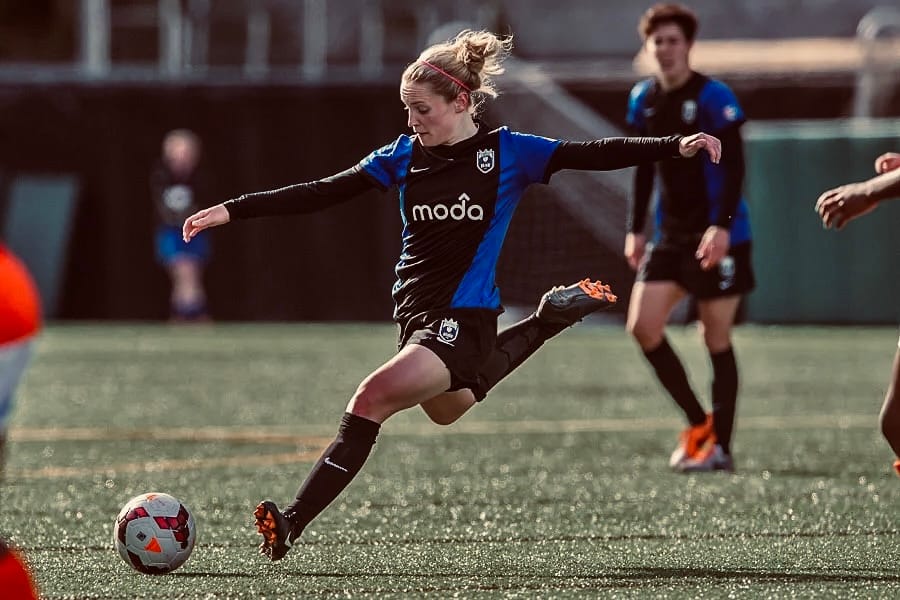
Seattle and the player who completed the team
Seattle Reign had a miserable first NWSL season in 2013, finishing second-to-last and scoring fewer goals than any other team in the league. Laura Harvey believed they were difficult to play against, which is the sort of compliment managers give a team when there isn't much else available — and she knew exactly what was missing. She needed Kim Little to connect a squad that already had serious quality gathering around her, including Megan Rapinoe, Jess Fishlock and Hope Solo.
Kim arrived in early 2014 and found that becoming a full-time professional meant more than just extra hours of training. America was enormous — domestic away trips could mean flights longer than the whole journey from Mintlaw to London, through summers far hotter than anything she'd known. The football felt different too: faster, more physical, less controlled than the European game. That could have made life uncomfortable for somebody who valued control. Instead, it made her quicker — if other players were rushing, Kim could still see.
Her first NWSL appearance came against Boston Breakers in April 2014. Laura Harvey had wondered whether Kim might need time to adjust; she needed 48 minutes, scoring twice as Seattle won 3-0. The goals kept coming — four in April alone earned her NWSL Player of the Month, and she won it again in May, the first player in the league's history to receive it twice. By midseason, opponents were rebuilding entire defensive plans around stopping her, and most of those plans didn't work.
That trust changed the team completely. Seattle went from scoring the fewest goals in the NWSL to scoring the most, losing only two of 24 matches and finishing 13 points clear at the top. Kim scored 16 goals and created seven more, earning the Golden Boot, a place in the Best XI and the league's Most Valuable Player award — in her first season. She's always looked a little uncomfortable separating an individual performance from the team that made it possible, and that isn't false modesty: Kim made the group better, and the group gave her possibilities in return.
Seattle won the NWSL Shield as the best regular-season team, but lost the Championship final 2-1 to FC Kansas City — an unsatisfying ending next to one of the greatest individual seasons the league had seen. The following year gave them another chance. Kim's role evolved: she scored 10 goals and finished with more assists than anyone else in the NWSL, showing she didn't need to protect the identity she'd built in her first season. Seattle reached the final again — and lost again, 1-0, to the same opponent.
Two seasons. Two Shields. Two finals. Two defeats against the same team. Kim doesn't talk about those years as a disappointment; the football, the friendships and the experience of building that team together were worth more than two lost finals could take away. Her connection with Laura Harvey, in particular, grew from a coaching relationship at Arsenal into a friendship that would last a lifetime.
But Kim's exploration wasn't finished. Rather than resting through the gap before the next NWSL season, she and Jess Fishlock looked towards Australia, where a new club was being built in Melbourne — and less than two months after losing the Championship final, Kim packed her bags again for a league she'd never played in.
Melbourne, another medal and the pull of home
There wasn't much of an off-season in Kim's life at that point. By the middle of October 2015, she was in Australia, joining a newly created Melbourne City team for the W-League season — the competition now known as the A-League Women, played during the American winter so US-based players could keep going instead of waiting months for the next NWSL season.
She joined a squad full of familiar names: Jess Fishlock beside her in midfield, Scotland teammate Jennifer Beattie in defence, and a 21-year-old Steph Catley as captain. The manager was Joe Montemurro — a name that matters far more in hindsight, since Joe would become Arsenal's manager two years later and build his title-winning midfield around Kim. He was trying to build a team that controlled matches through the ball with intelligent players who solved problems without waiting for instructions from the touchline, and he'd later say Kim's understanding of space was on another level.
Melbourne's first season was extraordinary. They won all 12 regular-season matches, finishing 17 points clear at the top, with Kim scoring nine goals as the league's second-highest scorer despite spending much of her time creating for others. The impressive part wasn't just that Melbourne won, but how quickly a brand-new group of players learned to work as one team — and Kim, needing nothing built specifically around her, could adapt to whatever the team needed match to match. Melbourne reached the Grand Final unbeaten, facing Sydney FC in front of more than 4,000 supporters. Kim set up Jennifer Beattie's opener, then curled in a free-kick herself to make it 2-0. Melbourne won 4-1, completing an unbeaten season with both the title and the Grand Final trophy, and Kim was named player of the match — a different country, league, coach and set of teammates, and the football still made complete sense to her.
Kim returned to Seattle for 2016, though the team was less settled, with key attacking players missing through injury for spells. She still scored six goals and provided two assists, but Seattle missed the play-offs by two points — the first season she'd spent in America without reaching a Championship final.
Yet the wider football world was starting to recognise what the people around her already understood. In May 2016, Kim was named the BBC Women's Footballer of the Year, decided by public vote ahead of nominees including World Cup winner Carli Lloyd — despite never having played at a World Cup or Euros herself. At 25, the girl from Mintlaw had been voted the best women's footballer in the world, and took the news in typically understated fashion: the award mattered, but it didn't change what she valued or how she measured herself.
By the end of 2016, Arsenal wanted her back — not a sentimental reunion, but a long-term contract and a real role in the club's future. The Arsenal she'd be returning to looked very different from the one she'd left: Chelsea were champions, Manchester City were investing heavily, and English women's football was rising fast. Seattle didn't want to lose her, but Laura Harvey called Arsenal's offer unbelievable and backed Kim's decision to leave — a mark of how far their relationship had grown beyond coach and player.
In January 2017, after three years away, Kim Little returned to Arsenal. She was still only 26, but arrived with experience very few British players of her generation had — three countries, three continental league titles, America's most valuable player, and the BBC's best in the world. More importantly, she'd learned her game could survive almost any change around it. Arsenal hadn't just brought back the brilliant young goalscorer who'd left in 2013; they were getting a more complete player, and a woman starting to understand the authority she carried.
Then, only a few months after returning, football handed her something she couldn't just solve by working a little harder. For the first time in her career, her own body was about to make her stop.
The year football made her stop
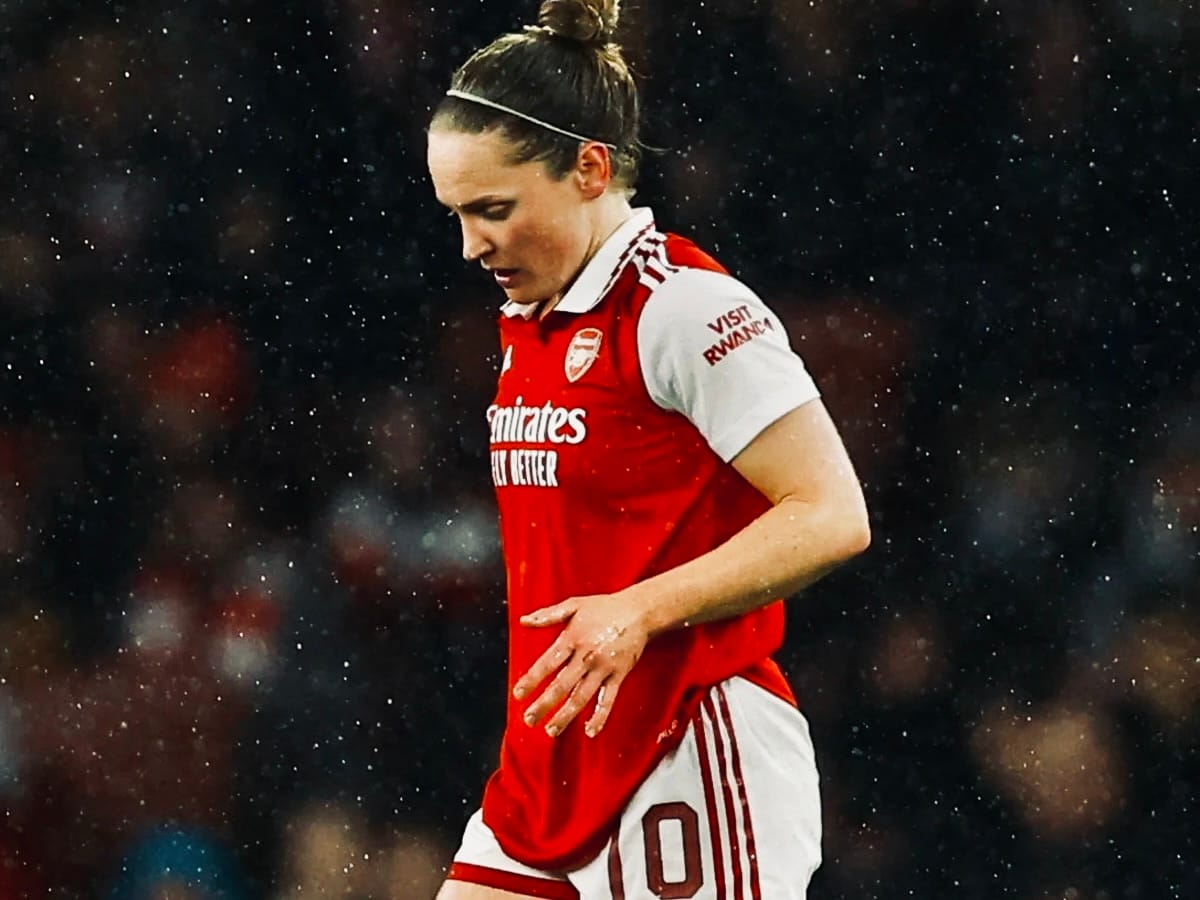
Kim returned to Arsenal in January 2017 expecting to help move the club forward. Instead, only a few months later, she was standing on a training pitch with a ruptured anterior cruciate ligament — the first major injury of her career, at 26, after a body that had let her do almost everything she'd asked of it.
The timing made it worse. Scotland had just qualified for the 2017 European Championship, the first major tournament the women's national team had ever reached, after Kim had spent a decade helping to get them there — including a cruel near miss in 2012, scoring twice against Spain in a qualifying play-off only for Verónica Boquete to end the dream seconds from the final whistle. Instead, her knee gave way during training in May 2017, with no opponent to blame and no dramatic moment in front of a crowd — just one movement that took away most of the following year. Scotland went to the Euros without her, and missed the quarter-finals by the smallest of margins.
There was nothing Kim could do about any of that. Her challenge was quieter: get the knee back. An ACL recovery strips football down to its smallest parts — before you can run, you have to walk properly; long before you can think about scoring, you're concentrating on bending your knee a few more degrees. Kim's since said that whenever injuries kept her from playing, she tried not to stay stuck in the disappointment for too long. Her response was practical: this is where I am, what do I need to do to get back? You can hear the same little girl from the garage in that approach — except this time her discipline had to include patience.
While she recovered, Arsenal changed managers. Joe Montemurro arrived in November 2017 — somebody Kim already understood from Melbourne, and whose training sessions, ideas and way of dealing with people she liked. But she still had to finish her rehab first. Nine months after the injury, she finally returned, coming on for the final 15 minutes of an FA Cup win over Millwall in February 2018. Five days later, in her first start since the injury, Joe gave her the captain's armband — before she'd even become Arsenal's permanent captain, authority had already begun to settle around her.
Three weeks after that, Arsenal faced Manchester City in the Continental Cup final. Kim later admitted she struggled to get through the 90 minutes, still rebuilding her fitness only weeks after nine months away. Vivianne Miedema scored in the first half, and Kim kept going until the end. Arsenal won 1-0, and Kim had a trophy in her hands less than ten months after an injury that had taken away her season and Scotland's historic summer.
This period helps explain something that can get lost when we only look at Kim's trophies and the calmness of her football: the reality hasn't been that smooth. Football had taken away a year, and a tournament she could never replay, and all she could do was accept where she was and gradually move forward — first walking, then running, then 15 minutes against Millwall, then the armband, then 90 exhausting minutes in a final. Now Kim and Joe could get on with the job she'd come home to do — making Arsenal champions of England again.
The armband, the broken leg and the title
The Continental Cup gave Kim a trophy at the end of her recovery, but the summer of 2018 gave her something even more valuable: time. For the first time since rupturing her ACL, she could go through a proper pre-season instead of catching up with everybody else, rebuilding her fitness and learning how Joe Montemurro wanted Arsenal to play.
Joe was reshaping the team around her. Lia Wälti arrived to give Arsenal calmness at the base of midfield; Vivianne Miedema was starting her second season in England; Beth Mead, Daniëlle van de Donk and Jordan Nobbs offered movement and goals; Leah Williamson was becoming increasingly important in defence. At the centre of it all was Kim, who began the new campaign as Arsenal captain after Alex Scott's retirement.
It may not have looked like the most obvious appointment — when many of us imagine a captain, we picture somebody making speeches and gathering everyone for a pre-match roar. Kim wasn't going to become that person just because somebody had handed her an armband; her authority came from the way she trained, the decisions she made, and the fact that her teammates knew she'd take responsibility when the match got difficult. She didn't ask anybody to meet a standard she wasn't already setting herself.
Arsenal began the season with three straight wins, then went to Chelsea — the defending champions — and won 5-0, with Kim scoring from the penalty spot. But her afternoon ended before the final whistle: a challenge from Chelsea's Drew Spence left her with a fractured fibula, only a few months after completing her ACL recovery. There's a particular cruelty in that timing. Arsenal kept winning without her, extending their perfect start to nine league matches, before Jordan Nobbs also ruptured her ACL in November — in the space of a month, Joe had lost two of the midfielders his team was built around.
Kim returned in January, and her presence changed the balance of the midfield again. Across only 14 league appearances that season, she scored eight goals and created six more — a remarkable contribution for somebody who'd missed almost three months with a broken leg. One of the strange things about watching Kim is that everybody around her looks like they're playing at full speed, while she seems to have an extra second that belongs only to her. She hasn't, really — she just decides what she's going to do before the ball arrives.
Arsenal answered a Chelsea defeat by winning seven league matches in a row, and by the end of April, travelled to Brighton knowing a win would make them champions. There was a pleasing symmetry to it — Kim had been part of the last Arsenal side to win the league, in 2012, and seven years later she was leading the team that could bring the title back. Arsenal won 4-0. They finished the season with 18 wins from 20 league matches, scoring 70 goals and conceding only 13.
Kim was the connection between those two versions of the club — she'd won the final title of Arsenal's original period of dominance, then gone away, changed as a player, and come back to help begin something new. Now she lifted the trophy as captain, after rupturing her ACL, missing Scotland's first major tournament and breaking her leg just as the title challenge began. The armband hadn't made her louder; it had just made official what her teammates already understood.
There was one more piece of unfinished business waiting that summer. Two years earlier, injury had taken away Scotland's first European Championship. Now Scotland had qualified for its first Women's World Cup — and this time, Kim was fit.
Paris and the cruellest ten minutes
Before Scotland travelled to France for the 2019 World Cup, they beat Brazil 1-0 in a warm-up friendly, with Kim scoring the goal against a side that included Marta, perhaps the greatest women's footballer of all time. It was only a friendly, but it gave a glimpse of what this Scottish team believed they could do.
For Kim, the tournament carried extra meaning. Two years earlier, an ACL injury had taken away Scotland's first European Championship before she could even board the plane. Now she was fit, captain of the English champions, and finally about to represent Scotland on the biggest stage in the game. Their group offered no favours — England, Japan and Argentina. Scotland lost their first two matches, 2-1 to England and 2-1 to Japan, leaving their World Cup hanging by a thread after just two games.
One route remained: beat Argentina and hope other results fell their way. In Paris, for 69 minutes, Scotland produced the performance they'd been waiting for. Kim scored their first goal from a rebound, Jennifer Beattie added a second, and Erin Cuthbert made it three with 21 minutes left.
I'm not sure there are many more dangerous feelings in football than believing the difficult part's already done. Argentina scored twice in five minutes to make it 3-2, then won and scored a stoppage-time penalty — retaken after a VAR review — to draw level at 3-3. The whistle went moments later. Kim stood on the pitch as Argentina celebrated a comeback that had eliminated both teams. Scotland had been three goals ahead with barely twenty minutes to go. And still, somehow, they were going home.
For Kim, there was another layer to the disappointment. She'd finally reached the tournament injury had denied her, started all three matches and scored the goal that appeared to be carrying Scotland through — but there'd be no knockout match, and no chance to show the wider world more of the player Arsenal, Seattle and Melbourne already knew. Still, a generation of Scottish girls had watched their national team at a World Cup for the first time, and had seen a path Kim herself never had at their age.
All she could do was go back to Arsenal and start again. And when Scotland played their next match, Kim scored five goals — because apparently the quiet, measured response to World Cup heartbreak was to take it out on Cyprus.
When the world became smaller
Five goals against Cyprus took Kim's international total to 58, and brought her back to the familiar rhythm of football — another match, another season starting with Arsenal as defending WSL champions. Keeping the title proved much harder than winning it: Chelsea and Manchester City had strengthened again, and both beat Arsenal twice that season. A foot problem needed surgery in February 2020, ending Kim's domestic season early — and then, in March, football stopped altogether as the country went into lockdown.
For Kim, the early months of lockdown were largely spent rehabbing her foot away from Arsenal — a different kind of isolation from the solitude she'd always been comfortable with, with video calls replacing physiotherapists and no match on the calendar to work towards. The WSL season was eventually ended without the remaining matches being played; Chelsea were declared champions on points per game, and Arsenal finished third, their title defence never finished on the pitch.
The following season was difficult, with Arsenal unable to match Chelsea and Manchester City, and after more than three years in charge, Joe Montemurro decided to leave at the end of it — remembered for the 2019 title, but also for the part he'd played in Kim's career long before Arsenal, coaching her in Melbourne and handing her the armband when the club needed a new leader.
Before a new manager arrived, Kim had one more tournament to play. The delayed Tokyo Olympics finally began in July 2021, and at 31, she was one of only two players in the Team GB squad — alongside Jill Scott — who'd also played at London 2012, this time as one of its leaders. Team GB topped their group, but the quarter-final brought Great Britain up against Australia and several players Kim knew well from Melbourne. The match went to extra time at 3-3; Kim played on with a bandage wrapped round her head after a blow, but eventually had to leave the pitch, and watched as Australia scored twice more to win 4-3. For the second time in two Olympics, her tournament ended in the quarter-finals.
A few weeks later, Kim retired from international football. There was no argument with the Scottish FA and no dramatic falling-out — she'd been thinking about the decision for a while and believed it was the right moment. That simplicity shouldn't disguise the size of what she was leaving: 140 appearances and 59 goals over 15 years, from her debut at 16 through the painful Spain play-off, Scotland's first major tournament (which injury took from her), and their first World Cup. When Kim was growing up in Mintlaw, Julie Fleeting was one of the few Scottish women she could watch building a career in football; by the time Kim retired, young girls were watching her instead.
Her retirement statement focused less on her own goals than on her teammates, thanking the women beside her for sharing both the good moments and the difficult ones. That tells you how she understood the journey: we remember the goal in Paris and the five against Cyprus. Kim remembered the people. She left as one of the finest footballers Scotland had ever produced — no farewell tour, just a thoughtful statement and then back to work.
A new Arsenal manager was waiting. His name was Jonas Eidevall, and within a few months, he'd ask Kim to lead another title challenge — one that would come down to a single point.
Fifty goals, one point and a familiar journey west
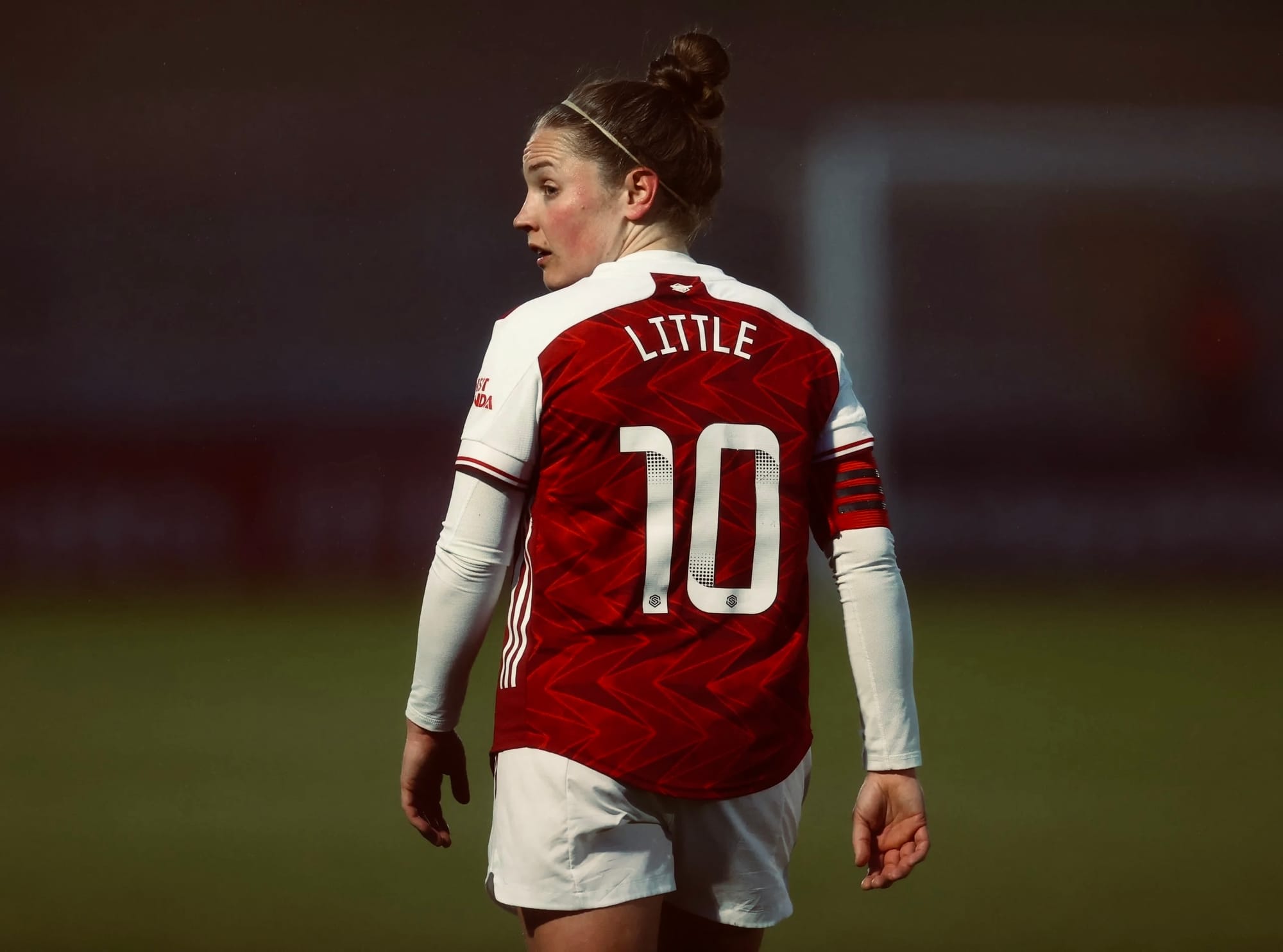
When Kim returned to Arsenal after the Tokyo Olympics, something had changed: for the first time since she was 16, she was no longer splitting herself between club football and Scotland. The new era under Jonas Eidevall began with a bang, with Arsenal beating reigning champions Chelsea 3-2 at the Emirates in his first league match in charge — the kind of result that removes any doubt that a team can challenge for the title.
Kim was at the centre of that belief. Jonas asked her to play with more freedom than she'd sometimes had under Joe Montemurro, still dropping to help control possession but also pushing forward and making the late runs that had produced so many goals earlier in her career. That version of Kim had never disappeared; Arsenal just started seeing her more again. They won their first six league matches, scoring 23 goals and conceding only two — including wins over both Chelsea and Manchester City.
Against West Ham in November, Kim scored twice, and the second was her 50th WSL goal — remarkable for a midfielder who'd also spent four years of her career in America, and who'd scored in the WSL's first season back in 2011 and was still deciding matches at the top of it more than a decade later. Arsenal won 4-0, and Kim, typically, wasn't going to make a fuss about the milestone.
The title race went all the way to the final day. Arsenal won 2-0 at West Ham, needing Chelsea to drop points elsewhere, but Chelsea recovered to win 4-2. Arsenal finished on 55 points; Chelsea on 56. One point — close enough to make you go back over everything. But this is where Kim's way of seeing football matters: she cares deeply about winning without performing that disappointment for the cameras. She'll study what went wrong and hold herself to an extremely high standard, but doesn't waste energy pretending the past can still be changed.
Her fellow professionals recognised the level she'd maintained by selecting her for the PFA WSL Team of the Year, alongside Leah Williamson and Vivianne Miedema — still, at 31, producing football her opponents rated among the best in the country.
Once the season ended, most of her Arsenal teammates turned to the European Championship. Kim, having already retired from international football, could've used the summer to rest. Instead, she joined OL Reign — the club she'd known as Seattle Reign — on a short-term loan, reunited with Laura Harvey and Jess Fishlock. Six years had passed, yet she was going back to people who already understood her; there was no grand announcement about unfinished business, just six matches played before she returned to north London for pre-season. It tells us more about Kim than any speech about losing the title could: the same instinct from that freezing garage in Mintlaw, just with the surroundings now professional training grounds in London and Seattle instead.
A trophy, an injury crisis and the space Kim left behind
Kim returned from her Seattle loan ready to begin again, and for a while Arsenal looked ready to turn the frustration of finishing second into something powerful. They won their opening six league matches and began the Champions League campaign with a remarkable 5-1 win away to Lyon, the reigning European champions who'd won the competition eight times. Kim didn't score that evening, but the match showed what Arsenal could become when she controlled the centre of the pitch. She scored four goals in her first five WSL appearances that season, at 32, still moving past defenders and carrying the ball into dangerous areas rather than just sitting in midfield.
Then, during a win over West Ham at the end of October, she injured her knee and missed several weeks. By the time she returned in December, Arsenal's season had changed around her. Beth Mead had ruptured her ACL in November; less than a month later, Vivianne Miedema suffered the same injury against Lyon. Arsenal had lost two of the finest attacking players in the world within weeks, and Kim returned to a team trying to absorb that shock while still competing on three fronts.
This was where captaincy became something more complicated than leading Arsenal out of the tunnel. There was no clever advice that could repair Beth or Viv's knees. But Kim understood exactly what it meant to have football suddenly removed from your life — the strange loneliness of rehabilitation, when everybody else leaves for training and progress means bending a knee slightly further than the week before. She'd lived through that after rupturing her own ACL in 2017, so she could sit beside them knowing exactly why the process was frightening. That kind of leadership rarely makes it into a match report, but it matters within a squad.
On the pitch, Caitlin Foord took greater responsibility, Frida Maanum moved into a more attacking role, and Stina Blackstenius became increasingly important through the middle — with Kim still providing the connection between them. Arsenal reached the League Cup final against Chelsea at Selhurst Park, a trophy they hadn't lifted since 2019. Sam Kerr headed Chelsea ahead after 98 seconds, but Stina equalised, and when Katie McCabe was fouled in the box, Kim took the penalty — no ceremony, waited for the goalkeeper to move, and sent it into the corner. Arsenal went on to win 3-1, and Kim was named Player of the Match as she and Leah Williamson lifted the trophy together, ending Arsenal's four-year wait for silverware and giving Jonas his first trophy as manager. Arsenal had conceded immediately against the strongest team in the country while missing Mead and Miedema — Kim made sure none of that became an excuse.
Less than four weeks later, Arsenal faced Bayern Munich in the second leg of their Champions League quarter-final, trailing 1-0. They won 2-0 to reach their first semi-final in ten years — but Kim was only on the pitch for the first 12 minutes before a hamstring injury ended her season. The club announced the injury on 17 April; one day later, they announced Kim had signed a new contract. Her season had ended, but Arsenal's belief in her hadn't.
Then the crisis deepened further. Leah Williamson ruptured her ACL, and Laura Wienroither suffered the same injury during the Champions League semi-final against Wolfsburg — Arsenal now had four senior players recovering from ACL injuries, plus their captain out with a hamstring problem. Kim could no longer influence matches directly, but her absence revealed just how much work she usually did: Arsenal lost the player who could receive the ball under pressure and give everybody a moment to reset. Other players stepped forward magnificently, but Arsenal lost the semi-final to Wolfsburg 5-4 on aggregate, conceding a heartbreaking goal in the 119th minute of extra time at the Emirates. Kim could only watch — for somebody whose instinct had always been to solve problems by working harder, that must have been a particular kind of torture.
Arsenal finished third in the WSL and secured another season of Champions League football, which, given the players they'd lost, shouldn't be dismissed. But the season also left a clearer understanding of Kim's importance. Sometimes you recognise a player through what she does. Sometimes you recognise her through everything that becomes more difficult when she isn't there.
Three hundred games and a cup won for Frida
Kim's rehabilitation continued through the summer, and she was ready for the 2023-24 season — but Arsenal weren't. Their return to the Champions League lasted only two qualifying rounds, and they were eliminated on penalties by Paris FC after reaching the semi-finals a few months earlier. The league campaign brought more frustration too, with an opening defeat to Liverpool and a draw with Manchester United.
The squad around Kim was changing. Alessia Russo, Amanda Ilestedt, Cloe Lacasse and Kyra Cooney-Cross arrived that summer, while Beth Mead, Vivianne Miedema and Leah Williamson worked their way back from ACL injuries. Kim's own place in the team was shifting too — still captain, but with her minutes now managed more carefully as other midfielders took on some of the physical responsibility. Playing less doesn't always mean becoming less important: her value had never depended entirely on how many times she touched the ball, but on how she shaped training and what younger players were expected to do. Kyra Cooney-Cross has spoken about watching Kim and Lia Wälti closely after arriving — discovering that copying Kim is rather harder than watching her.
In January, at Reading in a League Cup match, Kim came on to make her 300th appearance for the club. Ten minutes later, Leah came on for her first appearance since rupturing her ACL nine months earlier — one Arsenal captain reaching an extraordinary personal milestone, another completing one of the hardest journeys of her career. Leah later said Kim's consistency and loyalty shouldn't go unnoticed — performing under different managers and generations of teammates, and coming back from an ACL rupture, a fractured leg, foot surgery and more without any of them becoming the final chapter.
A few weeks later, more than 60,000 people filled the Emirates for Manchester United, a new WSL attendance record — a world away from playing at Borehamwood in front of hundreds while working part-time. Arsenal led 2-0 before half-time when Beth Mead was fouled in the box. Kim stepped forward, of course, and sent Mary Earps the wrong way to make it 3-0. The surroundings had changed beyond recognition since she'd first joined the club; her response to a penalty hadn't.
Arsenal couldn't build a sustained title challenge that season, eventually finishing third. The League Cup gave them one last chance — and once again, Chelsea stood in their way, in a tense final at Molineux that stayed goalless for 90 minutes.
Then football suddenly became unimportant. During stoppage time, Frida Maanum collapsed away from the ball. Play stopped immediately, medical teams rushed on, and Frida was treated for several minutes before being carried off on a stretcher. Arsenal later confirmed she was conscious, talking and stable — but her teammates didn't know any of that while they stood waiting. They only knew their friend had collapsed. When the players came together before extra time, they decided they were going to finish the match for her.
Kim had to help bring their attention back to football while dealing with the same fear herself. There's no chapter in a captaincy manual for that moment — you gather the group, make sure they're able to continue, and give them something immediate to hold onto. Arsenal kept going, and Stina Blackstenius scored the winner in the 116th minute. Arsenal had won 1-0. The celebrations were filled with relief as much as joy; Stina said afterwards how awful it had been to see Frida collapse, and that the players had wanted to win for her. Kim and Leah lifted the trophy together for the second season running — Arsenal's seventh League Cup, and the 17th major trophy of Kim's career.
But that afternoon won't be remembered only through the photograph of the cup above her head. It showed a different part of leadership — not the captain scoring the penalty or producing the decisive pass, but keeping a group together when they were frightened for somebody they loved. At 33, with more than 300 Arsenal appearances and another trophy behind her, it would've been easy to assume the rest of Kim's career would be about gradually handing everything over to the younger midfielders arriving around her. But she wasn't preparing to disappear into the background. The most important club season of her life was still ahead of her.
The season that nearly came apart
The 2024-25 season would eventually give Kim the greatest night of her Arsenal career — but it didn't begin as though it was heading anywhere special. Arsenal needed a fighting comeback against BK Häcken just to qualify for the Champions League group stage, then stumbled through the opening weeks: draws against Manchester City and Everton, a 5-2 defeat away to Bayern Munich, and a 2-1 home loss to Chelsea. They'd won only one of their first four league matches.
Two days after the Chelsea defeat, Jonas Eidevall resigned. Renée Slegers took temporary charge with another Champions League match only two days away, and Arsenal beat Vålerenga 4-1. Renée and Kim had played together briefly at Arsenal years earlier; now she was head coach, and Kim was the captain helping guide her through a difficult moment.
What changed under Renée wasn't one formation or a single brilliant idea — Arsenal began playing with greater freedom, and Kim became central to that shift, often used alongside Mariona Caldentey in midfield: if Kim carried forward, Mariona would drop behind her, and vice versa. It meant taking greater responsibility for everything that happened before the final pass rather than the pass itself — work that takes a particular lack of ego, since the pass that sets up somebody else's assist usually disappears before the highlights begin.
Arsenal won four consecutive Champions League matches after the Munich defeat, including home and away wins over Juventus, and Renée was appointed permanent head coach. Needing to beat Bayern by two goals in the final group match to finish top, Arsenal fell behind 2-1 before scoring twice to win 3-2 — enough to prove they were no longer the uncertain team from the season's opening weeks, even though it left them second in the group.
The league remained difficult, with Chelsea moving clear at the top. Kim played the January defeat at Stamford Bridge with a broken finger, picked up against Crystal Palace the previous week — she made herself available for two matches before finally having it surgically repaired. It says something about what she believed the team needed from her, even if playing through pain isn't always the wisest call. She returned in February, and Arsenal extended her contract to 2026 shortly afterwards; at almost 35, the club still saw her as central to its most demanding matches.
One of those matches arrived in Madrid. Arsenal lost the first leg of their Champions League quarter-final 2-0, and their European campaign again looked close to ending. Eight days later, Real Madrid came to the Emirates, and Arsenal spent a goalless first half pushing them back before scoring three times in 13 minutes of the second half to win 3-0 and reach the semi-finals. Kim played every minute of both legs, part of the problem in Madrid and part of the solution back home.
Waiting in the semi-final were Lyon — the same club Arsenal had beaten 5-1 two years earlier, now managed by Joe Montemurro, the coach who'd brought Kim back from her ACL injury and made her Arsenal captain. She'd already spent 17 years chasing the one club trophy she'd never won. To reach the final, she'd have to get past the most successful team in European women's football, led by a manager who understood her game inside out.
The trophy at the end of seventeen years
Lyon arrived at the Emirates for the first leg and showed exactly why they'd lifted the European trophy eight times. Kadidiatou Diani gave them an early lead, Mariona equalised from the penalty spot late on, but Dumornay restored Lyon's advantage four minutes later. Arsenal lost 2-1, meaning they now had to go to Lyon and win against a team that had reached 11 Champions League finals since 2010.
But Kim had reached a point in her career where history no longer had the power to intimidate her. She was 34, with more than 350 Arsenal appearances — the one thing missing was a Champions League final. Within three minutes in Lyon, a corner from a Kim-forced save crossed the line to level the tie. Kim and Mariona controlled the centre of the pitch, making the tiny, unglamorous decisions that stopped Lyon playing the match they wanted. Mariona put Arsenal ahead just before half-time, and Arsenal won 4-1 on the night, 5-3 on aggregate, to reach their first final in almost two decades. Kim was named UEFA's Player of the Match.
When the final whistle went, she cried. Not the usual brief smile and fist pump — real tears, with Lia Wälti holding her. She later admitted that during the closing minutes she'd started thinking about what reaching the final would actually mean, about the work players put in every day and how rarely football rewards it this generously. Leah Williamson said Kim deserved seven or eight Champions League titles for the player she'd been. Football doesn't award trophies for what somebody deserves across a career, but she'd have one opportunity now — against Barcelona, in Lisbon.
Barcelona were the defending champions, with a midfield of Aitana Bonmatí, Patri Guijarro and Alexia Putellas that had won four of the previous five Ballon d'Or awards between them. Kim had joined Arsenal in 2008, the year after the club's only previous European win, and had played 56 Champions League matches without reaching a final. This would be appearance number 57.
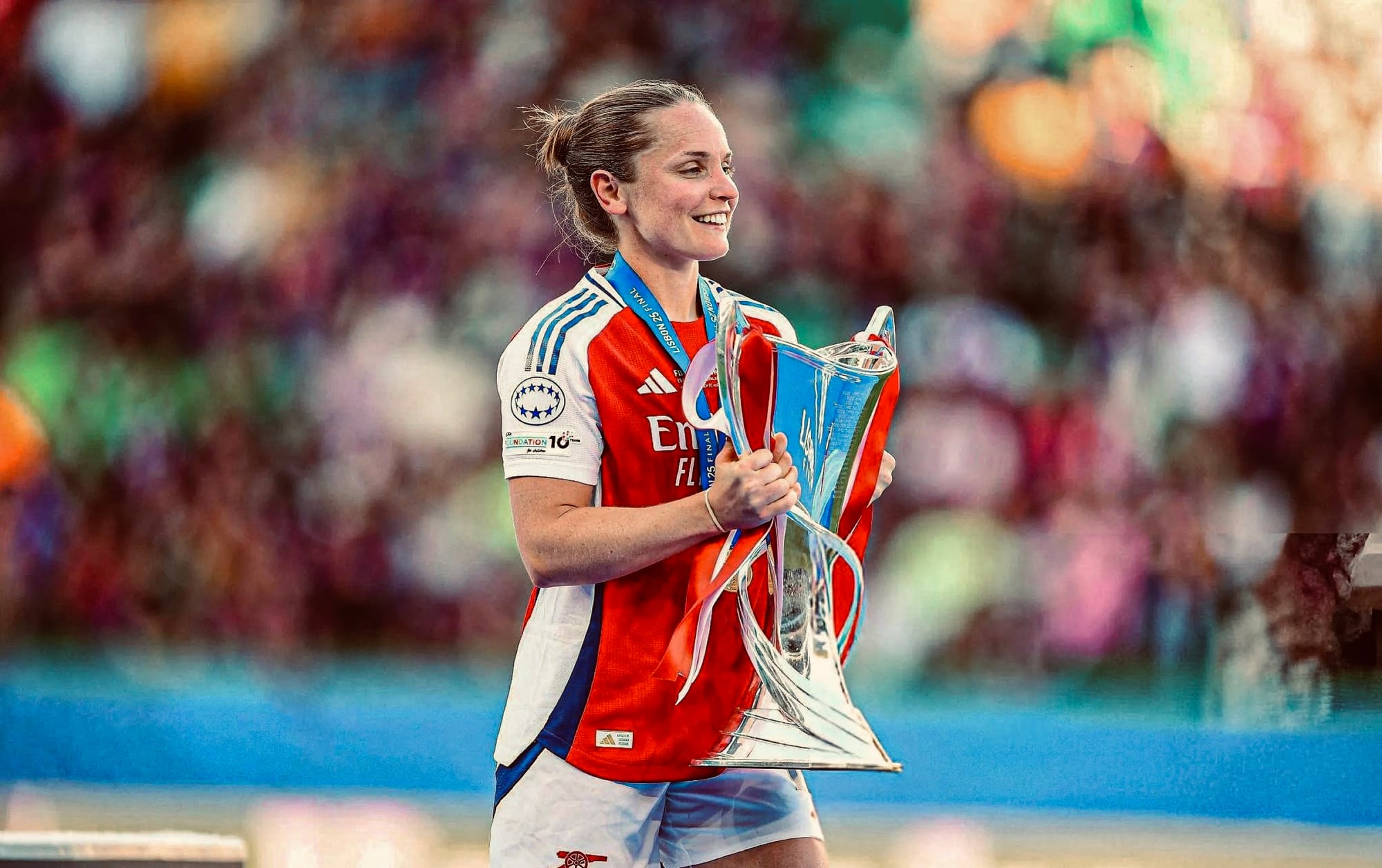
The final, played in Lisbon on 24 May 2025, was expected to be one-sided. Instead, Renée sent her team out to press and challenge Barcelona rather than sit back and survive, with Kim and Mariona playing through the centre together to stop Barcelona's midfielders finding space. Arsenal made the best team in Europe look uncomfortable, and in the 74th minute, substitute Stina Blackstenius scored the only goal of the game. Kim kept running until the final whistle.
Arsenal had beaten Barcelona. They were champions of Europe. Kim and Leah collapsed to the ground together — for a few seconds, no captain maintaining order and no midfielder calculating the next pass, just two people lying on the grass trying to understand what they'd done.
Seventeen years across two spells at the club. An ACL rupture, a broken leg, foot surgery, a season-ending hamstring injury, a broken finger only months earlier. League titles, FA Cups, League Cups, the best player in America, a dominant season in Australia. But this was the trophy that completed everything. When the time came to collect it, Leah suggested Kim should lift it alone — and Kim became cross with her. The idea that 17 years of her career should end with a photo that made it look like hers alone missed almost everything about who she is. So they lifted it together, teammates gathered behind them, and Arsenal became the first English club to win the Women's Champions League for a second time.
Kim later called it the pinnacle of her career. A pinnacle is the highest point, but it only exists because of everything underneath it — Mintlaw, Buchan Girls, Hibernian, the Tesco checkout, Arsenal at 17, Seattle, Melbourne, Scotland, the freezing garage, the injuries, the finals lost and the title missed by a single point. Every part of that journey was underneath Kim when she lifted the trophy in Lisbon. And if you thought winning the Champions League might finally persuade her the work was complete, you probably hadn't been paying attention.
Four hundred Arsenal appearances, another trophy and no farewell yet
Winning the Champions League didn't turn the following season into a victory lap. Arsenal began 2025-26 as European champions, and while the season didn't bring another WSL title and the Champions League defence eventually ended in the semi-finals against Lyon, Kim kept proving her importance hadn't disappeared with age.
In January 2026, at 35, she was named WSL Player of the Month — nearly 18 years after her first Arsenal appearance. She also scored in consecutive FA Cup rounds, meaning she'd now scored for Arsenal in 15 different seasons. In February, Arsenal won the first-ever FIFA Women's Champions Cup, beating Brazilian champions Corinthians 3-2 in extra time at the Emirates. Kim neither scored nor assisted the winner, and was still named Player of the Match — a reminder that her influence usually lives in everything surrounding the obvious moments.
Ten days later, coming off the bench in a 4-0 Champions League win away to OH Leuven, she made her 400th Arsenal appearance — appearances built across two separate spells, divided by years in America and Australia, through league titles, serious injuries, painful defeats and remarkable comebacks. She called it incredibly special. A month later, Arsenal extended her contract again, to the summer of 2027; by then she'd scored 177 goals in 405 appearances, and Renée Slegers said she felt privileged to work with her. Kim was staying because she could still help the team now, not because of what she'd done ten years earlier.
The Champions League defence ended painfully soon after, going out 4-3 on aggregate to Lyon. Kim's role kept evolving as Mariona Caldentey and Frida Maanum shared midfield duties, and she didn't need to start every match to matter — coming on against Crystal Palace and making her 182nd WSL appearance, surpassing Katie McCabe to become Arsenal's all-time WSL appearance record holder.
There's something neat in that. Kim played in the WSL's first season in 2011, scoring as Arsenal became the league's first champions and earning the league's first Players' Player of the Year award. More than 15 years later, she holds the club's appearance record in the same competition — having watched the WSL grow from small grounds and limited coverage into packed stadiums and international television deals, and Arsenal change managers, training grounds, teammates and generations around her. She is still training, still competing for minutes, and still being trusted to help Arsenal win matches. To understand why, we need to look beyond the appearances and medals to the person who's remained through it all.
The person behind the number ten
There's a danger when we talk about somebody like Kim Little that we turn her into a collection of qualities rather than a person. Professional. Intelligent. Humble. Quiet. All true, but very tidy — they don't tell us what she finds funny, what makes her uncomfortable, or what happens inside her head when the football stops.
For most of her career, Kim's kept much of that private. There's no carefully produced performance from Kim Little, the Arsenal captain — what we see is usually what she feels is necessary for the job, and little more. But in March 2026, she wrote something that let us understand her differently.
She explained that she's always needed time by herself. Even at Arsenal's training ground, surrounded by teammates and staff, she'll look for small pockets of time during the day to step away from the noise — after breakfast, she might go cycling alone. It isn't about hiding from anybody. It's how she allows herself to breathe. Her teammates have learnt to recognise when her social battery has run out, too. She remembered going to the cinema with Steph Catley and Beth Mead, and when one of them suggested continuing the evening back at their house, Kim's response was basically, "No, I'm going home now." Which may be the most relatable thing she's ever done. She admitted that even after leaving, she'd still wonder whether she'd made the moment awkward — in a larger group, she sometimes avoids the whole problem by quietly disappearing without announcing it.
That small story reveals more than another description of her being reserved. Kim needs solitude, but she's also deeply aware of how her actions affect others, and she'll replay a conversation afterwards, wondering if she could've handled it better. She applies the same process to football — writing training plans, keeping notes, understanding why something worked or adjusting when it didn't. That near-constant process of watching, questioning, and correcting is part of how a girl practising in a freezing garage in Mintlaw became one of the finest midfielders of her generation.
It also explains the kind of captain she became. Kim's said she tries to observe the different personalities within the squad — a teenager entering first-team training doesn't need the same thing as an experienced international who's played a hundred matches. Some players respond to a direct challenge, others need reassurance; some want advice immediately, others need time before they're ready to hear it. Her leadership begins with noticing the difference, which is far more demanding than giving the same speech to everybody. She's spoken about feeling a responsibility towards players like Kyra Cooney-Cross and Victoria Pelova, even though they're competing with her for a place in midfield — she still competes fiercely in training and has no intention of stepping aside, but helping them improve is part of serving Arsenal properly, and she wants the standards she's helped establish to survive beyond her own career.
There's another part of Kim's story that's more difficult to discuss, but leaving it out would give an incomplete version of who she chose to show us. Kim revealed that there have been two significant periods during her career when she experienced depression and took antidepressants — times when getting out of bed felt difficult and playing football felt almost impossible. We don't know exactly when, and we shouldn't try to guess; she chose to share the experience, not every private detail around it. What matters is that the player we watched perform at the highest level wasn't always experiencing life the way her performances suggested. From the outside, her career can look remarkably smooth — she rarely creates drama, and even serious injuries seem met with a calm plan for returning. But calmness on the outside isn't proof that somebody is fine.
Kim continued training and playing partly because she felt responsible to the people around her — that doesn't mean work cured her depression, or that anybody struggling should force themselves through it, but the team gave her something to hold onto through periods she still finds difficult to explain. The experience changed how she sees other people: she said she can now sense when somebody within the group isn't quite herself, describing it as noticing when a person's frequency changes. The player may still be arriving on time, still training and laughing, but something about her has shifted — and Kim understands she may not know what's wrong or be able to fix it. Leadership in that moment isn't charging in with an answer. Sometimes it's just allowing the person to know she's been seen.
That makes the word resilience feel less simple. We've used it about Kim's ACL injury and her broken leg, but physical recoveries always offered a clearer route through them — the injury could be examined, rehabilitation planned, progress measured. Mental health doesn't always offer that certainty. By speaking about it, Kim didn't make herself less strong; she let us understand that strength can exist alongside struggle, and that the people who seem most composed may still need help. For any younger person listening who recognises something of herself in that, the lesson isn't to hide it as successfully as Kim once did — it's that struggling doesn't make you weak, and you shouldn't have to carry it alone.
That idea of not being alone sits at the centre of how Kim now understands her career. A few weeks after Arsenal won the Champions League, she was in Sorrento for her auntie's 60th birthday, sitting with her family in a small restaurant, when the conversation turned to the final in Lisbon. Her sister mentioned how much her flight had cost. Kim hadn't known. She looked down at her glass and began to cry. It wasn't really about the price of the flight — her sister had three children and a life full of pressures, but had quietly found a way to be there because she understood what that match meant. There was no demand for recognition. She'd just shown up.
That moment forced Kim to stop looking towards the next training session and recognise how many people had travelled through this life with her — her parents, who gave her space and support to practise for hours; her brother and sister; the teammates who became close friends in London, Seattle, Melbourne and Scotland; the coaches who challenged her and the supporters who watched women's football grow from near-empty grounds to a sold-out Emirates. When Kim looks back now, it isn't one goal or trophy that stands out most clearly. It's the people.
That may be the most intimate understanding of Kim Little we're entitled to have. She's private, but she isn't distant — she feels things deeply, thinks constantly and pays far more attention to the people around her than the quietness might suggest. She needs time alone, leaves social occasions when her battery runs out and then worries she's made it awkward. She plans, reflects and corrects. She's lived through periods when just getting up felt difficult, and those experiences have made her more alert to pain in other people. She's fiercely competitive, but secure enough to help the players who'll eventually replace her. Perhaps that's why the description of Kim leading by example, while true, has never felt quite sufficient. She doesn't only show her teammates how to play. She notices them.
What Kim Little means to Arsenal
So how do we bring Kim Little's story to a conclusion when she hasn't finished writing it yet? I don't think we should try. This isn't a farewell — Kim is under contract until 2027, still competing for her place, and already made more history this season. There will be more matches, more decisions made before anybody else has seen the pass, and almost certainly more occasions when she leaves a group event without saying goodbye.
What we can do is return to the question we began with: how did the quiet girl from Mintlaw become the person everybody at Arsenal looks towards? Perhaps the answer is that she didn't have to become somebody else first. Kim didn't transform herself into the loudest person in the dressing room, or decide the captain's armband required a dramatic speech before every match. She learnt how to lead as herself — trained properly, prepared carefully, made sure her own standards were high enough before asking anything of another player. Then she paid attention. She noticed what the game needed, and what people needed.
That isn't the leadership we typically celebrate, since it doesn't generate many social media clips. But inside a team, those moments build trust. When a young player arrives at Arsenal and sees Kim completing every exercise with the same care, the message is obvious. When a teammate is struggling, and Kim notices before she's said anything, that matters too. And when Arsenal are under pressure in front of thousands of people, the players know they can give Kim the ball — perhaps the greatest expression of trust a footballer can receive.
We've followed her from the garden and freezing garage in Mintlaw to Hibernian, Arsenal, Seattle and Melbourne. We've seen her win titles on three continents, become the best player in America, and represent Scotland 140 times. We've watched her recover from an ACL injury, a broken leg and other setbacks that interrupted a career that can look almost effortless from a distance, and we've seen her experience the pain of missing major tournaments with Scotland, losing a league title by a single point, and falling short in European matches that seemed close enough to touch. Then, finally, we watched her lead Arsenal into Lisbon and lift the Champions League trophy. Since then, she's become the first captain to lift the FIFA Women's Champions Cup, surpassed 400 appearances for Arsenal, and become the club's WSL appearance record holder.
It's a remarkable career. But the numbers aren't the reason I chose Kim for the 50th episode of Trailblazers. I chose her because if this podcast is supposed to look beyond the obvious version of a player's story, there may be no one who embodies that idea better. The obvious version of Kim Little is that she's quiet, technically brilliant and one of Arsenal's greatest players. All true.
But look a little closer, and you find the child who wouldn't come inside for dinner until she'd finished everything on the list in her head. You find the teenager working a Tesco checkout while scoring 88 goals for Hibernian. You find the young woman who left Arsenal at the height of her success, discovering how good she could become somewhere completely unfamiliar. You find somebody who's lived through periods of depression while continuing to perform in public, and who used that experience to become more aware of what other people might be carrying. You find a captain who competes against younger midfielders for her place and still feels responsible for helping them take Arsenal forward. And you find a sister sitting in a restaurant in Sorrento, looking down at a glass of wine and suddenly realising how many people had quietly rearranged their lives to share one extraordinary moment with her.
That feels much closer to the real story. Kim Little's career has never been the work of one person operating in complete isolation — her family, teammates, coaches and supporters have all travelled some part of the distance with her. But she's made every piece of support count. Talent can give somebody an opportunity; it can't create this career on its own. Longevity at this level comes from curiosity, discipline and the willingness to keep adjusting as the game changes around you — accepting that what worked five years ago may not work now, and having the humility to keep learning even when you've already won almost everything. Kim's done that without losing the parts of herself that existed before anybody knew her name. She is still the person who needs order, preparation and the occasional escape from everybody else. She is still chasing the next improvement.
And I think that's what a 12-year-old girl reading this should take from Kim Little's story. You don't have to be the loudest person in the room to be powerful. You don't have to pretend that difficult experiences haven't affected you. You can need time alone and still care deeply about other people. You can help somebody improve without making yourself smaller. You can be ambitious without turning your life into a performance for everybody watching. Most importantly, you don't need to copy another person's version of leadership.
Kim Little found her own. That quiet girl from Mintlaw didn't disappear on the way to becoming Arsenal captain. She became the foundation everything else was built on.
So when Kim eventually plays her final match, whenever that may be, there'll be time to talk about where she stands among Arsenal's greatest players. For now, I'd rather appreciate the fact that she's still here. Still learning. Still noticing. Still demanding more from herself and still giving Arsenal somewhere safe to place the ball. Four hundred appearances, 182 in the WSL, and a career filled with trophies, records and moments we'll be talking about for years. Yet somehow, the clearest way to understand Kim Little remains the simplest: when Arsenal need her, she shows up. And perhaps that's why everybody else keeps showing up for her.
You hear the spoken version of this article on the Arsenal Women: Trailblazers podcast.