
Arsenal Women 0-0 Crystal Palace: How Did Arsenal Not Win?
Arsenal Women had 30 shots, 79 per cent possession and hit the crossbar twice, but Crystal Palace still left the Emirates with a point. After watching the match again, the result felt familiar but the performance told a more encouraging story.

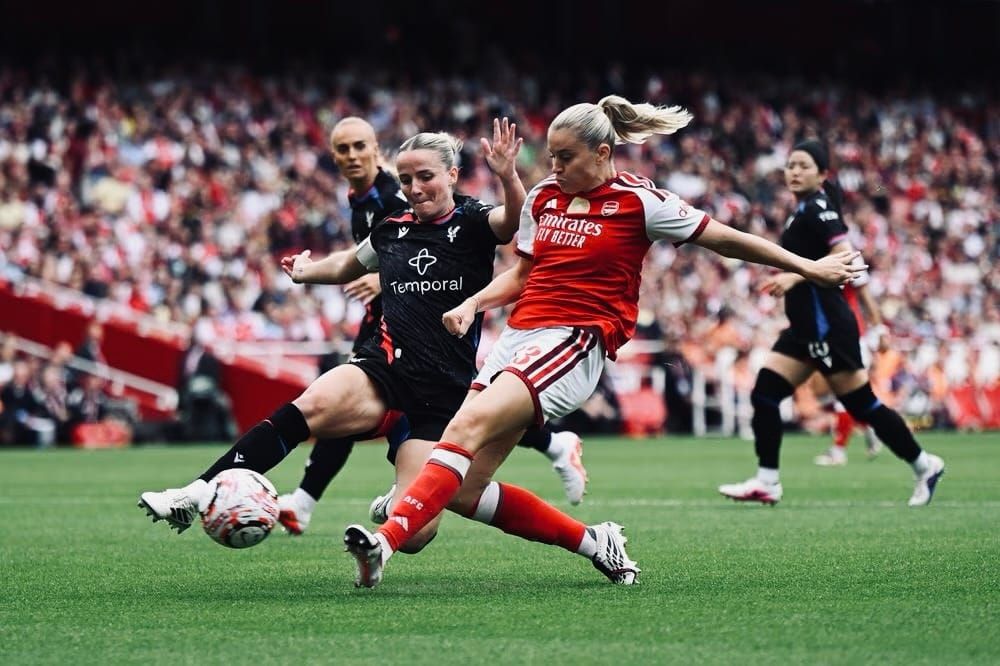
Arsenal drew six league matches last season, and too many followed a similar pattern. We controlled the ball, spent long periods around the opposition penalty area and finished wondering how so much possession had produced so little on the scoreboard. Those dropped points helped take us out of the title race.
After watching this match again and studying the key moments, I don’t think the picture is quite as bleak as it felt when we left the stadium.
The teams and Renée's changes
Renée made three changes from the team that started the 1-0 win at Brighton. Lotte Wubben-Moy replaced Steph Catley in central defence, Kyra Cooney-Cross came in for Kim Little and Chloe Kelly replaced Olivia Smith.
That gave us Misa Rodríguez in goal, with Emily Fox, Leah Williamson, Lotte and Ona Batlle across the defence. Georgia Stanway and Kyra began in midfield, Mariona Caldentey played ahead of them, and Lisa Baum and Chloe supported Alessia Russo.
Lotte gave Arsenal another natural centre-back alongside Leah and added height against Palace’s set pieces. With Kyra sharing the responsibility of collecting the ball from defence, Georgia had more freedom to carry it forward and run towards the penalty area.
Lisa moved to the right after starting on the left at Brighton, with Chloe taking up her usual position on that side. Chloe could hold the width and deliver crosses, while Lisa was more likely to move inside and combine with the midfielders. Mariona drifted between them, coming deep to help Kyra and Georgia before appearing around Alessia whenever Arsenal established an attack.
I thought the selection made sense. It had passing ability, movement around the striker and two different threats from the wings.
Ann-Katrin Borbe, Élisa de Almeida, Steph Catley, Smilla Holmberg, Kim Little, Olivia Smith, Frida Maanum, Caitlin Foord and Stina Blackstenius formed a very strong bench. It was Élisa’s first competitive Arsenal squad, while Géraldine Reuteler, Selina Cerci and Taylor Hinds were left out again.
We still haven’t been given a clear explanation for those omissions, so there’s no point inventing one. But Reuteler and Cerci were signed to offer something different, and their absence would have drawn attention if Arsenal reached the second half without a goal.
Jo Potter made only one change to the Palace team that had beaten Everton. Bethany England missed out with what was reported to be a minor knock, so Abbie Larkin started alongside Lexi Lloyd-Smith.
Pauline Peyraud-Magnin was in goal behind Jamie-Lee Napier, captain Aimee Everett, Molly Bartrip and Teyah Goldie. Annabel Blanchard, Shanade Hopcroft, Fuka Tsunoda and Shannon O’Brien completed the midfield.
Peyraud-Magnin and Goldie were both facing their former club, but the most important feature of Palace’s selection was its familiarity. Ten of the players who had beaten Everton started again. Without the ball, they settled into two close lines of four, kept Larkin and Lloyd-Smith slightly further forward and left Arsenal almost no space through the middle.
It took Arsenal less than two minutes to test them.
Arsenal start quickly, but Palace close every door
Chloe held the width on the left, and Mariona collected the ball in midfield. She played it back to Kyra, Kyra moved it across to Georgia and Stanway drove towards the Palace defence.
Georgia passed through the defenders to find Alessia, who got ahead of her marker, turned and shot towards the near post. Peyraud-Magnin reacted brilliantly and pushed it away.
It was an encouraging start, but the replay showed what Arsenal were facing. Palace had three defenders inside the six-yard box, another three immediately outside it and two players closing around Alessia.
They didn’t merely defend close to their goal. They defended the spaces between Arsenal’s players. Whenever we formed a triangle or diamond around the ball, Palace placed players inside it. A pass might reach its target, but the receiver rarely had time to turn before another defender arrived.
Four minutes later, Arsenal came within inches of scoring.
Lisa played inside to Kyra, who smartly let the ball run through to Georgia. Stanway carried it towards the penalty area and found Ona coming inside from the left. Ona slipped it into Chloe, and her deflected cross looped back towards Mariona.
With the Palace defenders occupied by Alessia and Lisa, Mariona controlled the dropping ball and sent a gorgeous half-volley beyond Peyraud-Magnin. The goalkeeper was beaten, but the ball struck the underside of the crossbar and bounced away.
Arsenal had already found two different routes through Palace. The first came from Georgia passing into Alessia. The second moved Palace across the pitch before finding the player they hadn’t managed to cover.
Kyra and Mariona then combined to release Emily Fox into the box, but Peyraud-Magnin read the danger and came quickly from her goal to smother the ball.
Emily was involved again soon afterwards. Kyra found her coming inside from the right, and Fox lifted a good pass towards Georgia’s run into the area. Two defenders prevented Stanway from making proper contact with the header, but Mariona reacted to the loose ball and headed it back towards Alessia.
Russo shot with the goalkeeper no longer properly set, yet Palace recovered with remarkable speed. Three defenders rushed into the space, and Molly Bartrip cleared from the goal line.
The move had contained nearly everything we wanted. Kyra switched the play, Emily recognised the run and Arsenal kept the attack alive before finding Alessia in front of goal. Palace simply defended the final moment exceptionally well.
Arsenal also recognised when the crowded penalty area made shooting from further out the right choice.
After Mariona crossed towards Alessia and Lisa, Georgia collected the loose ball and found Ona outside the box. Ona sent her shot narrowly over. It wasn’t a desperate effort. Palace had blocked the routes ahead, and she had a clear sight of goal.
Palace offered very little at the other end, although a free-kick was flicked towards Teyah Goldie and she headed it over under pressure from Lotte. It was their best chance of the half and a reminder that one poorly defended set piece could still change the match.
Then, in the 36th minute, came the chance Alessia will still be wondering how she missed.
Georgia collected the ball deep and passed through a group of Palace players to find Mariona near the centre circle. Ona received the lay-off and moved it to Lisa on the left.
As Lisa looked towards the area, two defenders were already moving towards Alessia. Bartrip checked across to see where Chloe was on the far side, and once she realised Chloe was behind the attack, she moved across to help close the space around Russo.
Lisa still drove an excellent low cross beyond the final defender, and suddenly Alessia was through in front of goal.
Everybody around me began to stand because when that ball reaches Lessi, you expect her to score. She still had to meet the cross at speed, but it was exactly the kind of chance we’ve seen her finish many times.
This time, she sent it wide.
Arsenal had played through Palace, gone around them and created chances from both sides. Mariona had struck the crossbar, Bartrip had cleared from the line, and Russo had missed the best opportunity of the half.
Palace deserved enormous credit, but Arsenal didn’t need a completely new plan at half-time. They needed to keep creating those moments and trust that the next one would go in.
Baum hits the bar before Renée turns to the bench
Renée made no changes at half-time and that was understandable. Arsenal had created enough to be ahead. The question was whether they could maintain the speed while improving the final pass or finish.
Georgia found Lisa on the right and Baum cut inside Goldie before forcing Peyraud-Magnin to push her shot behind. A few minutes later, Georgia picked out Mariona with a longer pass. Mariona moved beyond Bartrip and shot just wide.
Then, in the 57th minute, Lisa came within the width of the crossbar of producing another wonderful goal.
Mariona played to Georgia outside the area and Stanway moved it first time into Alessia. With two defenders closing around her, Russo protected the ball and released Lisa on the right.
Lisa shaped one way, wrong-footed Goldie and moved the ball onto her right foot before driving it across goal. Peyraud-Magnin was beaten, but the shot crashed against the crossbar.
It came from a similar angle to Lisa’s winner at Brighton, although this time she attacked from the opposite side and used her right foot. Defenders can’t simply show her one way and assume the danger has gone.
Three minutes later, Olivia Smith replaced Chloe and Stina Blackstenius came on for Kyra.
Mariona moved deeper alongside Georgia, Stina became the central striker, and Alessia dropped into the spaces around her. Palace had spent an hour surrounding Russo, so adding Stina gave the defenders another striker to occupy and let Lessi receive the ball further from the crowded area. Olivia offered a more direct runner from the left.
The changes didn’t transform the pattern, but Arsenal created another good chance. Emily and Mariona combined on the right before finding Lisa inside. Despite two defenders closing her down, Baum threaded a lovely pass beyond Palace captain Aimee Everett and into Stina’s path.
Stina reached it near the six-yard box, but Peyraud-Magnin was out quickly and smothered the first-time shot.
Lisa then had an effort blocked before Alessia shot straight at the goalkeeper.
Palace finally produced their first effort on target when Arsenal lost the ball and Abbie Larkin shot from distance, but Misa collected it comfortably. It was only Palace’s second attempt of the entire match, which tells us how well Leah, Lotte and the players ahead of them controlled the threat of a counterattack.
Georgia next tested Peyraud-Magnin from outside the area. Ona beat the first defender and found Stanway with Palace once again blocking every pass ahead of her, so Georgia took the available shot and forced a low save.
With 15 minutes remaining, Kim Little replaced Mariona and Caitlin Foord came on for Lisa.
Lisa had probably been Arsenal’s most dangerous attacker and purely in terms of the match, I would’ve liked her to stay on. She’s also 19, had started both opening league games and had put an enormous amount into this one, so the decision to use Caitlin’s experience wasn’t unreasonable.
Foord moved to the left, and Olivia switched to the right. Caitlin tried to carry the ball at Palace, but had little time or space to settle into a match with such an established pattern. One misplaced pass did put Leah under pressure and threatened to release Shannon O’Brien, although Lotte read the danger and made an important tackle.
It wasn’t an influential cameo from Caitlin, but 15 minutes against a defence playing this well isn’t enough for a sweeping judgement about her season.
Kim brought her usual calmness, although Palace had dropped even closer to their own area by then. Frida Maanum replaced Alessia for the final five minutes and helped create one last opening when the ball reached Olivia, whose effort went narrowly wide. Smith later sent a free-kick over the bar.
Only two minutes were added, and Palace celebrated the final whistle as though they had won.
Renée had changed the shape, added another striker, introduced pace on both wings and eventually replaced the entire starting attack.
The goal still didn’t come.
What the numbers tell us, and what they don’t
So, what actually went wrong?
Arsenal had 79 per cent possession, took 30 shots and put nine on target. Twenty came from inside the penalty area, nine were blocked and Arsenal recorded 74 touches in the box.
The expected-goals calculation, which estimates how likely a team would normally be to score from the chances it creates, placed Arsenal at around 2.4. It doesn’t mean Arsenal were owed two or three goals, but it confirms that these weren’t 30 hopeless shots from ridiculous distances.
The problem wasn’t a complete absence of ideas. Arsenal attacked through the middle, delivered from wide areas and shot from outside when Palace blocked the closer routes. They used one striker and then two, while the full-backs and wide players moved into different positions.
Renée felt the number and variety of chances represented a big step forward from Brighton. Having watched it again, I agree.
There is still plenty to improve in the final pass, touch and finish. Arsenal also attempted 40 crosses and won 13 corners. Not all of the crosses were hopeful, because several created our best opportunities, but as the match went on too many attacks ended with a delivery into the area Palace were best prepared to defend.
We didn’t consistently get around the outside and deliver from closer to the goal line. Too often, the defender stayed in front of the crossing player and could face the ball as it arrived. Thirteen corners should also produce more danger.
The other set of numbers belongs to Palace.
They made 73 clearances, attempted 27 tackles, and won more individual battles. Those figures describe a team that defended for almost the entire afternoon without losing its concentration.
Aimee Everett organised the line, Bartrip constantly checked when she could leave one Arsenal player to help with another, and Goldie stayed close to Lisa whenever possible. When Arsenal got through them, Peyraud-Magnin made eight saves and was quick from her line.
Jo Potter was entitled to be enormously proud. Palace offered almost nothing in attack, but their discipline earned them the point.
Lotte Wubben-Moy said afterwards that Arsenal couldn’t claim they hadn’t shot enough. The opportunities were there, and the team simply needed to become more clinical.
That is the uncomfortable part. Arsenal have scored once from chances worth roughly four goals across the first two league matches. It’s too small a sample to declare that nothing has changed, but supporters are right to recognise a similarity to last season.
The resemblance is real. It just isn’t proof that the season will end in the same way.
Who stood out?
Lisa Baum was Arsenal’s most dangerous attacker.
She’s 19, has started two competitive matches and already plays as though she expects to belong. Against Brighton she scored from the left with her left foot. Against Palace she threatened from both wings, hit the bar with her right, created Alessia’s clearest chance and played Stina through.
There were moments when Goldie contained her, but Lisa kept asking questions and Palace never became comfortable against her.
Georgia Stanway was another major positive. She could collect the ball near the defenders, but rarely settled for passing sideways. When space appeared, she carried it forward, played through Palace or ran towards the box.
Renée described her as an intelligent and instinctive player who understands what she can bring. She already looks comfortable taking responsibility.
Kyra had a quieter afternoon, but helped Arsenal move the ball through midfield and gave Georgia freedom to advance. Her dummy in the move for Mariona’s shot was a small but intelligent decision that removed a touch and gave Palace less time to recover.
When Kyra went off, Arsenal gained Stina in the area but lost a player helping them progress the ball. It wasn’t necessarily the wrong substitution, but it changed the balance.
Mariona had been one of Arsenal’s most influential players until moving deeper. She linked midfield and attack, found pockets around Alessia and often knew her next pass before receiving the ball. Once Kyra left, Mariona helped Georgia in midfield but was naturally less involved close to goal.
Chloe had a more difficult afternoon. She contributed to Mariona’s effort against the bar and maintained Arsenal’s width, but Palace prevented her from receiving the ball with room to build speed. Replacing her with Olivia after an hour was a sensible attempt to introduce a more direct runner.
Alessia will feel the result most personally. Her miss was completely out of character, but her performance shouldn’t be reduced to that moment. She spent most of the match surrounded, yet still protected the ball, linked with teammates and created Lisa’s shot against the bar.
Strikers are judged by goals and she’ll know she should have scored. The encouraging part is that Arsenal continued finding her. Lessi won’t hide from the next opportunity.
Emily and Ona both moved inside to give Arsenal an extra player around midfield. Renée later explained that Arsenal wanted to draw Palace towards the centre and create room out wide. Ona helped create Mariona’s effort and nearly scored herself, while Emily’s movement and delivery caused problems from the right.
I would’ve liked both full-backs to go around the outside more often later in the match, but their positions were part of Arsenal’s attempt to be less predictable.
Leah and Lotte had little traditional defending to do, yet remained alert while Arsenal committed players forward. Lotte’s late tackle on O’Brien was particularly important.
Misa made one comfortable save and kept her second clean sheet in two league appearances. Arsenal have allowed Brighton and Palace very few opportunities. That defensive control gives us a strong foundation.
Now the attack has to reward it.
Around the WSL
Before deciding what Arsenal’s draw means, it’s worth looking briefly at the rest of the weekend.
Manchester City are the only team with a perfect record after beating Aston Villa 4-1. Jade Rose, Mary Fowler and Khadija Shaw scored before a late deflection from Lauren Hemp’s effort completed the result.
Chelsea responded to their opening draw by beating Manchester United 5-0. That is particularly relevant because United face Arsenal next. They have lost both matches and conceded seven goals, so they’ll arrive needing a response.
Liverpool and Tottenham drew 1-1, Everton beat a nine-player Charlton 1-0, and Birmingham surrendered a two-goal lead as Kiko Seike’s stoppage-time equaliser earned Brighton a 2-2 draw. West Ham beat London City Lionesses 2-1.
City lead with six points. Chelsea, Liverpool, Tottenham, Arsenal and Palace all have four, with Arsenal fifth on goal difference.
It’s far too early for the table to tell us much, but a win would have put Arsenal level with City and ahead of Chelsea. Instead, we’re already two points behind the champions.
So how worried should we be?
A warning, not a crisis!
The concern is understandable.
Four points from the opening two matches, with only one goal scored and points already dropped at home, isn’t the start Arsenal wanted. In a title race against City and Chelsea, there won’t be much room for error.
But familiar doesn’t necessarily mean identical.
Against Palace, Arsenal didn’t create one half-chance before spending the rest of the afternoon passing around the box. They produced several opportunities that good players normally finish and forced an excellent goalkeeper to make eight saves.
Creating very little would require a much bigger solution. It might suggest the shape was wrong, the midfield couldn’t find the forwards, or the attackers weren’t making the right movements.
Missing good chances is still a problem, but it’s one these players have proved they can correct. Alessia won’t miss that opportunity every week. Mariona and Lisa won’t hit the crossbar every time they beat the goalkeeper and Stina has built an Arsenal career on scoring important goals from the sort of position she reached here.
Renée’s balance after the match felt right. Arsenal should reinforce the movement and variety that worked, while being critical of the final decisions and finishes.
If they panic and change everything, they risk losing the good parts. If they dismiss this as bad luck, they risk allowing a familiar weakness to settle into the season.
Palace deserve their proper share of the story too. They have taken four points from Everton and Arsenal without conceding. Jo Potter said nobody expected them to produce this result, while Aimee Everett’s description was simpler: everyone did their job.
That was exactly what it looked like.
For Arsenal, the positives extend beyond the chances. We’ve kept two clean sheets, Misa has settled quickly, and the defence looks secure. Georgia already appears at home in midfield, Ona offers new movement from full-back, and Lisa has been our most dangerous attacker across the opening two matches.
For me, this result is a warning, not a crisis.
Arsenal can’t continue needing 20 or 30 attempts to score because the title race will punish them. But most of the difficult work was done here. They controlled the match, protected themselves against the counterattack and created enough to win.
Yesterday, that left us all feeling deflated. Having watched it again, I can see more positives than I recognised from my seat at the Emirates.
Now Arsenal have to make them count.
You can hear the full in-depth analysis on The Arsenal Women: Trailblazers podcast.