Arsenal Women vs Benfica Preview: Team News, Predicted XI and Growing Questions Over Renée Slegers
Arsenal Women face Benfica in the Champions League after their North London Derby win. Amid injuries and questions over Renée Slegers' squad management, we preview the game and discuss why Arsenal's handling of talent could have long-term consequences.

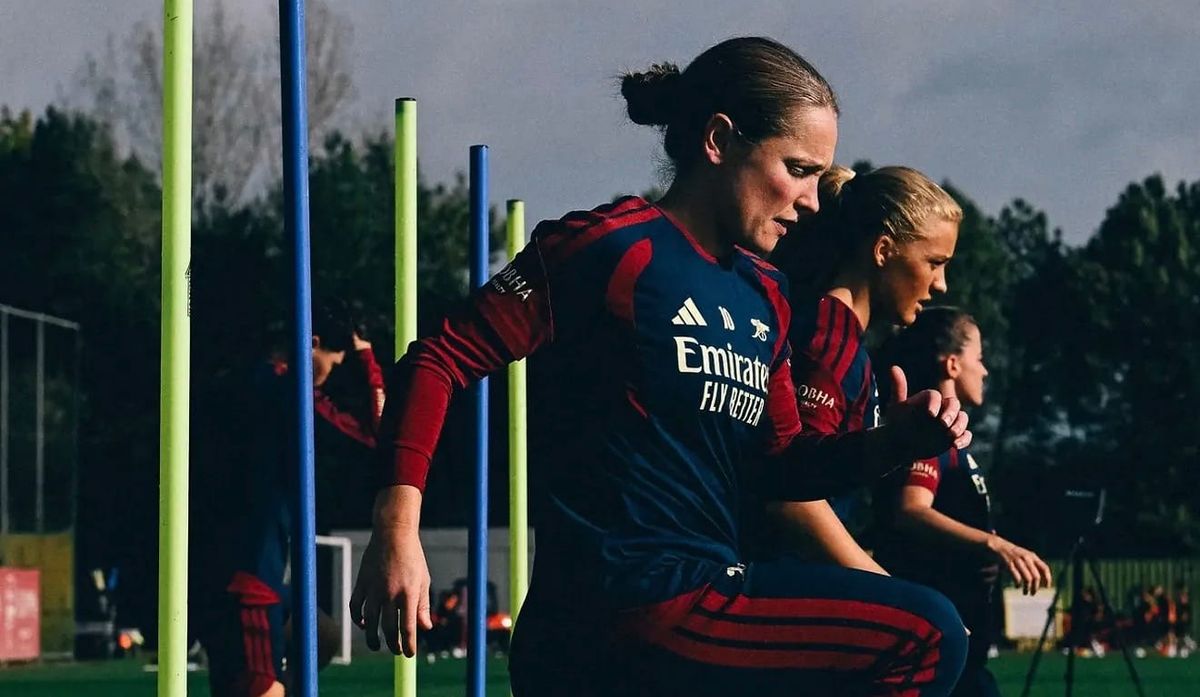
Benfica are in town for our next Women’s Champions League game, and this is a chance for Arsenal to do something we haven’t managed very well this season.
Build on a positive result.
Because the difficulty hasn’t been finding moments when Arsenal look like a very good team; we’ve seen plenty of those. The challenge has been putting together 90 minutes of convincing football and then doing it again in the next game.
That’s what I’m looking for against Benfica.
We’ll take a proper look at the opposition, what to expect from them, and how I’d approach the game. We’ll also go through the latest Arsenal Women news, our injury situation and what that means for today’s team selection.
And there’s a question about Renée Slegers that I’m really struggling to ignore.
Now, I’ve been really supportive of Renée. I was delighted when she got the job permanently, and I don’t believe managers should be judged on a handful of disappointing results.
But my concerns are no longer limited to on-pitch performance.
I’m looking at how we’re using the squad, how we’re integrating the players we’ve recruited, and whether Renée is making the most of the extraordinary talent available to her.
And inevitably, that brings us back to Géraldine Reuteler.
I know we’ve spoken about Géraldine quite a bit recently, but with the 2027 World Cup approaching, her lack of playing time is becoming a much bigger issue than whether she starts the next game.
We’ll get into that properly, because I have some serious concerns about how this situation is being managed.
But first, there’s a Champions League game to prepare for, and I want to give Benfica the attention they deserve.
What challenge does Arsenal face on Wednesday night, and what do we need to do differently to make sure Saturday’s victory wasn’t just a one-off?
Benfica: A Game Arsenal Should Win, But Cannot Afford To Take Lightly
So, what do we know about Benfica?
They are the reigning Portuguese champions, regulars in European competition, and they’ve made a reasonably encouraging start to this season’s Champions League.
They opened with a 2-1 away win over Juventus, a very good result by anyone’s standards, before losing 3-0 at home to Bayern Munich.
Now, that Bayern result looks fairly comfortable on paper, but there’s a little more to it. Benfica kept them out for almost 75 minutes before Bayern finally broke through.
And that gets my Spider Sense tingling because we’ve seen Arsenal struggle against teams that defend patiently, stay organised, and make us work for every chance.
Benfica aren’t coming to Meadow Park expecting to dominate possession. They know Arsenal have the stronger squad, the home advantage, and they know we’re the favourites.
But they’ll also have watched our recent games.
They’ll have seen how difficult we found it to break down Birmingham City and HB Køge. They’ll have seen us surrender a two-goal lead against Paris FC. And they’ll definitely have noticed that we are vulnerable when opponents move the ball forward quickly.
So I wouldn’t be at all surprised if Benfica approach this game with a fairly straightforward plan. Stay compact, frustrate Arsenal, take advantage of any mistakes, and see if the pressure starts to get to us.
If they can keep the score at 0-0 for an hour, the game becomes very different.
But here’s why I believe Arsenal should win.
Benfica have struggled defensively in European competition. They’ve gone ten Champions League games without keeping a clean sheet, and although they beat Juventus, they’ve won only one of their last nine European games.
Those aren’t the stats of a team we should fear.
Respectful of, absolutely. Frightened of, no.
One player in this Benfica squad deserves particular attention.
Marit Bratberg Lund.
The Norwegian scored both goals in that victory over Juventus, and Arsenal will need to be aware of her, especially when Benfica get chances to deliver the ball into dangerous areas.
They also come into this game with domestic confidence, having won their last three league fixtures by an aggregate score of fourteen goals to one.
So this isn’t a side arriving in London completely out of form.
But there’s another statistic I want to mention.
Arsenal have won their last six home games in the Women’s Champions League.
And if you look at our European performances over the last couple of seasons, we’ve been much more convincing at home than some of our recent league results might suggest.
That’s encouraging.
The problem, of course, is that history doesn’t win you football games, and we’re now approaching a particularly difficult part of the Champions League schedule.
After Benfica, we face Barcelona away, Lyon at home, and Inter Milan away.
We’ve picked up four points from our opening two games, and Benfica have three.
With the top four in the league phase qualifying directly for the quarter-finals, and the teams finishing fifth through twelfth going into the knockout play-offs, every point matters.
So for me, Wednesday is a game Arsenal really need to win.
Not because Benfica are poor opposition, but because of what comes afterwards.
You don’t want to be travelling to Barcelona knowing you’ve already dropped points in games where you were expected to take three.
And there’s something else.
I’d like Arsenal to win this game convincingly.
Not necessarily by four or five goals, but I want to see us control the game, create good chances, and make Benfica worry about what we’ll do next.
I’d like to see us score from open play without needing twenty attempts, and if we take the lead, I’d like us to look fully capable of scoring a second.
Because the difference between Arsenal playing well and Arsenal just having more possession than the opposition has become increasingly apparent this season.
We need to move the ball faster, get players into dangerous positions, and stop giving opponents so much time to organise themselves.
And that brings me to Renée’s team selection.
Saturday gave us some encouraging answers about the defence, but with our injury situation, a European game to manage, and Aston Villa coming up at the weekend, she has some important decisions to make.
So who should start against Benfica, and where would I make changes?
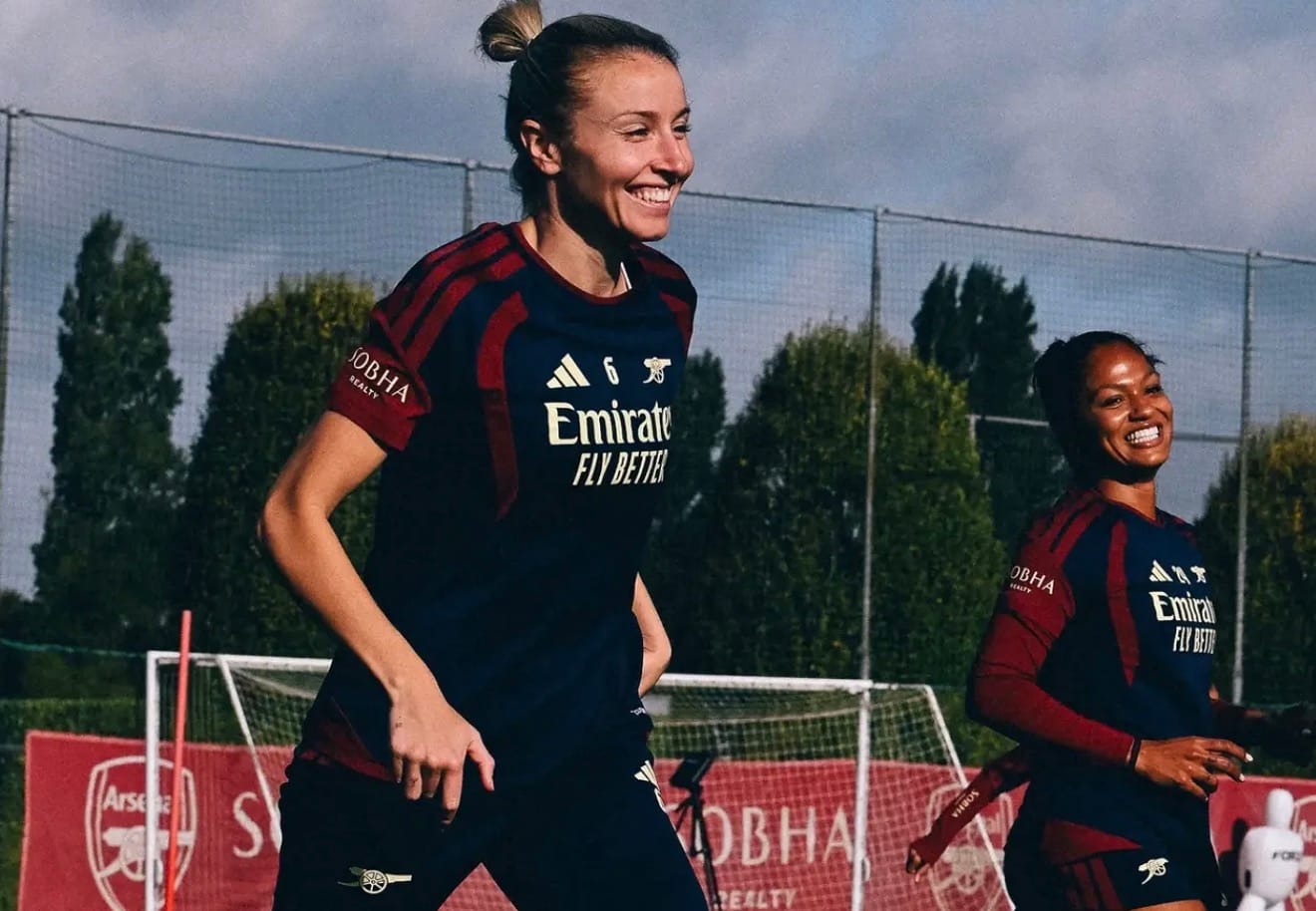
Arsenal's Team Selection: Time To Use The Squad
Now, some of you will disagree with me, because after finally winning a league game, the obvious argument is that Renée should stick with the team that beat Tottenham.
And normally, I might agree.
But we’re playing Benfica on Wednesday and Aston Villa on Sunday, and we’ve got a squad full of international footballers who should be able to compete at this level.
So I’d make a few changes. Not because Saturday’s team got anything wrong, but because I want us to build some momentum without running the same players into the ground.
And I’d start in goal.
I’d give Anneke Borbe the chance to start and let Misa Rodríguez rest.
Misa has had a lot to deal with this season, and I see no reason we shouldn’t trust Borbe in a European game at home.
She’s an experienced goalkeeper, and if we believe in this squad's strength, we need to show that belief by using it.
In defence, I’d largely stick with what worked against Tottenham.
Emily Fox at right-back, Taylor Hinds at left-back, and Steph Catley continuing in central defence. But I’d make one change. I’d start Élisa de Almeida alongside Catley and rest Leah Williamson.
Leah’s return has been hugely important, but we need to manage her minutes. We’ve got a long season ahead, and there’s no point asking her to play every game when Almeida, an international centre-back, needs minutes herself.
And I’d already be thinking ahead to Sunday.
If everything goes according to plan, I’d look to bring Smilla Holmberg on for Emily Fox around the hour mark.
Fox gives us so much on that right-hand side, but we’ve seen how important she is to our defensive balance. I want her available and fresh for Aston Villa, and Holmberg needs minutes too.
Now, the midfield is where things get interesting.
I’d keep Kyra Cooney-Cross in front of the defence.
She’s earned the opportunity to continue in that role, and I think it’s valuable to give Kyra another start to build her confidence and develop those relationships around her.
Kim is back in training and fit enough to be involved, so I’d certainly bring her on for the final half-hour or so.
Then I’d play Georgia Stanway in that more advanced midfield role, and I'd start Géraldine Reuteler alongside her in the number 10 position. I’m not going to turn this into another lengthy discussion about Géraldine just yet, but I will come back to her situation later in the article.
From a footballing perspective, I want to see what happens when we put a player with her movement and intelligence in that space behind our centre-forward. We’ve talked repeatedly about the lack of creativity in certain areas of the pitch, and here's another opportunity to try something different. Give her the responsibility, give her the minutes, and let’s see what she can do, because if she plays well and does what she is capable of, everyone benefits.
And if there are aspects of her game that need improving, at least we’ve got something tangible to work with. We can’t keep having this discussion without giving the player a chance.
Up front, I’d make another change, and some of you will scream, and some of you will be confused, because I've been disappointed lately to see her on a team sheet or coming on as a sub.
Assuming Reuteler finally gets her start, I’d rest Alessia Russo and start Stina Blackstenius.
Alessia’s contribution against Tottenham was vital, but she’s been carrying, as usual lately, a massive amount of responsibility for this team, and with Aston Villa coming up, I’d like her to have a little breathing space.
Besides, Stina is a very good centre-forward. She gives us a different sort of threat with her movement and willingness to run behind defenders.
That could be particularly useful if Benfica defend with a high line, but even if they sit deeper, I want us looking for ways to get the ball into Stina early rather than spending the evening passing sideways around the penalty area. If Reuteler is behind her, I believe she’ll get the service she wants.
On the wings, I’d keep Caitlin Foord but switch her to the right.
She was excellent against Tottenham, with a Player of the Match performance, and we should take advantage of the bounce from starting last weekend.
On the right, I’d probably start Olivia Smith, with Lisa Baum available to come on.
I want to see Olivia running at defenders from a wider position, using her pace and directness to create opportunities rather than spending the whole game battling central defenders. For me, she didn’t work as effectively centrally against Tottenham.
And with Géraldine operating behind Stina, and I get I could be in wishful thinking territory wanting our No 14 in the starting line-up, there should be opportunities for Liv and Gery to combine as well.
That gives you my starting eleven of Borbe in goal; Fox, Almeida, Catley and Hinds across the back; Kyra, Georgia and Géraldine in midfield; and Foord, Stina and Olivia up front.
That’s a strong team. We’ve rested a few players, given others a chance, and we’ve still got Alessia Russo, Lisa Baum, and hopefully Kim Little available off the bench in the second half if we need them.
And I want to make one thing clear. I’m not suggesting we treat Benfica as an easy opponent or use the Champions League as a chance to experiment for its own sake.
Quite the opposite. I believe this team is more than good enough to beat Benfica. But I also believe that unless we start trusting our squad's depth, we’ll find ourselves in a not-so-great position later in the season, with exhausted regular starters and expensive, talented players who’ve barely kicked a ball.
That’s not sustainable.
And that brings me neatly to the latest injury updates, because several players' availability could influence Renée’s decisions on Wednesday.
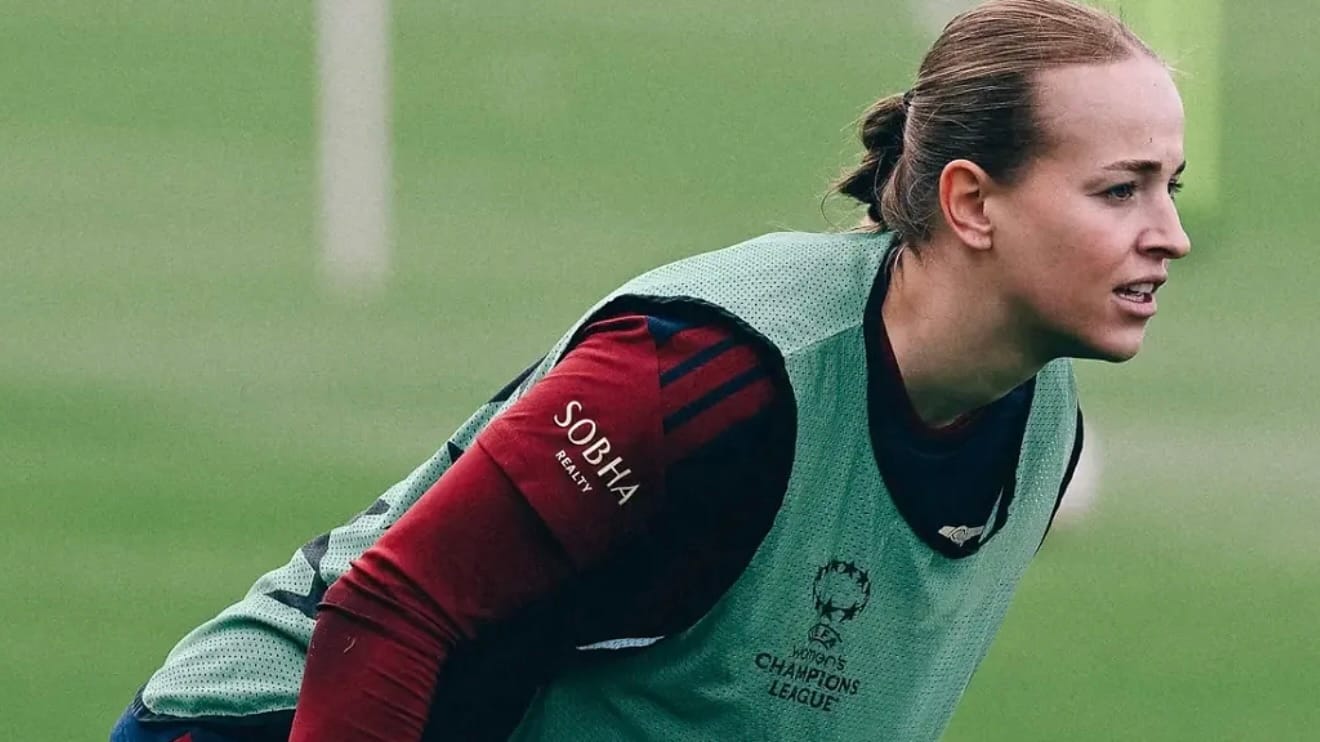
Arsenal Injury News: Some Encouraging Signs, But We're Still Short of Options
Now, let’s look at the injury situation, because we’re still missing several important players, and the news is a bit of a mixed bag.
Mariona Caldentey is still recovering from the hamstring injury she suffered against Manchester City, and Renée previously said we could be without her for eight to ten weeks.
Then there’s Chloe Kelly. Renée confirmed last Friday that Chloe still wasn’t training with the team because of her hamstring injury, although she said her rehabilitation was progressing well.
Selina Cerci is also recovering from knee surgery, while Frida Maanum is dealing with a muscle injury.
That’s a considerable amount of attacking quality unavailable to us, and it’s worth remembering that Cerci arrived at Arsenal with the expectation that she’d strengthen our options up front. Unfortunately, we haven’t really yety had the opportunity to see what she can contribute on a consistent basis.
But there is some more encouraging news.
Katie Reid has been making progress in her recovery!
Renée confirmed last week that Katie was training with the team again and looking good, although she hasn’t confirmed that Katie’s completely ready to return to competitive football.
She may still make the matchday squad, although if I were the manager that’s one situation where I wouldn’t want to be taking any unnecessary risks.
Katie has a very long career ahead of her. Getting her fully fit is much more important than rushing her back for one Champions League game.
Michelle Agyemang is also continuing her rehabilitation, although she’s a lot further away from returning.
We also have Daphne van Domselaar, who was back in the squad at Tottenham but hadn’t yet been cleared to play.
That’ll be something to watch when Wednesday’s team is announced, especially given my suggestion that Anneke Borbe should start.
Now, looking at that injury list, two things concern me.
First, how much creative and attacking quality we’re currently missing. Mariona, Chloe, Frida, and Selina would all offer Renée different options, and their absence inevitably makes her job harder.
I think we have to acknowledge that when we’re assessing Arsenal’s performances.
But the second concern is what we’re doing with the players who are available, because injuries are part of football, and every manager has to deal with them.
When you’ve assembled a squad as talented as Arsenal’s, that investment in depth should start paying off.
You can’t replace Mariona with another Mariona. But you can adapt your approach, give other players chances, and develop different combinations, and for me, that’s where Renée's responsibility lies.
Injuries explain why some players aren’t available. They don’t automatically explain why other talented players aren’t being used.
Which brings us to a subject I know we’ve discussed before, but it is one that’s now impossible to ignore.
Géraldine Reuteler.
Stay with me, because this time I want to look beyond the team selection itself, I think there are much bigger questions we need to ask about how Arsenal are managing her career.

Géraldine Reuteler: How Much Longer Can This Continue?
Right, Géraldine Reuteler. Yeah, I know, here we go again, Roberto's talking about Géraldine.
But I'm going to keep talking about her because I believe this situation raises some really serious questions about Renée Slegers and how she's managing this Arsenal squad.
It's not just about how highly I rate Géraldine as a footballer; it's about what happens when a club recruits an established international footballer and then barely gives her a chance to play.
We know Arsenal's interest in Géraldine didn't develop overnight. They'd been pursuing her for a considerable period before she joined; this wasn't a last-minute signing to fill a gap in the squad.
She was someone Arsenal - Renée Slegers herself - identified, wanted and eventually brought to London.
But here we are, approaching November, and we're still asking when she's going to play.
Renée has spoken publicly about Géraldine's qualities. She's praised her movement, her attacking runs and what she contributes in training. She's also spoken about managing her fitness following an interrupted pre-season.
But at some point, you have to ask when that explanation stops being acceptable.
If a player is training well, is available for selection and continues to sit on the bench, what is it that’s really preventing her from getting any minutes?
And if there are footballing reasons, what are they?
Because from what we've seen of Arsenal's attacking performances this season, it's difficult to argue that everything is working so well that there's just no room to try something different.
The opposite is happening game after game - we struggle to break down organised defences, and we've spent long periods in games looking for someone capable of making intelligent movements between the lines.
Those are exactly the qualities Renée herself has identified in Géraldine, so I am now at the point where I just cannot reconcile what the manager says about the player with what she's doing on the pitch.
But there's another side to this, and I think it's really important.
We need to consider what this situation could mean for Géraldine herself.
Put yourself in her position for a moment; you’re an established Swiss international, you were a living legend at your previous club. You've built your reputation through years of playing regular football, and one of Europe's biggest clubs in Arsenal, the biggest team in the women’s game, comes along offering you the opportunity to compete for major trophies.
That's a huge career decision. You're leaving behind a club where you've established yourself over 7 years, teammates you know and an environment where you're comfortable.
But you're doing it because you believe the move will help you progress.
Then you arrive, and you barely play.
I don't know what conversations are taking place between Géraldine and Renée, and I'm not going to speculate about what's being said behind closed doors.
But I do know that footballers need to play football. Training is important, being part of a successful squad is important. But neither replaces actual competitive minutes.
You need that rhythm, the experience of making decisions under pressure, building relationships with teammates and developing confidence through your performances.
And there's a World Cup coming next summer. For someone who represents Switzerland, that makes regular club football really important.
So when I look at this situation, I don't just see a selection decision I disagree with; I see a player whose career could be severely, negatively impacted if things continue as they are, and that's why I'm so upset about this whole situation.
I want Géraldine Reuteler to succeed at Arsenal. I want to see what she can do alongside Georgia Stanway, Alessia Russo and the other attacking players we've brought together in this group.
But she needs the chance.
Not five minutes at the end of a game when everything's already been decided.
A proper start.
Tonight against Benfica is the perfect chance; we're at home, we've got injuries in attacking positions, and Géraldine's movement and creativity will be really valuable against them.
If Renée starts her, great. I'll be delighted, and I'll give the manager credit for finally making that decision. But if Géraldine spends another entire game watching from the bench, I think the questions will then be unavoidable.
Because we're approaching January, and if I were an international footballer in this position with a World Cup on the horizon, I'd be considering my options if nothing changes.
That's not me saying I know what's going to happen. It's simply looking at the situation from the player's perspective.
How long do you wait for opportunities that don't seem to be coming?
And here's where my concerns about Renée go beyond Géraldine Reuteler.
A manager's job isn't simply to select eleven players and come up with a tactical plan - it's to manage an entire squad. Her job is to recognise individual qualities, develop players, build relationships and create an environment where people believe they have a meaningful role.
Sure, sometimes that means having difficult conversations and making decisions that players won't like. But those decisions need to make sense, and right now, I can't understand Renée's decision-making.
I've supported her, I've defended her when results haven't gone our way, and I've been prepared to give her time because I believe changing managers every time a team goes through a difficult period is rarely the answer.
But my confidence is really being tested because of this question of how she's not making the most of the people available to her. This Arsenal squad is far too talented for us to have the same conversations week after week about players who aren't getting their chance, and if Géraldine Reuteler eventually decides her future lies elsewhere, I think Arsenal supporters would be completely entitled to ask how we let that situation develop. And this wouldn’t be the first time under Renée.
Another aspect worries me, because the consequences could extend well beyond Géraldine Reuteler.
What does this do to Arsenal's reputation when we're trying to recruit players in the future?
Women's football is a relatively small world; players know one another, and they speak to international teammates, former teammates, and friends at other clubs. Agents speak to agents.
When a club approaches a player, especially an established international already playing regularly somewhere else, one of the first questions she'll ask is whether she'll get opportunities to play.
Which brings me to Jenna Nighswonger. Remember her?
An established United States international, Olympic gold medallist, NWSL champion and one of the most highly regarded young full-backs in American football when Arsenal signed her from Gotham in January 2025.
She arrived with an excellent reputation… and then she barely played.
In fact, during the first half of last season, Jenna managed just sixteen minutes of WSL football before eventually going on loan to Aston Villa.
By August, she'd left Arsenal altogether and returned to the United States with Bay FC.
During that period, she had also lost her place in the US national team.
I'm not suggesting that Renée Slegers was solely responsible for everything that happened in Jenna's career, but you cannot ignore the sequence of events.
Arsenal recruited an established international, barely used her, and within eighteen months she was gone. Now we're watching another established international struggle to get opportunities under the same manager.
At what point does this become a pattern rather than an isolated situation?
Here's what concerns me most. Imagine you're a top international footballer and Arsenal come calling. You've got a good contract, you're playing regularly, you're representing your country, and everything's going pretty well.
Arsenal make contact and offer you the chance to play for them. It’s a very attractive proposition. But you're also looking at what's happened to Jenna Nighswonger and what's happening to Géraldine Reuteler.
Wouldn't you have questions? I would.
I'd want some pretty cast-iron assurances about my role before putting my career in the hands of Renée Slegers, especially with a major international tournament approaching.
And that's a big problem for Arsenal.
We can offer the best facilities, Champions League football, great salaries and the chance to play in front of the biggest crowds in the women’s game. But if players question whether they'll actually play, those other attractions might not be enough.
We have to remember that footballers have careers to protect. They don't get unlimited opportunities to make these decisions, and a couple of seasons spent on the bench can have huge consequences.
Reputations matter, and I wouldn't underestimate how quickly concerns about a manager's treatment of players can spread around the women's game.
Which is why I believe this is becoming a much bigger test of Renée's management than simply deciding who starts against Benfica. It's about whether she can demonstrate that Arsenal is a place where talented footballers can develop, contribute and fulfil their potential.
If we lose Géraldine Reuteler without ever giving her a proper opportunity, and having already watched Jenna Nighswonger come and go in similar circumstances, I think we need to ask some very serious questions about Arsenal's recruitment and squad management.
And frankly, I wouldn't blame any prospective signing for asking those same questions.
We need the best players to want to come to Arsenal; but we also need them to believe they'll have a future here once they arrive.
I desperately hope it doesn't come to that, but Renée needs to give us a reason to believe there's a plan.
And for Géraldine, I really hope that plan starts on Wednesday night at Meadow Park.
What Would Convince Us That Arsenal Are Making Progress?
Right, we've looked at Benfica, we've discussed the team selection and I've probably said enough about Renée Slegers to keep her press officer busy for the next few days.
But there's still a Champions League game to win, and I want to finish by saying what would convince me Arsenal are moving in the right direction, because I don't think the scoreline alone will tell us everything.
Of course we want the three points; we’re playing at home tonight, and with Barcelona, Lyon, and Inter Milan still to come, we can't afford to drop points against Benfica.
But I want to see more than just the result.
I want to see Arsenal playing with a bit more freedom.
Too often this season, we've looked like a team afraid to make mistakes. Players taking an extra touch when they could release the ball. Passing backwards when we could go forward. Attacking moves slow down because everyone seems to be waiting for someone else to decide.
I'd love to see us start Wednesday's game with real purpose. Move the ball quickly, get runners beyond the defence and make Benfica uncomfortable from the first minute.
If something doesn't work, try it again.
I'd much rather see a player attempt an ambitious pass that doesn't come off than watch us recycle possession for another two minutes without threatening anyone.
There's something else I'd like to see, and that's how Renée responds during the game. If someone isn't having a good evening, make a change; if Benfica are finding ways to frustrate us, change the approach; and if we're comfortably ahead, use the opportunity to give minutes to players who need them.
That doesn't mean making substitutions for the sake of it. It means recognising the bench is there to help you manage a football game, not just provide a place for half the squad to sit.
And I'd really like to see us manage the final half-hour intelligently.
We've got Aston Villa on Sunday, and I don't want to see players unnecessarily exhausted because we've left substitutions until the closing minutes of the game.
But there's one other thing that matters to me.
I want to enjoy watching Arsenal again.
I don't mean that every game has to be some amazing exhibition of attacking football; sometimes you've got to dig in. Sometimes things don't work. Sometimes the opposition are excellent and you have to find another way.
That's football.
But I want to recognise the Arsenal team that made us European champions. A team that played with courage, took responsibility and believed it could beat anyone.
We've still got those players. We've added more quality to the squad. There's absolutely no reason we shouldn't be able to play that way again.
So, my prediction?
I'm going for an Arsenal win, 3-0.
Maybe that's optimistic, but we've got enough quality to win this game comfortably if we play to our potential.
I'd love nothing more than to be sitting here on Friday talking about a confident Arsenal performance, a clean sheet and a few players who've taken their chances.
Especially Géraldine Reuteler.
Because ultimately, that's what I want; I want Renée to succeed, I want these players to succeed, and I want Arsenal back competing where we belong.
But wanting something and seeing evidence that it's happening are two different things. Wednesday gives us another opportunity to judge the evidence.