Tottenham 1-2 Arsenal Women: A Derby Win, But Have Arsenal Really Turned a Corner?
Arsenal Women returned to winning ways with a 2-1 victory over Tottenham. Despite encouraging changes from Renée Slegers and a decisive performance from Alessia Russo, the question remains: has Arsenal truly turned a corner, or is this just welcome relief after a difficult start to the WSL season?

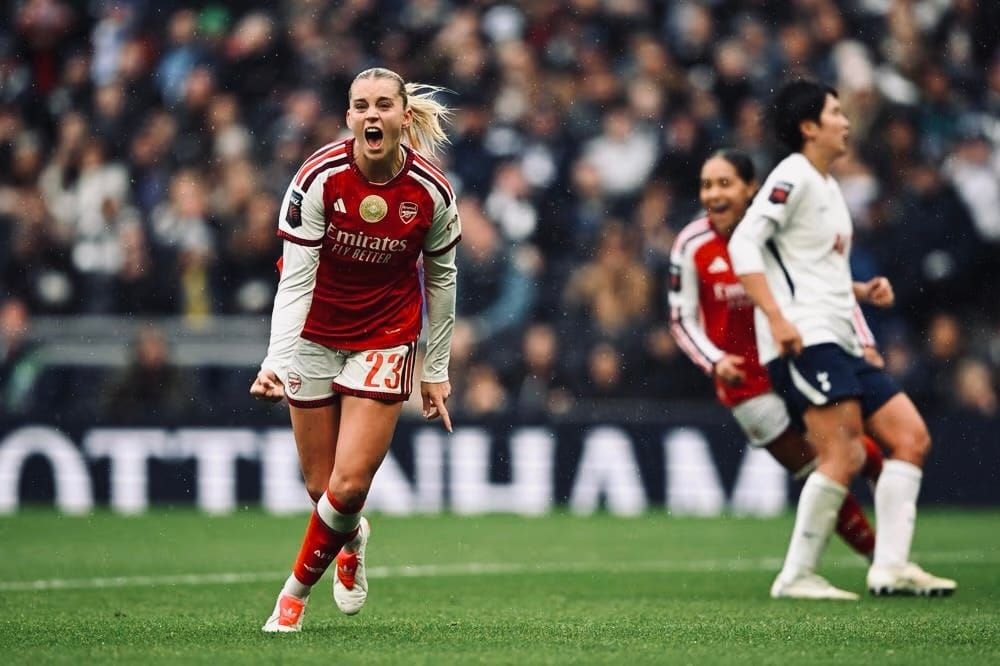
What a different feeling it is to sit down to write a post-match report after an Arsenal victory!
And not just any victory, but a 2-1 win over Tottenham in the North London derby, away from home at the Tottenham Hotspur Stadium, with almost 4,000 Arsenal supporters there to enjoy it.
It really has been a while!
Before we start, I want to make sure you know that I'm really, really happy we won. Absolutely, completely, utterly over the moon.
I know that is an obvious thing to say, but it's important, because we've spent weeks discussing what's going wrong at Arsenal, questioning Renée Slegers' team selections, the substitutions, our inability to break teams down and some of the decisions being made behind the scenes.
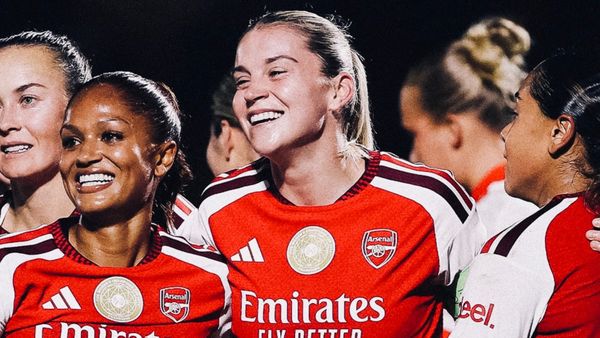
But football is also meant to be enjoyable, isn't it? Watching Leah Williamson and the team run towards the travelling Arsenal supporters at the final whistle, and seeing the relief and excitement on the players' faces, along with Renée’s big smile, was wonderful. It brought tears of joy to my eyes.
Especially after the last few weeks.
You could see how much that result meant to them, and we should acknowledge that before we start pulling the performance apart, because sometimes, when you're struggling as a team, you need to find a way to win a game, even if it isn't very pretty.
And Saturday wasn't always pretty.
In fact, there were moments when I wondered if we'd spend another afternoon watching Arsenal make life unnecessarily difficult for themselves.
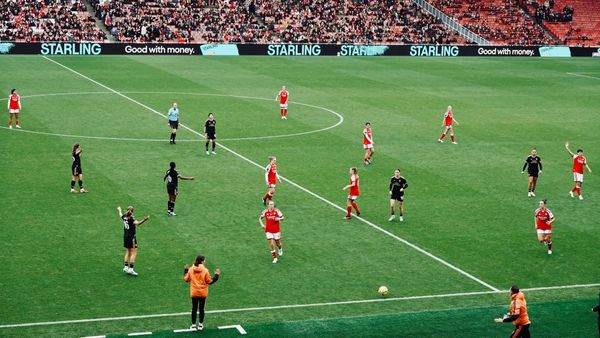
We conceded from a corner after thirteen minutes, Georgia Stanway produced a brilliant equaliser four minutes later, and Alessia Russo eventually won the game for us from the penalty spot in the second half.
Overall, I do feel Arsenal deserved the three points, but I don't think anyone watching that game can seriously say everything has suddenly clicked into place.
But there were some encouraging signs.
Renée made the defensive changes we discussed in the preview: Taylor Hinds at left-back, Steph Catley partnering Leah Williamson in the middle, and Emily Fox returning on the right.
Georgia Stanway got on the scoresheet, Alessia Russo helped with both goals, and at times Arsenal looked much more aggressive and purposeful.
So there's a lot to be happy about, but there are also questions.
Tottenham had conceded twelve goals in their previous two league games, and while we created chances, we weren't exactly tearing their defence apart.
We needed a penalty to win; we still looked vulnerable at times, gave the ball away too much, and our attacking movement felt all too familiar in places.
And then, of course, there's the situation with Géraldine Reuteler.
I don't know what she's got to do to get some meaningful minutes in this team, but apparently being the player Renée was so keen to sign two summers ago that she waited to bring her to the club this summer isn't quite enough!
We'll come back to that, because I think her continued absence raises questions about how Renée is approaching team selection.
I also want to look at what Renée said after the game, especially her comments about Taylor Hinds, Caitlin Foord and the decision to play Olivia Smith as our number 9 (spoiler alert: that didn’t work very well in my opinion).
Some of her comments help explain what she's trying to achieve, even if we don't necessarily agree with every decision she's making, and that's really what I want us to examine today.
Was Saturday the beginning of Arsenal getting back to the football we know they're capable of playing, or was it a hard-fought derby victory that papered over some, if not all, of the problems we've been discussing?
Maybe it's a bit of both.
I don't want to spend another episode finding fault with absolutely everything, especially after beating Tottenham. But equally, we've got Benfica next in the Champions League mid-week, and Aston Villa in the WSL next weekend, and one win doesn't suddenly put our season back on track.
So let's enjoy the three points, give credit where it is due, and then take a proper look at the performance.
The best place to start is the opening twenty minutes, because they told us a lot about both the problems Arsenal are still facing and what we got right on Saturday.
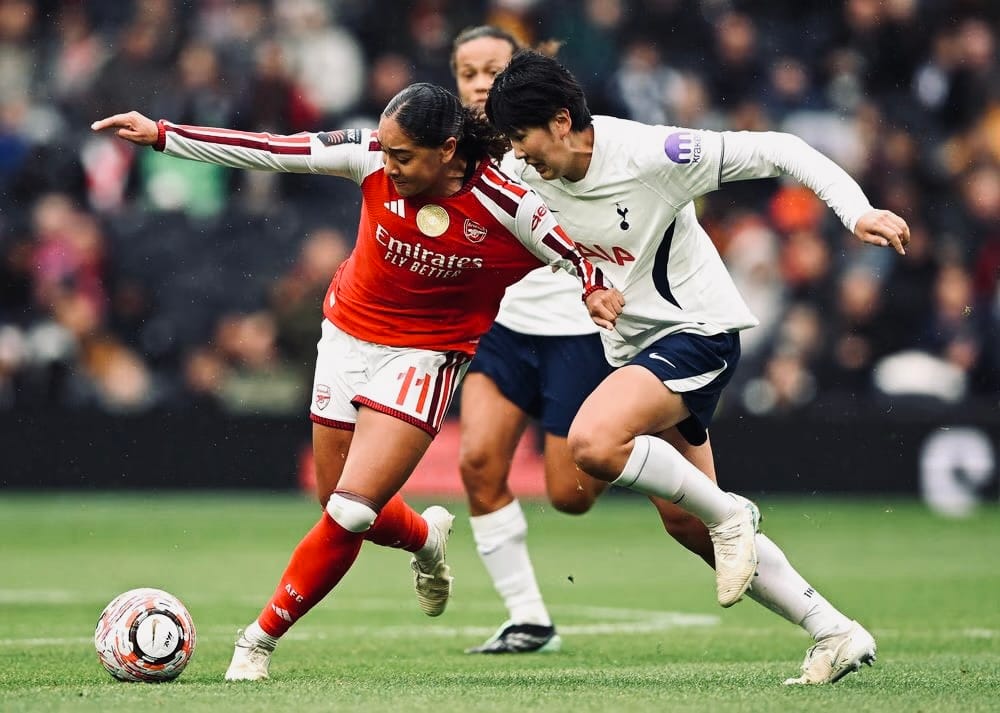
How The Game Unfolded: A Familiar Problem, A Much Better Response
Right, let's get into the football itself, because I think those opening twenty minutes tell us a lot about where Arsenal are right now, and there were some encouraging signs almost immediately.
Georgia Stanway was looking to get forward, we were putting Tottenham under pressure, and there seemed to be a bit more purpose about the way we were moving the ball. Georgia even forced an early save from Lize Kop, and I remember thinking maybe, just maybe, we'd see the more aggressive Arsenal we'd talked about in Friday's preview.
But then thirteen minutes in Tottenham scored, and the way we conceded that goal was really disappointing.
The move began when Lisa Baum lost possession with a sloppy pass back; Victoria Pelova latched on, carried the ball forward, and won a corner for Tottenham. Pelova delivered it, Cathinka Tandberg got herself into a dangerous position and powered a header past Misa.
But not before Leah Williamson, on the line, tried to keep the ball out with her hand. Look back at that goal again, and tell me what on earth one of our most experienced players is doing. She was lucky to still be on the pitch, because if she “saves” that, she’s off with a red card, and the rest of the team have a very difficult 77 minutes ahead of them.
Anyway, she didn’t save it, so it’s 1-0 to Tottenham.
Now, there are a couple of things I want to discuss about that goal, because it was preventable before the corner was even taken.
First, Lisa Baum's loss of possession led to Tottenham winning the corner. One thing we've been discussing recently is what happens when Arsenal lose the ball with players committed forward. We've been caught out too many times when opponents turn defence into attack quickly, and Victoria Pelova, of all people, reminded us exactly why that's dangerous.
Then we look at the corner itself.
We've got to be better at defending those situations. Tandberg's a dangerous player in the air, and whatever we think about individual marking responsibilities, she shouldn't get that sort of opportunity so easily. Fox, Catley, and Lisa Baum around her, and she still gets a powerful header.
It's another example of something we've seen too often this season, where Arsenal are doing reasonably well in a game, something goes wrong of our own making, and suddenly we're behind.
And at that point, I was thinking (and I know some of you were when my DMs started popping off), here we go again.
We went to Tottenham desperate for a win, against a team that had shipped 12 goals in their last two games, and within 13 minutes we'd handed them the lead.
Not exactly the start we’d been hoping for!
But here's where I think Saturday differed from some of our recent performances: Arsenal responded immediately.
Four minutes later, we were level, from a brilliant Georgia Stanway goal.
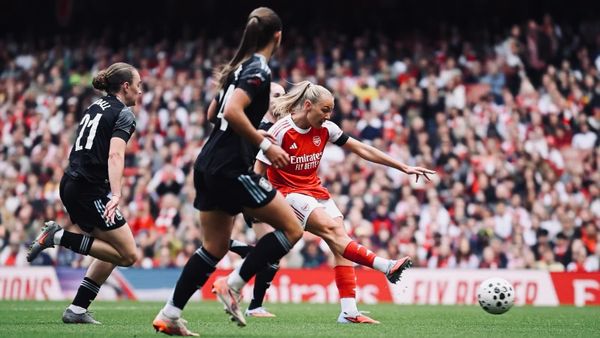
Taylor Hinds plays a sublime defence-splitting pass from the left of Tottenham’s box to find Alessia Russo; Alessia lays it back into an oncoming Georgia's path, and she absolutely hammers it towards goal from the edge of the box. Lize Kop got a hand to it, but the shot had so much power it crashed off the underside of the crossbar and went in.
1-1.
And that goal illustrated something we've been asking Arsenal to do for weeks.
Georgia Stanway runs into an attacking position. She wasn't collecting the ball ten yards in front of our centre-backs, looking up and wondering how to get through an entire opposition midfield. She moved forward as the attack built on the left-hand side; she made herself available, and when Alessia found her, she didn't hesitate.
She just hits it, and sometimes, it really is that simple.
We've spent so much time watching Arsenal pass the ball from side to side, trying to work the perfect opportunity, so it was brilliant to see Georgia build on the example Olivia Smith set last weekend.
Two other players deserve huge credit for that goal.
Taylor Hinds, making her first league start for Arsenal (I cannot believe I’m saying that by the way) plays the pass into Alessia, and Alessia has the awareness to recognise Georgia arriving behind her, hold off the defender who’s latched onto her and play the pass back.
That connection between players is exactly what I've been talking about: someone moving into space, a teammate recognising the movement, and the ball arriving at the right moment.
Trust your instincts. It doesn't have to be complicated.
For Alessia, that was another reminder of how intelligent she is as a footballer. Even when she's not the player finishing the move, she can make things happen with her movement and link-up play.
I'll come back to her position later because I still have some really strong feelings about where she should be playing, but there's no denying the quality of that contribution.
So, seventeen minutes gone, 1-1, and I thought we were set up for a really exciting game.
But the rest of the first half didn't develop that way.
Arsenal had more of the ball; we were generally the team trying to make things happen, but we weren't creating chance after chance against a Tottenham defence that had been struggling so badly.
Emily Fox had a headed opportunity from a Caitlin Foord delivery; Foord had an effort blocked, and we looked threatening in passages of play without really producing the final ball or finish.
I found that a little frustrating, because Tottenham weren't sitting there looking completely comfortable. Spaces were available, opportunities to move the ball forward, and I felt we were making things harder for ourselves than we needed to.
We weren't playing terribly, but I also wasn't watching Arsenal and thinking we'd suddenly rediscovered the attacking football that made us so difficult to play against last season.
There was more intensity, definitely, and more willingness to compete for possession. But we still weren't turning that good work into clear chances or making the opposition goalkeeper work.
We also gave the ball away unnecessarily almost every time we won possession back, something we talked about in the preview, and that control we’d been begging for is still missing.
But the second half was much better.
Shortly after the restart, Tottenham defender Alice Sombath suffered a serious injury and had to be stretchered off. I believe it’s a serious knee injury, and I hope she’s ok and, whatever it is, she comes back from it as quickly as possible.
Ella Morris came on to replace her, and only a few minutes later we had the passage of play that ultimately decided the game.
Caitlin Foord got into a dangerous position and pulled the ball back for Alessia Russo, who produced a shot that looked destined for the net until Lize Kop made an outstanding save.
And that chance deserves recognition because it was a really good attacking move.
Foord got herself into position to create the chance, Alessia made the right run into the penalty area, and Kop had to produce something special to keep Tottenham level.
From the resulting corner, Leah Williamson got a touch on the ball, Lisa Baum's effort came back off the post, and as Tottenham tried to clear, the ball struck Ella Morris on the arm.
Penalty to Arsenal.
Now, we do have to talk about that decision, because Martin Ho wasn't happy about it afterwards, and I can understand why there's been some debate.
The ball came at Morris from close range; there wasn't much time to react, and I don't think everyone watching immediately agrees it's an obvious penalty. In the moment, honestly, I didn’t think it was.
Under the laws of the game, it is not a handball offence if the ball touches a player's hand or arm directly after being played/kicked by their own teammate, provided it doesn't go directly into the opponent's goal or lead to an immediate goal-scoring opportunity. Additionally, the short distance (<1m) and lack of time to react mean the player has no realistic opportunity to avoid the contact.
But the referee gave it, and Alessia Russo stepped up, sent Kop the wrong way, and put Arsenal 2-1 ahead, suddenly putting us in a position to win a must-win game.
As much as we can debate the penalty decision, we can’t overlook what happened immediately before it, because Arsenal created a really good chance through Foord and Russo. We forced a fantastic save, maintained pressure from the corner, and Lisa Baum hit the post.
That was a much more convincing spell of attacking football than we'd seen for large parts of the first half.
But here's where I think the game gets interesting from an analytical point of view, because once we went ahead, we didn't really put Tottenham away.
We had more chances to create, Alessia had another effort saved, and there were moments when we looked capable of finding a third goal, but Tottenham were still in the game.
As we entered the final fifteen minutes, I found myself getting more and more nervous; Martin Ho brought on Shekiera Martinez and Kirsty Hanson to give his team fresh attacking options, and Tottenham began looking for a way back into the game.
A worrying moment came late when Martinez threatened to equalise before the offside flag came to Arsenal's rescue.
Then, in added time, we got another reminder of Victoria Pelova's ability to create problems, though Kyra Cooney-Cross made a crucial defensive intervention to help Arsenal see out the game.
Now, I do think Arsenal managed those closing minutes pretty well, with much more composure than we've seen recently.
We didn't completely fall apart; we didn't let Tottenham create wave after wave of attacks; Misa didn't have to spring into action every other minute, and that's important because game management has been one of Arsenal's biggest criticisms this season.
But I also think there's a difference between successfully protecting a lead and looking completely comfortable doing it, and I certainly wasn't completely comfortable! But that could have been the same for most of us, and it may have distorted my perception a bit, because we really, really needed this win.
When the final whistle eventually went, I was so happy. And relieved.
Three points, a North London derby victory and finally something positive to take into the next game.
But the scoreline only tells part of the story.
Arsenal had 14 shots to Tottenham's 5, 5 on target to their 1, and controlled more of possession. On those numbers, there's a strong argument that we deserved to win, and I think we did.
But it's also worth remembering that LCL and Chelsea were scoring goals for fun against this Tottenham defence, and we needed a dubious penalty to secure a 2-1 victory.
So, while I think our pressing, intensity, and how some players combined improved, I don't think we should confuse a slightly better performance with a complete transformation.
And that brings us to something I was especially interested in, and happy to see, when the team sheets came out.
Renée's starting eleven.
After weeks of asking for changes, she made several, and I think we do need to give her some credit for that, while also asking why certain other decisions still leave me scratching my head.
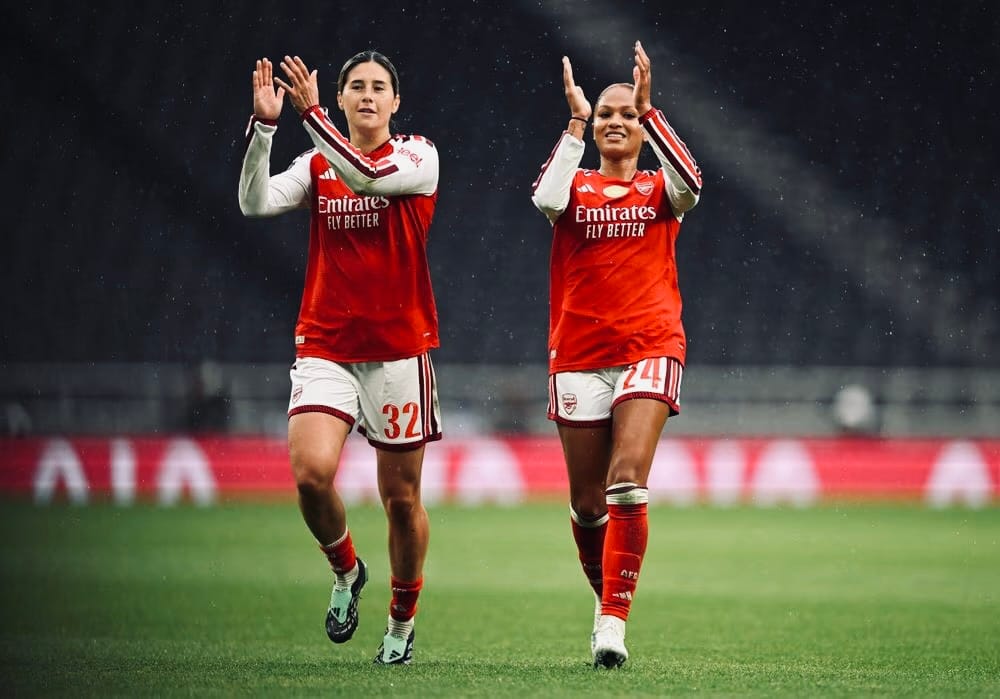
Renée’s Team Selection: Some Welcome Changes, But Some Familiar Questions Remain
When the team sheet came out on Saturday, I was pleasantly surprised.
After weeks of discussing Arsenal's defensive problems, Renée Slegers made the three changes I'd been calling for. Emily Fox was back at right-back, Steph Catley partnered Leah Williamson in central defence and Taylor Hinds was finally starting at left-back.
HALLELUJAH!
Now, I'm not going to claim Renée's been listening to Trailblazers, although if she has, I've got a few more suggestions for her!
But credit where credit is due. Those changes gave Arsenal a more balanced back four, with players operating in positions that suit their strengths.
And Taylor Hinds deserves particular attention. We've been asking why Arsenal signed a specialist left-back only to keep playing Ona Batlle out of position, especially when that side of our defence has been causing us problems.
Well, Taylor got her opportunity and took it.
She looked comfortable, confident and positive in possession. Her pass into Alessia Russo helped create Georgia Stanway's equaliser, and she brought a natural balance to the left side that we've been missing.
Renée praised her afterwards, highlighting her mobility, left foot and the conviction she showed throughout the game.
Which raises an obvious question: “If Taylor can deliver that sort of performance against Tottenham, why has it taken so long to give her a league start?”
I'm not suggesting one good performance makes her suddenly undroppable, but she's earned the chance to stay in that spot and build on it. I really hope Renée gives her that chance rather than immediately reverting to Ona against Benfica.
Having Steph Catley alongside Leah Williamson also made sense. Both are comfortable bringing the ball out of defence, and with Steph naturally left-footed, our distribution is better balanced. That partnership deserves more time together.
Moving into midfield, my first choice Kim Little was unavailable with a knock, so Renée continued with Georgia Stanway and Kyra Cooney-Cross. I didn’t have a problem with that.
And Kyra deserves plenty of credit. I've been calling for Kim to return when she's fit, but that's not a criticism of Kyra, who's been one of Arsenal's most consistent performers this season.
What interested me was Georgia's freedom to move forward.
Her goal was a perfect example of why I've been arguing that we need to use her attacking qualities better. She has the passing range, the energy, and the ability to arrive in dangerous positions. We need to encourage that instead of asking her to spend the entire game sitting in front of the defence.
But further forward, Renée made decisions I still struggle to understand.
Caitlin Foord started on the left, Lisa Baum on the right, Olivia Smith through the middle, and Alessia Russo in the Number 10 behind Olivia.
Caitlin had a really good game. Her work rate was excellent; she was competitive, and she created that brilliant second-half opportunity for Alessia. Renée praised those qualities afterwards, and she was right.
But moving Olivia into the number 9 position means we're taking her away from the left wing, where her pace, directness and ability to run at defenders have been so effective.
And we're still asking Alessia Russo, our best striker, to play behind another striker.
Alessia was involved in both goals, so no one can question her contribution. But we know what she offers as a number 9, and I still want to see her leading the line with someone providing creativity behind her.
Which brings me, inevitably, to Géraldine Reuteler.
Because not only did she miss out on the starting eleven, she didn't get on the pitch at all.
That's becoming increasingly difficult, actually impossible, to understand.
We've spent months discussing what Géraldine can bring to Arsenal, and yet here we are, seven league games into the season, still waiting for her to receive a proper opportunity.
We'll look at that in more detail shortly, because it deserves its own conversation.
For now, my verdict on Renée's team selection is fairly straightforward. The defensive changes were welcome, and they worked. Renée deserves credit for making them.
The midfield showed encouraging signs, especially Georgia getting into more attacking positions.
But the attacking setup still leaves questions about whether we're getting the very best out of the players available.
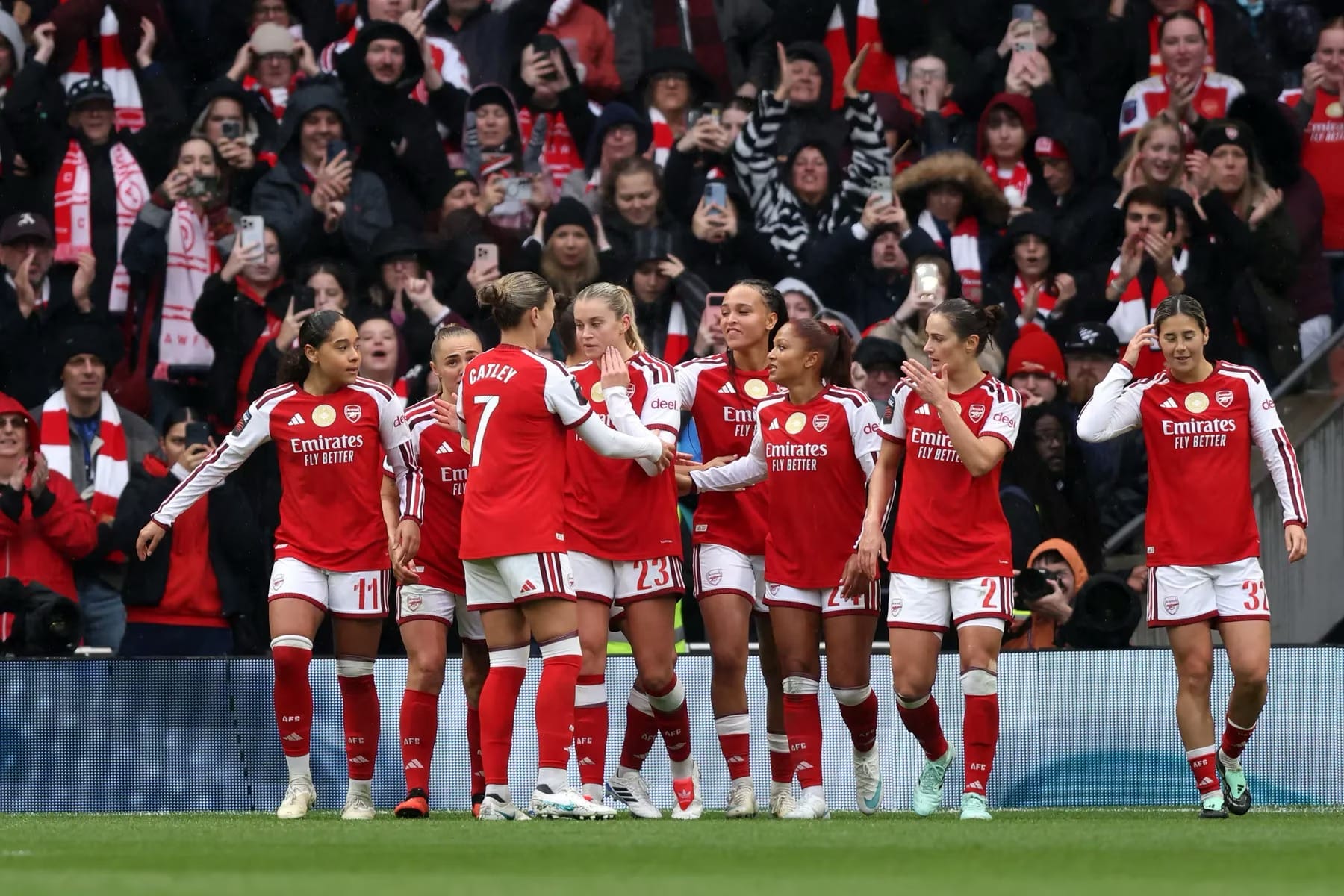
What The Result Doesn’t Fix
Here's the problem. We've beaten Tottenham, finally picked up three points and there were definite improvements in Arsenal's performance. But we played a team with a very shaky defence, and we still needed a penalty to win 2-1 because of a refereeing error.
Fourteen shots, five on target and only one goal from open play.
That doesn't mean we didn't deserve to win, because we did. But it does tell us that our problems in front of goal haven't disappeared.
And I keep coming back to the same question. With the attacking talent we've got in this squad, why is it so hard for us to consistently create good scoring opportunities?
We've got pace, technical ability, creativity and players who can score from almost anywhere around the penalty area. Yet we still have long periods of games where we dominate possession without putting the opposition under enough pressure.
And that's where I have concerns about the attacking structure.
Renée spoke afterwards about the importance of partnerships, players understanding one another and making better decisions in possession. I agree with her completely. But those partnerships need time to develop, and players need to operate in positions where they can make the greatest contribution.
At the moment, we're still moving some of our most effective attacking players around to accommodate others, rather than establishing a system that makes the most of their strengths.
I'm not convinced that's sustainable…and then there's our vulnerability when we lose possession.
Tottenham didn't create many chances, but when they moved the ball forward quickly, Arsenal still looked uncomfortable at times. We can't afford to keep leaving ourselves exposed, especially against teams with better attacking players and much more confidence than Tottenham have at the moment.
The other concern is our set-piece defending. We've seen opponents take advantage of lapses in concentration too often, and we need to address that on the training ground. We can spend all week working on our attacking combinations, but if we're giving opponents straightforward opportunities from corners, we're making life unnecessarily difficult for ourselves.
Now, here's something I did find encouraging. For once, we protected a narrow lead without completely losing control of the game!
Tottenham made attacking substitutions; they tried to put us under pressure, and Arsenal managed those closing stages reasonably well. That matters, because our inability to respond when games change has been a massive source of frustration recently.
But I still have questions about Renée's substitutions.
Emily Fox came off after 71 minutes, Steph Catley after 78, and then we waited until the 87th minute to introduce Stina Blackstenius and Smilla Holmberg.
Now, I understand protecting a lead. I understand wanting to maintain defensive stability, and I certainly wasn't calling for wholesale changes when we were winning.
But what about making a change to help us regain control further up the pitch?
What about introducing someone who could receive the ball in tight spaces, draw defenders towards her and help us maintain possession in more dangerous areas?
Which brings me back to Géraldine Reuteler.
I don't want this to become a weekly campaign against Renée simply because she isn't selecting one particular player, but there's a bigger issue than Géraldine herself.
What is the plan for the players Arsenal recruited this summer?
We brought in some exceptional talent. We strengthened areas of the squad that needed strengthening. We gave ourselves options that we simply didn't have last season.
But having those players sitting on the bench doesn't make us a better team.
We have to find ways to integrate them, build combinations and give them opportunities to influence games.
If Renée believes Géraldine isn't ready to start, or that she needs to improve aspects of her game, that's fine. She's the manager, she sees the players in training, and she's entitled to make those decisions.
But seven league games into the season, we supporters are entitled to ask what the longer-term plan looks like.
Because we're not talking about a young prospect who's just arrived from an academy. We're talking about an experienced international footballer, a legend at her former club, whom Renée herself pursued and recruited to strengthen Arsenal's attacking options.
And this is where the victory over Tottenham leaves me with very mixed feelings.
I'm delighted with the result. I'm encouraged by some of the changes. But I still don't see a settled attacking identity, and I don't see a clear pathway for some of the players we've brought into the squad.
One win doesn't answer those questions.
Interestingly, Renée's post-game comments give us a clearer sense of what she's prioritising at the moment.
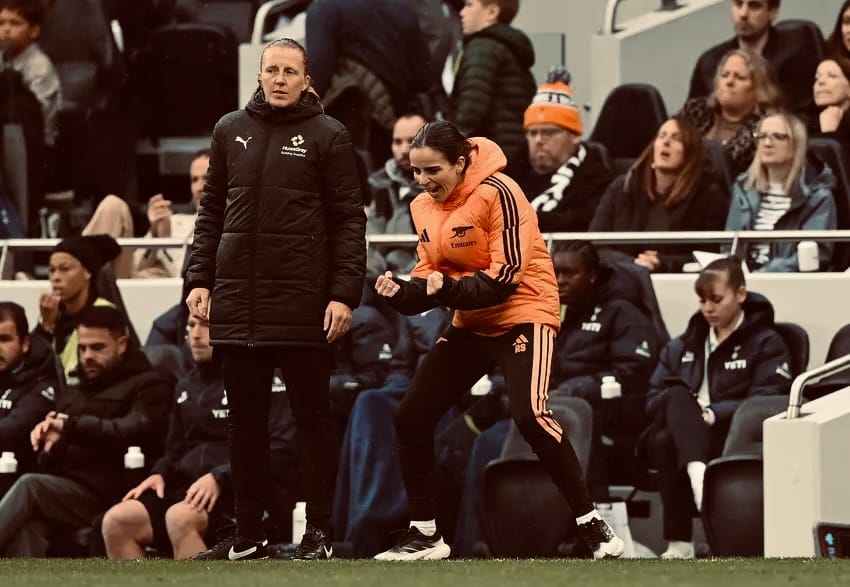
Renée’s Post-Game Comments: What Do They Tell Us?
Renée Slegers spoke to the press after Saturday's win, and a few things in her comments caught my attention, especially given the pressure she's been under over the last few weeks.
First, she explained what she'd asked of the players. She talked about intensity, fight and playing for the supporters, and described the team selection as reflecting those priorities.
Now, that's interesting, because Renée wasn't talking about introducing some revolutionary new tactical system. She was talking about getting back to the basics of competing, working together and showing the determination that's been missing from some of our recent performances.
And in fairness, we saw more of that against Tottenham.
But should we really be celebrating Arsenal players showing fight and intensity?
This is a Champions League-winning team. These are international footballers who know exactly what it takes to compete at the highest level. That level of commitment should be the starting point, not something we have to rediscover seven games into a season.
I also found Renée's comments about the pressing interesting. She felt Arsenal had been brave and consistent with their press, and that the players were making better decisions in possession and developing stronger partnerships.
I agree about the improved decision-making, although I'm not convinced our pressing has been consistently effective throughout the season. We've had spells where it's worked, but we've also seen opponents play through us far too easily.
That brings me to another thing Renée said. She explained that the players found solutions themselves during the game, and that her half-time discussion was constructive rather than some big tactical intervention.
I like that; we need players who can recognise problems and adjust without constantly looking to the touchline for instructions. Leah Williamson, Kim Little, Steph Catley and several others have lots of experience. They should be able to identify what's happening around them and respond.
But there's an important distinction between players taking responsibility and players having to solve problems because the original plan isn't working.
We need both. Strong leadership on the pitch and a coaching team that's prepared to make changes when they're needed… and that responsibility ultimately sits with Renée.
She was also asked about the scrutiny surrounding her position, and she said the important thing wasn't how she was feeling, but what Arsenal needed to do to get back on track.
I respect that answer. She's clearly aware of the pressure, and Saturday's victory must have been a huge relief. But the questions about her future haven't appeared out of nowhere. They exist because Arsenal's performances and results have been, and still are, well below expectations.
Winning at Tottenham gives her some breathing space. What matters now is what she does with that.
But my favourite part of Renée's press conference was what she said about the supporters. Apparently, the players and staff deliberately tried to connect with the travelling Arsenal fans before the game. And afterwards, rather than gathering for their usual team huddle, they went straight over to celebrate with them.
I loved that. Nearly 4,000 Arsenal supporters, some of whom I know through the Arsenal Women Supporters’ Club, travelled across North London, in the wind and rain, to support a team that hadn't won a league game for weeks.
Those supporters deserved that moment.
Renée explained that they'd been talking about playing for something bigger than themselves, and you could see what she meant when the final whistle went. There was relief, happiness and a real connection between the players and the people who've continued supporting them through a difficult start to the season.
Football's about more than formations and statistics. Those moments matter.
But something else Renée said was equally important. She acknowledged that this was only the first step, and that Arsenal now needed to back it up with further performances.
She's absolutely right. The challenge isn't whether or not Arsenal can raise their game for a north London derby. It's whether they can consistently produce that level of commitment, organisation, and attacking purpose, regardless of the opposition.
Because if we go into Wednesday's Champions League game against Benfica and find ourselves discussing the same old problems, Saturday starts looking more like a temporary reprieve than the beginning of a recovery.
Which brings us to the bigger question.
Where does this victory leave Arsenal's season, and what do we need to see next?
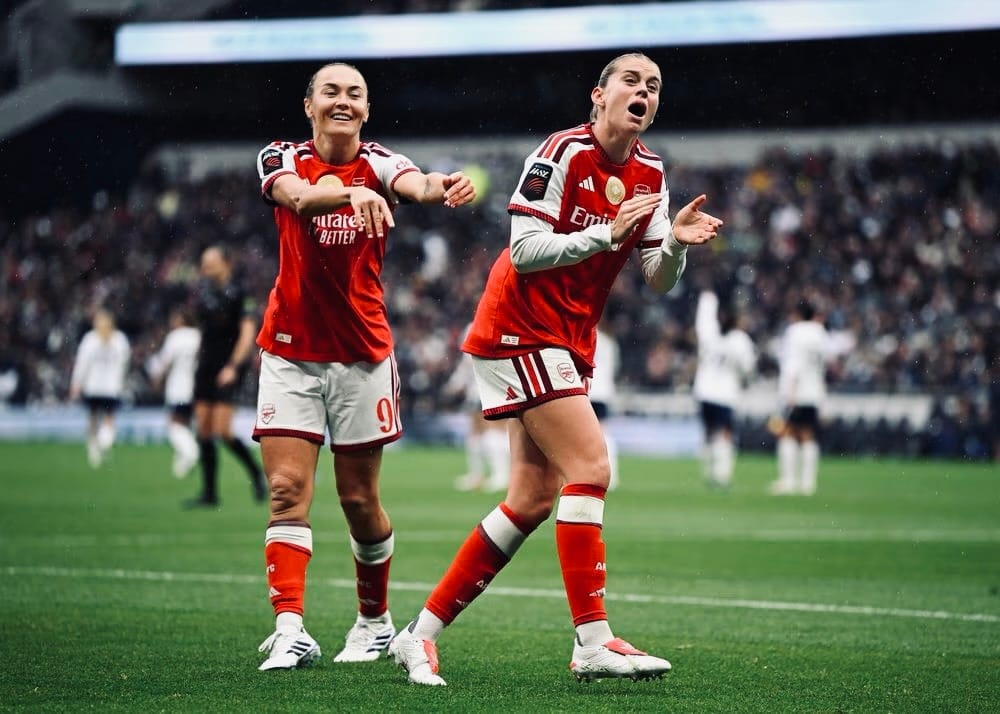
Where Does This Leave Arsenal, and What Happens Next?
We’re now seven games into the WSL season, we've finally got another league victory and we're currently, at the time of writing, sitting 6th in the table.
Not exactly where we expected to be after winning the Champions League, is it?
But we've beaten Tottenham, and I'm hoping Saturday has given the players a bit of confidence to take into what could be a really important few weeks.
Because confidence is a funny thing in football. When you're winning, players seem to make decisions instinctively. Passes find their targets, movements become more natural, and everyone looks like they know exactly what they're doing.
When you're struggling, even the simplest things become complicated, and we've seen plenty of that at Arsenal this season.
So hopefully Saturday's victory will help some of those players rediscover the freedom and confidence we've been missing.
But there's a danger here too. We can't afford to confuse the relief of winning with having solved the problems that caused us to struggle in the first place.
We've got Benfica in the Champions League on Wednesday, followed by Aston Villa in the WSL, and those games present two very different challenges.
Against Benfica, I want to see Arsenal building on the positive changes we saw against Tottenham. More movement, more confidence in possession and a team that looks comfortable playing together.
And I'd love to see Renée use her squad's quality.
We've spent a lot of money bringing players to Arsenal who are more than capable of contributing at this level. We need to find ways to make them part of the team rather than just names on a very impressive substitutes' bench.
Then there's Aston Villa. For me, that's an especially important test, because we've already shown we can raise our performance for a big occasion. What we've struggled to do is produce that same level of quality consistently against teams we're expected to beat.
We've dropped too many points in games where we've dominated possession but couldn't turn it into goals, and if we're serious about recovering our league season, that has to change.
So where do I stand after Saturday?
I'm encouraged.
I'm pleased Renée made some changes, delighted for the players and absolutely over the moon that we've beaten Tottenham.
But I'm not ready to declare that Arsenal are back, not just yet.
I want to see what happens when we play a team that sits deep. I want to see how Renée responds when her original plan isn't working, and I want to see some of the players who've been waiting patiently for opportunities finally getting the chance to show us what they can do.
That's how we'll know if Saturday was a turning point or simply a very lucky 3 points.
I really hope it's the former, because this Arsenal squad has too much talent for us to spend the rest of the season wondering what might have been.