Arsenal 5-1 Charlton: I Think We’re Starting to See Renée-Ball
Arsenal Women’s win over Charlton offered our clearest look yet at Renée Slegers’ evolving system, squad depth and the patterns taking shape before the WSL season.

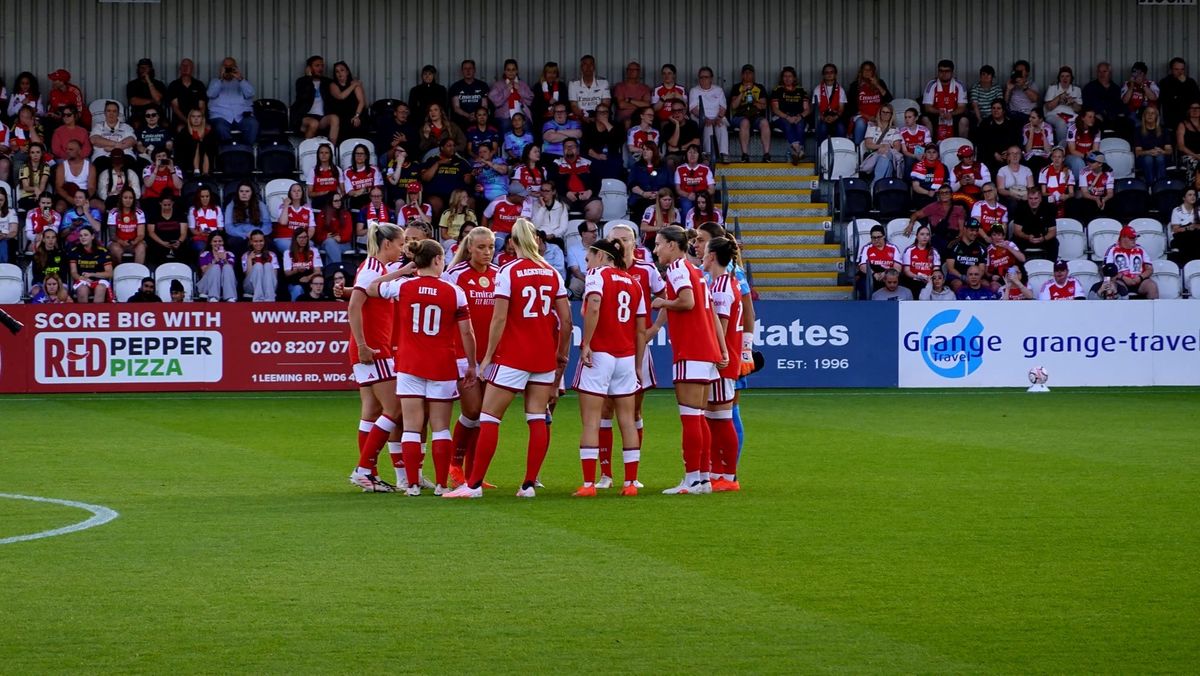
I spent quite a lot of Wednesday evening trying to work out what formation Arsenal were playing, which at the time I put down partly to the fact that it was my first visit to Meadow Park, I was very excited to finally be there, I was wearing my away shirt with Ona Batlle 22 on the back because apparently I am twelve, and without a team sheet in front of me I was attempting to watch the football while also taking everything else in, so I wasn’t exactly conducting the most rigorous tactical analysis of my life.
Then I watched the match back, and I’m now fairly sure the confusion wasn’t entirely mine.
Because Arsenal started in something you could reasonably call a 4-3-3, or perhaps a 4-2-3-1 if you wanted Alessia Russo to be the number ten behind Stina Blackstenius, and at various moments you could probably make an argument for something else entirely, but after watching what the players were actually doing, I’m increasingly less interested in trying to give it a number. The shape kept changing because the players kept changing it, deliberately, depending on where the ball was and who had moved where, and by the time Renée Slegers changed seven players at half-time, and the replacements started doing remarkably similar things, I think I stopped worrying about what formation I was looking at and started wondering whether we were finally seeing something much more interesting.
I think we might be starting to see what Renée-ball actually looks like.
And I’m slightly reluctant to call it that because we’re still in pre-season and football has an unfortunate habit of making you regret anything definitive you say approximately four days later, but this is now several matches where the same ideas have kept appearing, and what happened against Charlton moved things on from what we saw against Paris FC in a way I wasn’t necessarily expecting.
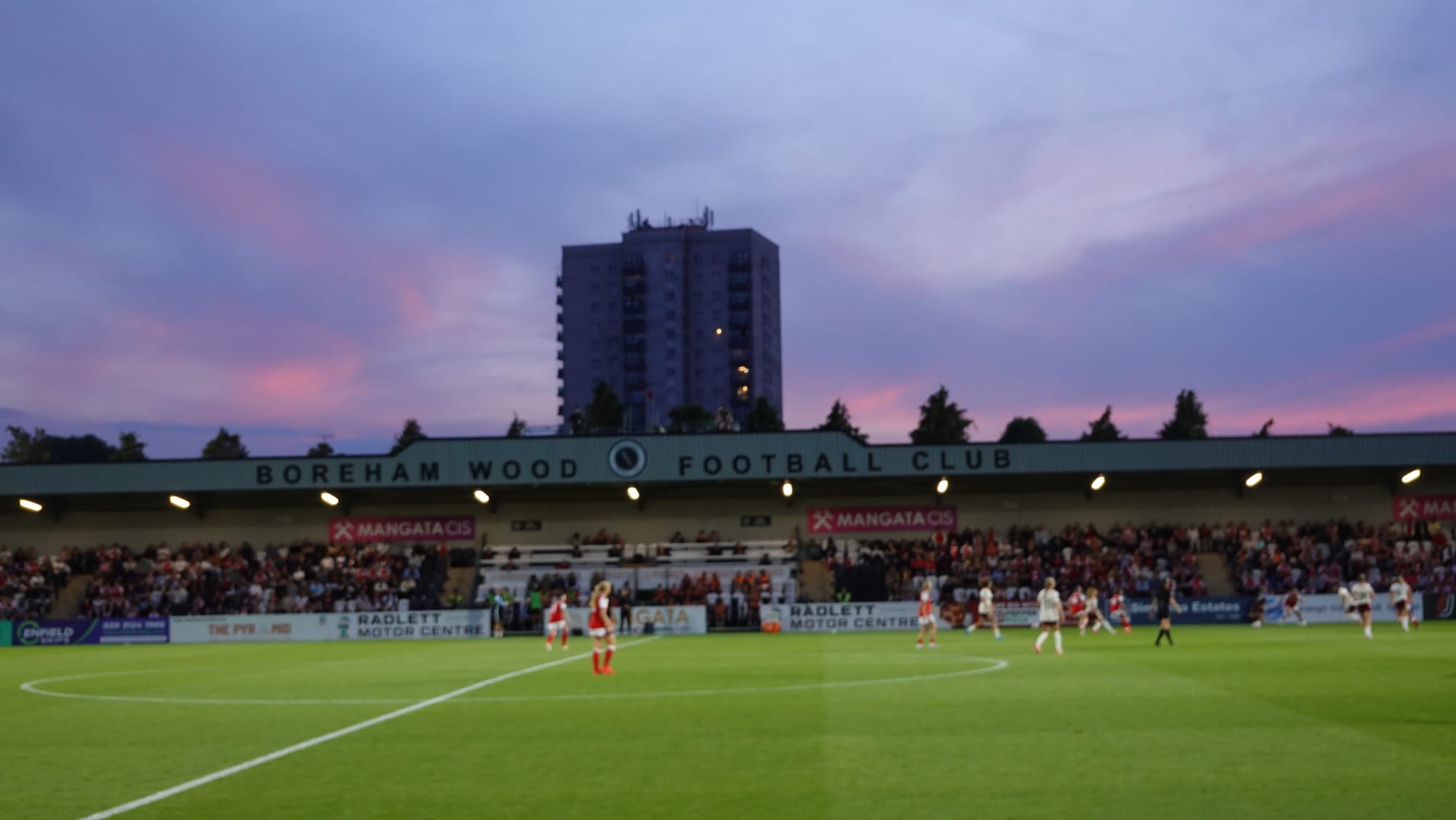
Before I get into all of that though, I do want to talk about Meadow Park because this was my first time there, and I know for those of you who have been going for years it’s just where Arsenal Women have played an awful lot of football, but I’d never actually experienced it before and I was ridiculously excited. There’s something rather lovely about finally walking into a place you’ve seen so many times on a screen, particularly somewhere that has so much of the history of this team attached to it, and I think that probably explains why my observations from inside the stadium were slightly more impressionistic than usual. I was watching the football, obviously, but I was also looking around, taking in the North Bank, watching the players warming up a few feet away, enjoying being there and, yes, being disproportionately pleased that Ona was starting on the evening I’d decided to wear her name on my back.
It was also interesting watching from that close because you notice different things. You can see the communication, you can hear some of it, you get a much better sense of how quickly spaces appear and disappear, but you also lose the lovely elevated television view where somebody has very kindly put all twenty outfield players in front of you and made the geometry obvious. So from my seat I could see that Arsenal were doing something quite interesting on both wings, but I couldn’t always see exactly what was happening behind it.
Watching it back filled in those gaps, and I think the first half is where we need to start because the 5-1 scoreline could easily leave you with the impression that Arsenal eventually overwhelmed Charlton and that’s basically the story, whereas I think what happened before the goals tells us considerably more about where this team is going.
Charlton made Arsenal work.
They had a lot of players behind the ball, they were organised, they were trying to put bodies between the Arsenal player in possession and the obvious passing option, and for the opening part of the match Arsenal had almost complete territorial control without actually creating very much. Charlton’s own report described Arsenal as suffocating them with the press while also saying they were defending relatively comfortably, and those two things can both be true. We’d seen something similar against Paris FC a few days earlier. Arsenal could have the ball, recover it very quickly when they lost it and keep the opposition pinned back, but there was still this separate question of how you turn all of that control into a really good chance.
What interested me more this time was the structure Arsenal were using to try to answer it.
We’d already seen the Lisa Baum and Smilla Holmberg partnership against Paris, with Smilla getting very high from right-back, Lisa moving between the wing and more central areas, Kim Little helping them from midfield and Leah Williamson sliding across behind Smilla whenever she disappeared up the pitch. Renée went straight back to it against Charlton and within about a minute they were doing it again, which immediately makes me think this isn’t simply something that happened to work in one friendly.
But this time there was something happening on the other side as well.
Ona Batlle was pushing extremely high from left-back, Mariona was starting from the left but coming inside, Georgia Stanway was moving across from midfield to join them and Steph Catley was adjusting behind Ona, so we effectively had these two groups operating on either side of the pitch. Lisa, Smilla, Kim and Leah on one side; Mariona, Ona, Georgia and Steph on the other. And obviously I’m simplifying that because footballers inconveniently refuse to stand still long enough for us to draw lovely diagrams around them, but that was the general pattern.
What happened when the full-backs went was the bit I found particularly interesting.
If Smilla and Ona were both high, Leah and Steph could move wider from centre-back and Kim and Georgia could come deeper, so suddenly the players who had started as central midfielders were helping form the base of the attack while the players who had started as full-backs were standing roughly where you’d expect the wingers to be, and Lisa and Mariona could come inside. Then, just when you thought you’d worked that out, Georgia would go charging all the way through the other way and arrive in the penalty area.
Which is why trying to decide whether this was 4-3-3 or 4-2-3-1 started to feel a little beside the point.
The team sheet tells you where somebody starts. It doesn’t necessarily tell you where Renée wants them to go.
And Alessia was another part of that because I’d initially wondered whether Arsenal were playing Stina and Alessia together as two forwards, but watching it properly Alessia was much more of a number ten, dropping into midfield, moving around behind Stina and trying to connect everything, which gave Arsenal another player between Charlton’s lines while Stina occupied the defenders ahead of her.
There were moments when all of this looked really promising and moments where Charlton dealt with it perfectly well. Smilla repeatedly got to the byline but would then find two defenders waiting for her. Ona was finding advanced positions on the other side but Charlton, particularly Ashleigh Neville and Paula Partido, made her work extremely hard for them. Lisa got one excellent opportunity in the six-yard box and put it straight at Sophie Whitehouse. Arsenal were trying little one-twos between the lines and Charlton were often getting a foot into the final pass.
But I didn’t get the same feeling of sterile possession that we’ve occasionally had watching Arsenal in the past. They were taking risks.
They were trying passes that might not come off, Georgia in particular seemed very happy to collect the ball deep and then look immediately for something progressive, Kim was constantly trying to split the next line, Misa Rodríguez was becoming another passing option behind them, and when something didn’t work Arsenal generally seemed confident enough in what was behind the ball to accept the turnover and go after it again.
Misa, incidentally, is going to be extremely interesting to watch this season because her comfort with the ball is immediately obvious. She passes it beautifully, she’s calm when somebody comes towards her, she’s vocal, she moves into positions that allow the defenders to use her as another player in the build-up, and you can tell she has that background of having played outfield football when she was younger. There’s no sense of please get this thing away from me before somebody arrives. She wants to participate.
Which makes the Charlton goal all the more irritating because it came from almost nothing. I initially thought from inside the ground that Arsenal had simply switched off, but watching it back I think “miscommunication” is fairer. The ball comes into an area Arsenal should deal with, Steph, Kim and Leah are all around it, there’s this tiny moment where nobody seems completely certain whose problem it is, Charlton don’t wait around for them to hold a meeting about it, Emily van Egmond takes advantage and Lucy Fitzgerald finishes the move.
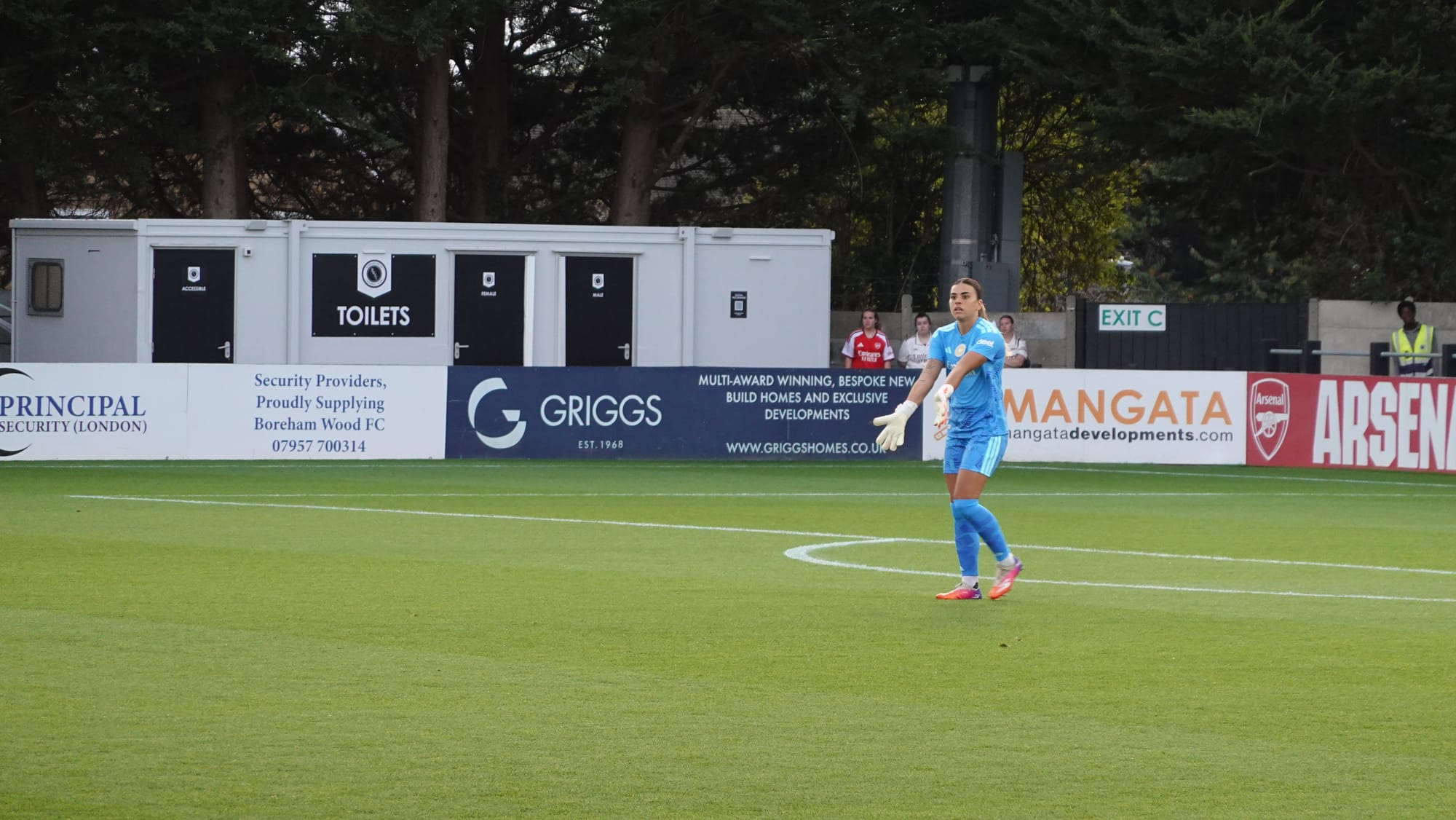
Misa was visibly upset.
And she had every right to be because Charlton had barely been able to get near the Arsenal goal and suddenly they were 1-0 up.
I actually found what happened next more encouraging than I expected because Arsenal didn’t abandon what they’d been doing. They just did it faster and harder. The combinations remained, the full-backs kept going, but the press became noticeably more aggressive and Charlton started finding it increasingly difficult to keep the ball whenever they won it.
That press is probably the thing I’m most convinced is going to carry into the season because we’ve now seen it repeatedly. Against Paris FC it was one of the strongest parts of the performance and against Charlton it appeared again. Lose the ball, hunt it immediately. And it isn’t just one player charging after somebody while everybody else watches. The players around the ball close in, the players behind them squeeze the space, and the opposition suddenly discovers that winning possession and actually being allowed to do anything with it are two entirely different things.
The equaliser came through that right-hand side we’d been watching all half, and I absolutely loved the pass from Lisa Baum because it’s one of those little bits of football that tells you something about a player. Arsenal build from Misa, through Leah and Kim, Alessia gets involved, the ball eventually goes back out towards Lisa and Smilla, and Lisa sees Georgia making the run. Rather than playing the obvious ball, she shapes it in a way that wrong-foots the defender and slides Georgia through at an angle.
It was a slightly Ødegaard-ish pass, actually, that disguised little reverse ball where everybody thinks you’re sending it one way until the ball has already gone somewhere else.
Georgia still had a ridiculous amount to do because the angle was horrible, but she somehow wrapped her foot around it and squeezed the finish past Whitehouse.
And Lisa Baum is becoming increasingly difficult for me to discuss without sounding as though I’ve completely lost perspective.
She’s nineteen.
I’m just going to keep saying that every few paragraphs until I believe it myself.
The second goal comes from another area Arsenal had been attacking all half, with Steph involved from the corner and Georgia being pushed over in the box before Mariona calmly puts the penalty away, so Arsenal go into half-time 2-1 up and I think that score probably reflects the game reasonably well. Charlton had defended very well, Arsenal had made one dreadful mistake, but the pressure had gradually started producing things.
Then Renée changed seven players, and this is where the match became considerably more interesting to me than the scoreline.
Because you’d think changing seven players at half-time would make the whole thing look completely different. It almost has to, doesn’t it? Kim and Georgia disappear from midfield, Leah and Steph disappear from central defence, Ona goes off, Mariona goes off, Misa goes off, and suddenly you’ve removed a huge part of the structure we’ve spent the first half trying to understand.
Except the replacements started doing recognisable versions of the same things.
That was the moment when something clicked for me.
Smilla moved from right-back to right centre-back and started doing the job Leah had been doing behind her. Emily Fox came in at right-back and started combining with Lisa in front of Smilla. On the other side, Lotte Wubben-Moy, Taylor Hinds, Caitlin Foord and Géraldine Reuteler began to form their own relationships. Anneke Borbe came into goal and was still willing to step into the build-up. Kyra Cooney-Cross and Géraldine replaced Kim and Georgia and Arsenal began finding different routes through midfield, but the basic behaviour of the team hadn’t disappeared with the people who started the game.
And I think this is where all of Renée’s talk through pre-season about “connections” suddenly makes a little more sense to me.
I’d been thinking about connections mostly as partnerships between specific players. Lisa learns Smilla. Smilla learns Leah. Ona knows Mariona from Barcelona. Georgia learns how Kim moves. Those relationships obviously matter, but perhaps Renée is trying to create something slightly broader than that, where the players understand the job being done around them well enough that somebody else can enter the same space and the whole thing doesn’t have to be rebuilt from scratch.
That’s a very different proposition when you start thinking about squad depth.
Because we can look at Arsenal’s transfer window and say there are two good players for almost every position, and that sounds lovely on paper, but having two good players for every position doesn’t automatically give you a good squad. If changing six players means changing the way the entire team functions, you’ve got a collection of depth rather than useful depth.
Against Charlton, at least for one pre-season half, Arsenal changed seven and I didn’t see an enormous drop in the underlying structure. That excites me.
And Smilla at centre-back may have been the best example because I’d spent the first half watching Leah cover behind her as Smilla disappeared up the wing, and then after half-time Smilla became the player doing the covering while Emily Fox went ahead of her. She looked absurdly comfortable doing it as well. Renée specifically mentioned Smilla playing centre-back afterwards and talked about wanting versatility throughout the squad, and I think we’re beginning to see why that matters to her. If the system asks players to move around this much during a match anyway, having people who understand several positions isn’t simply useful when somebody gets injured. It becomes part of how the football works.
The attack also started looking slightly different.
There was more coming through the middle with Kyra and Géraldine on, and Kyra in particular was finding those gaps between Charlton’s lines and carrying the ball forward. This was another thing I’d been waiting to see because she gives Arsenal something different in midfield. Georgia can drive, Kim can find those ridiculous little passes that seem to travel through people, but Kyra has this lovely ability to receive, turn and just move the whole attack twenty yards up the pitch herself.
And then she scored that goal.
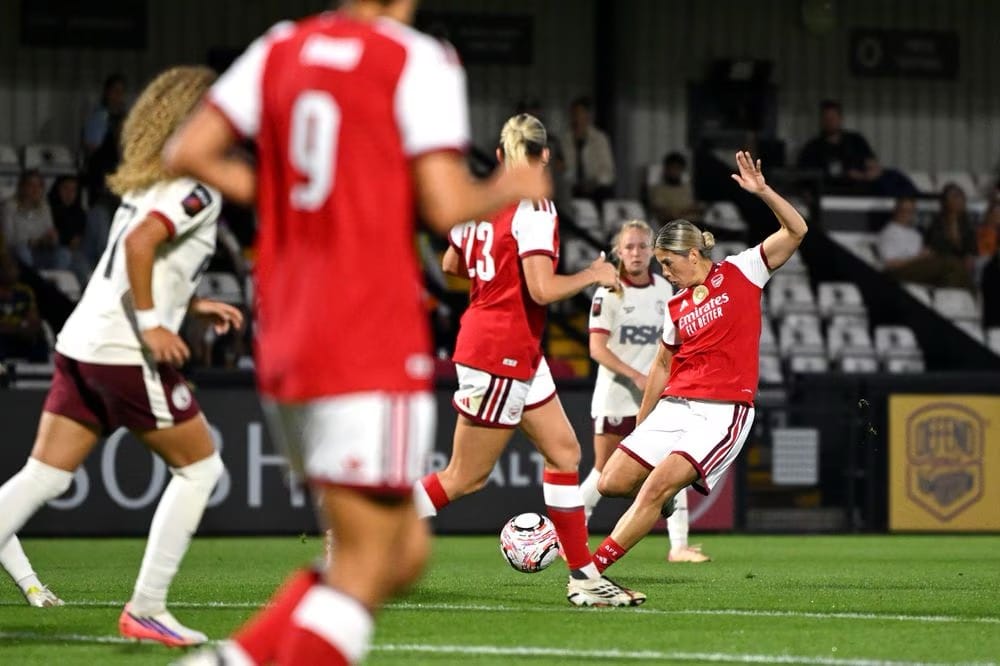
Lisa puts another ball in from the right, Charlton head it clear, Alessia has the awareness to let it run rather than trying to do something unnecessary with it, and Kyra hits it first time from outside the box into the top corner.
There’s a lovely bit of accidental comedy in the fact that Mariona and some of the other first-half players apparently missed it because they were walking back after doing their post-substitution gym work and had to watch it on an iPad, which seems a particularly unfair way to experience one of your teammate’s best goals.
But I think the goal matters beyond being spectacular because of something Renée said afterwards.
She talked about Arsenal working on taking shots from the edge of the box when that space opens up. And that made me think immediately about Paris FC.
Against Paris we spent a lot of time talking about the extra touch. Arsenal would do the hard bit, move the defence, create a little pocket of space and then occasionally want one more touch, one more pass, another fraction of a second to make the chance better, and Paris would use that fraction of a second to close everything again. Renée called it the “final detail”.
Three days later, Kyra sees the opening and hits it. Then Emily Fox has a go from distance. Later Olivia Smith gets the ball outside the box and absolutely smashes it into the top corner. Then Frida Maanum receives Lotte’s pass under pressure and curls another beautiful finish in.
Now, I don’t want to pretend Arsenal solved an attacking problem permanently between Sunday and Wednesday because that would be ridiculous. Brighton may put eleven players behind the ball next weekend and make this entire paragraph look very silly. But there is a connection there that I think is worth noticing.
Paris FC showed us a team repeatedly trying to create a better chance after already creating a decent one. Renée talked about the final detail afterwards. Charlton defended in another low/mid-block, Renée says Arsenal have specifically discussed shooting from the edge when that opportunity opens, and suddenly we're watching players take those shots.
That’s what pre-season is supposed to be for, isn’t it? Not collecting friendly wins, but finding problems, trying things, seeing whether they work, adjusting them and trying again.
And Charlton were tiring by this point, which we shouldn't ignore. Mariona said that herself afterwards. They’d spent an enormous amount of the match without the ball, Arsenal had made seven changes at half-time and then brought Olivia Smith and Frida Maanum into the game just after the hour, which must have been a fairly dispiriting sight if you’d already spent sixty minutes chasing Arsenal around Borehamwood.
The squad depth started to become quite brutal. Fresh players arrived and the press went up again. Charlton were being pushed deeper and deeper, Arsenal were winning possession back almost immediately, and by the last fifteen minutes it was becoming difficult for them to get out of their own half.
This is also where Géraldine started becoming more visible to me.
I mentioned after Paris that some supporters had barely noticed her when she came on, and when I watched that game I could understand why: she was occupying a more fixed central position than Mariona had been, and some of the connections around her simply weren’t there yet. Against Charlton, particularly as the second half went on, I started seeing more of what she was looking for. She was combining with Taylor and Caitlin, finding those little forward passes through the lines and beginning to look more comfortable in the spaces around her.
I still don't think we've seen enough of her to decide exactly what her Arsenal role is going to become, and I’m quite happy about that. We don’t need to produce a definitive verdict on every new signing before the league has even started. Sometimes you can just watch somebody gradually appear.
Olivia, meanwhile, requires rather less patience.
She came on and immediately gave Charlton another problem, and her goal was another example of the thing we’d been talking about since Paris. Caitlin takes players out of the move, the ball gets to Selina Cerci, her effort is blocked and it falls outside the area to Olivia.
She doesn’t take the extra touch.
She doesn’t look for a better chance.
She just hits it.
Top corner.
And then Frida does something similarly decisive for the fifth after Lotte drives forward and plays a gorgeous pass through the defence, with Frida meeting it and curling the finish into the corner despite the pressure around her.
Five goals from five different players, which Renée highlighted afterwards, and different kinds of attacks producing them. That matters to me more than Arsenal scoring five.
Because I think one of the things we’ve wanted from this squad is different answers to the same question. If somebody stops Plan A, does Arsenal have to do Plan A harder or can somebody offer something else? We saw wide overloads, we saw combinations through midfield, we saw Georgia arriving from deep, we saw Stina occupying the centre-backs, Alessia linking underneath her, Kyra carrying through midfield, Lisa creating from wide and inside, Olivia attacking defenders directly, and players willing to shoot when Charlton protected the penalty area.
There were mistakes in amongst it. The Charlton goal was dreadful. There were a couple of other moments where concentration went and a better attacking team might have punished Arsenal. Ona had an interesting rather than spectacular half; she got herself into some excellent advanced positions but Charlton also handled her well at times. There were still attacks where the final ball didn't quite arrive and combinations where somebody was expecting a run that somebody else hadn't made.
It’s August. I think I can live with that.
What I came away from Meadow Park feeling, and what became much clearer when I watched the match back, was that this pre-season has gradually stopped looking like Renée trying a collection of new players and started looking like Renée building a way for Arsenal to play.
Perhaps that’s the bit I hadn’t completely understood after Paris.
I saw the Lisa-Smilla-Leah relationship there and thought, there’s an interesting partnership developing. Against Charlton, Renée changed the people and some of the same behaviours remained, and suddenly I’m wondering whether “partnership” is too narrow a way of looking at it.
Maybe the connection isn’t simply Lisa knowing what Smilla will do.
Maybe it’s Lisa understanding what the right-back will do, the right-back understanding what the centre-back will do, the midfielder knowing which space becomes available when those two move, and all of them being comfortable enough with that structure that Renée can change the names without changing the idea.
That would explain why she keeps talking about versatility. It would explain why Smilla can spend one half charging down the right wing and the next playing centre-back, why Mariona can start on the left, despite saying herself that she isn't particularly used to playing there anymore, and still look comfortable because Ona is behind her and they already understand each other.
It might even explain why I spent part of my first evening at Meadow Park wondering what formation Arsenal were playing.
Perhaps I was asking the wrong question.
Because I'm not sure Renée particularly wants us to be able to look at Arsenal in possession and say, there's the left-back, there's the left winger, there's the number eight and everybody is exactly where the graphic said they would be.
The idea is movement.
And if you can create a squad where several different players understand how to make those movements and, equally importantly, how to cover the space somebody else has just left behind, then suddenly having this much depth becomes rather more interesting than simply having an impressive bench.
We’ll find out soon enough how much of this survives when the games matter, because pre-season allows you to experiment in ways the WSL will not. Brighton will attack Arsenal with rather more ambition than Charlton were able to for much of this match, mistakes like the one that produced Fitzgerald’s goal will become considerably more expensive, and the spaces Arsenal were able to occupy at Meadow Park won't necessarily be waiting for them every week.
But that’s almost why I’m glad Charlton made the first half difficult.
A comfortable 5-0, with Arsenal scoring three in the opening twenty minutes, wouldn't necessarily have told us much. Instead we got another team sitting in a low/mid-block, another period where Arsenal had to work out how to create against it, another reminder that concentration at the back still matters even when you've got virtually all of the ball, and then a second half where Renée changed most of the team and the basic ideas survived.
And somewhere amongst all of that, Kyra Cooney-Cross nearly took the roof off the North Bank.
Not bad for my first night at Meadow Park. I arrived wearing Ona 22, slightly overexcited and trying to decide whether Arsenal were playing 4-3-3, 4-2-3-1 or something I hadn't thought of yet.
I left thinking the formation might have been the least interesting thing about them.