Chelsea 1-0 Arsenal: Is Arsenal’s Problem Now Bigger Than Finishing?
Arsenal were the better team for half an hour at Stamford Bridge, but still lost 1-0. With just two goals in four WSL games, are the problems now bigger than finishing?

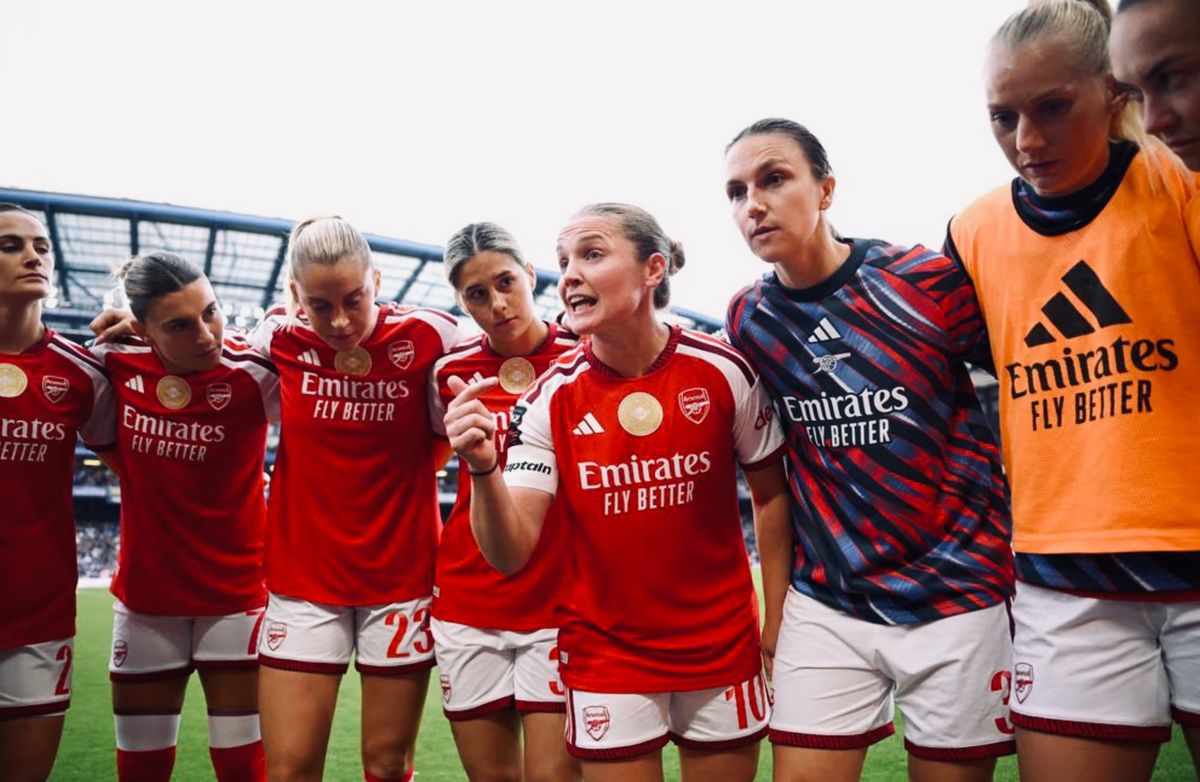
I was going to talk about Arsenal losing 1-0 to Chelsea today. But sitting here at my keyboard after watching that game again, I don't think that's the conversation we need to have anymore.
Because I'm starting to wonder if Arsenal's problem is bigger than not taking their chances.
I think we need to talk about Renée Slegers.
And I want to be really careful about how we do this because I've already seen plenty of reaction online; I've had messages from some of you and phrases like “end of the Jonas era vibes” are starting to appear.
I'm not there yet.
I'm certainly not sitting here telling you Renée has lost the dressing room because there is absolutely no evidence that she has.
But I am starting to have questions about what we’re watching, and I think after today those questions go beyond Arsenal simply not putting the ball in the back of the net.
Because here's the really frustrating thing about this Chelsea game.
For the first half an hour or so, Arsenal were good. Really good, in fact.
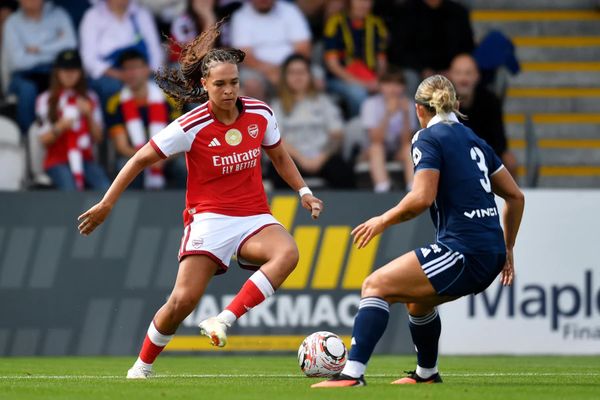
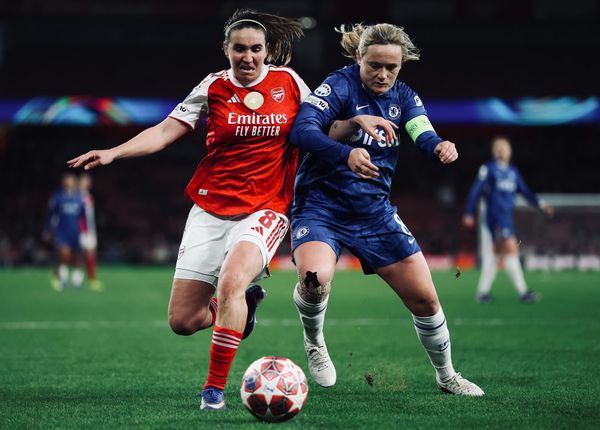
We went to Stamford Bridge and took control of the game. Arsenal had most of the ball, we were winning the physical battles, and we were getting into some really promising positions.
Kim Little and Mariona Caldentey both hit the woodwork.
Kyra Cooney-Cross found space and moved the ball forward. Lisa Baum was causing problems on the right, and Arsenal looked like the team most likely to score.
Even Renée said afterwards that Arsenal dominated until Chelsea's goal and that when you have that sort of momentum against another very good team, you have to take advantage of it because eventually the momentum is going to swing.
And that's exactly what happened.
Chelsea gradually got into the game, and then, in the 39th minute, Arsenal gave the ball away playing out from the back; Keira Walsh's shot was saved by Anneke Borbe, and Alyssa Thompson reacted quickest to put the rebound away.
One-nil Chelsea, and suddenly a game Arsenal had been controlling was being played on Chelsea's terms.
Now, we can spend the next 20 or so minutes talking about the mistake that led to the goal, but I'm not sure that's constructive because mistakes can happen.
What bothers me more is what happened before it, because once again Arsenal had opportunities to hurt their opponent, and once again there seemed to be this hesitation at the exact moment when the person with the ball needed to make an instinctive decision.
We talked about this before the game, and so did Renée: that final pass, the decision before the shot. Seeing the opportunity clearly and staying calm enough to take it.
Watching today, I kept finding myself saying the same thing.
“Shoot! Take the shot!”
There were moments when the opportunity appeared and instead of taking it, we wanted one more touch, or we wanted to move the ball slightly further, or we wanted to find an even better position.
And in that extra second or two, Chelsea had recovered.
That's becoming a pattern now, and we talked about this in the preview. I said we needed to act quickly, or we would let Chelsea get back behind the ball again and lose the opportunity we created.
Against Palace we had 30 shots and didn't score. Køge: 21 shots and only 2 were on target.
Today we had 18 attempts, hit the woodwork twice and didn't score.
We can’t keep describing this as simply Arsenal being unlucky in front of goal. Something clearly isn't working, and I'm starting to wonder if we're spending too much time looking at the end of the move when maybe we should be looking at everything that's happening around it.
Because then the second half happened, and that's where my questions about Renée really start.
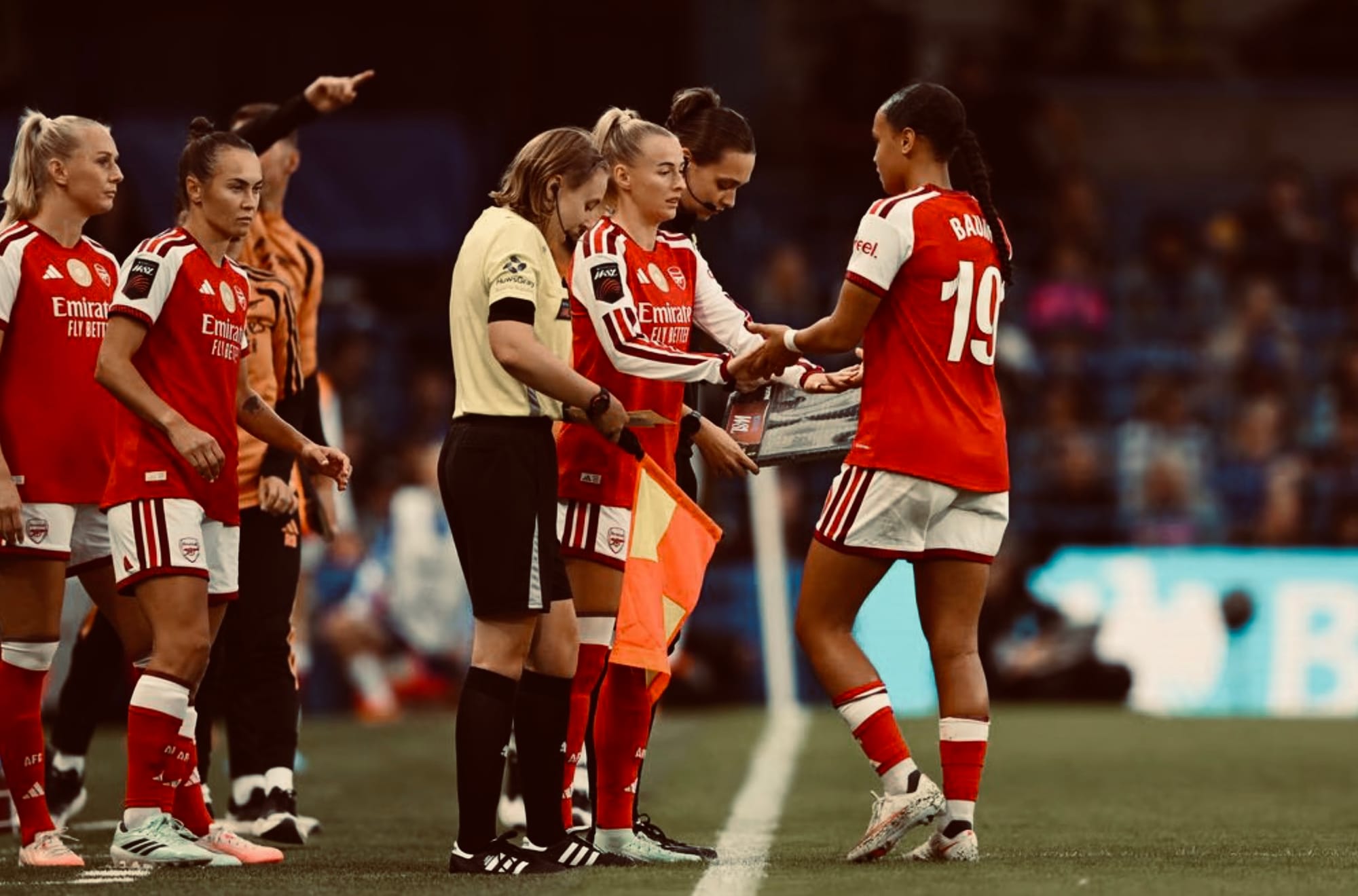
What happened after the substitutions?
Let’s talk about those changes, because this is where I started to feel really uncomfortable with what I was watching.
Arsenal are 1-0 down, and Renée made three substitutions just after the hour. Caitlin Foord replaced Mariona, Stina Blackstenius replaced Georgia Stanway, and Chloe Kelly replaced Lisa Baum.
Now, Renée explained afterwards what she was trying to do. She wanted to change all three attackers, bring some fresh energy into the game, be more direct and create different overloads against Chelsea's defence.
Fine, I can totally understand the idea.
But what I'm really struggling with is whether the subsequent performance on the pitch actually looked like that of a more dangerous team.
For me, Arsenal looked more disjointed, and that is where I think we have two separate questions.
The first is, did Renée have a tactical plan for those substitutions? Clearly she did, because she said so.
The second, and much more important, question is: did the players understand the tactical plan well enough to execute it?
Emma Sanders from the BBC reported from Stamford Bridge that at one point Kim Little shouted towards the bench, “Am I the six now?”
To be clear, I'm not going to take one sentence shouted across a football pitch and present it as any kind of evidence that Renée has lost the dressing room, because that would be ridiculous, but we can’t just ignore it either.
Your captain, one of the most, in fact THE MOST experienced and intelligent players in this squad, apparently having to clarify what position she's now playing after substitutions have been made is at least worth talking about.
Renée was asked about exactly this afterwards, and she was adamant that there was clarity. Her explanation was that Emily Fox had gone down at the same time, Arsenal were temporarily down to ten, and the players were receiving instructions for what they needed to do while Fox was off the pitch and then what they needed to do when she came back on.
That’s a perfectly plausible explanation, but here's my problem.
I wasn't confused by one moment when Arsenal temporarily had ten players; what confused me was watching the game after the substitutions and wondering what exactly Arsenal were trying to do.
Because we'd spent the opening half an hour playing some really good football; there was movement, there were combinations, and Arsenal were getting into really dangerous areas.
Then we went behind, Renée changed things, and I don't think those changes made us better; in fact, I think they made us slightly worse.
Which brings me to the players she chose to bring on.
Caitlin Foord and Stina Blackstenius have obviously done so much for Arsenal over the years, so this isn't about disrespecting either of them or pretending they're suddenly terrible footballers.
But we've just watched Selina Cerci come off the bench against Køge and immediately give Arsenal something different. She gets the ball and goes forward; she attacks space; she attacks defenders. She won the penalty that eventually won us that game.
Smilla Holmberg has already shown she can change a game, and the statistics show we don't lose when she is in the team.
And Géraldine Reuteler was sitting there, again, still waiting for her first opportunity in this Arsenal team.
But when Arsenal needed to change a game against Chelsea, Renée's first response was Foord and Blackstenius. Cerci and Reuteler had to wait until the 81st minute, and Holmberg didn't come on at all.
And this is where I want to understand Renée's thinking because maybe I'm missing something.
If Arsenal's problem is that we're taking too many touches, we're not making decisions quickly enough, and we're struggling to turn promising situations into proper chances, why isn't Selina Cerci one of the first players you turn to?
If you signed Géraldine Reuteler for her footballing intelligence, her movement, and the creativity she can bring, why are you waiting until there are just nine minutes of normal time remaining before asking her to come on for the first time ever and change a game at Stamford Bridge?
And if Smilla Holmberg has already demonstrated time and again that she can come into a match and completely change the energy down one side of the pitch, why isn't she an option when you're chasing a goal?
Now, I'm not saying all three should have come on at the same time, but I am asking what the hierarchy is.
Because right now, it feels like when Renée is under pressure and needs to change a game, her instinct is to go for the players she knows and trusts rather than the players who might give Arsenal something different.
Maybe that's understandable, but Arsenal didn't need more of the same today.
They needed something to change.
That's why I think the conversation is starting to move beyond finishing now. If you've got this much attacking talent available and you're repeatedly watching Arsenal struggle to turn possession and territory into goals, we eventually have to ask whether the problem is the people taking the shots or the people being asked to create the opportunities.
And then there's the bigger question that some of you have already started asking me.
Is Renée beginning to lose this team?
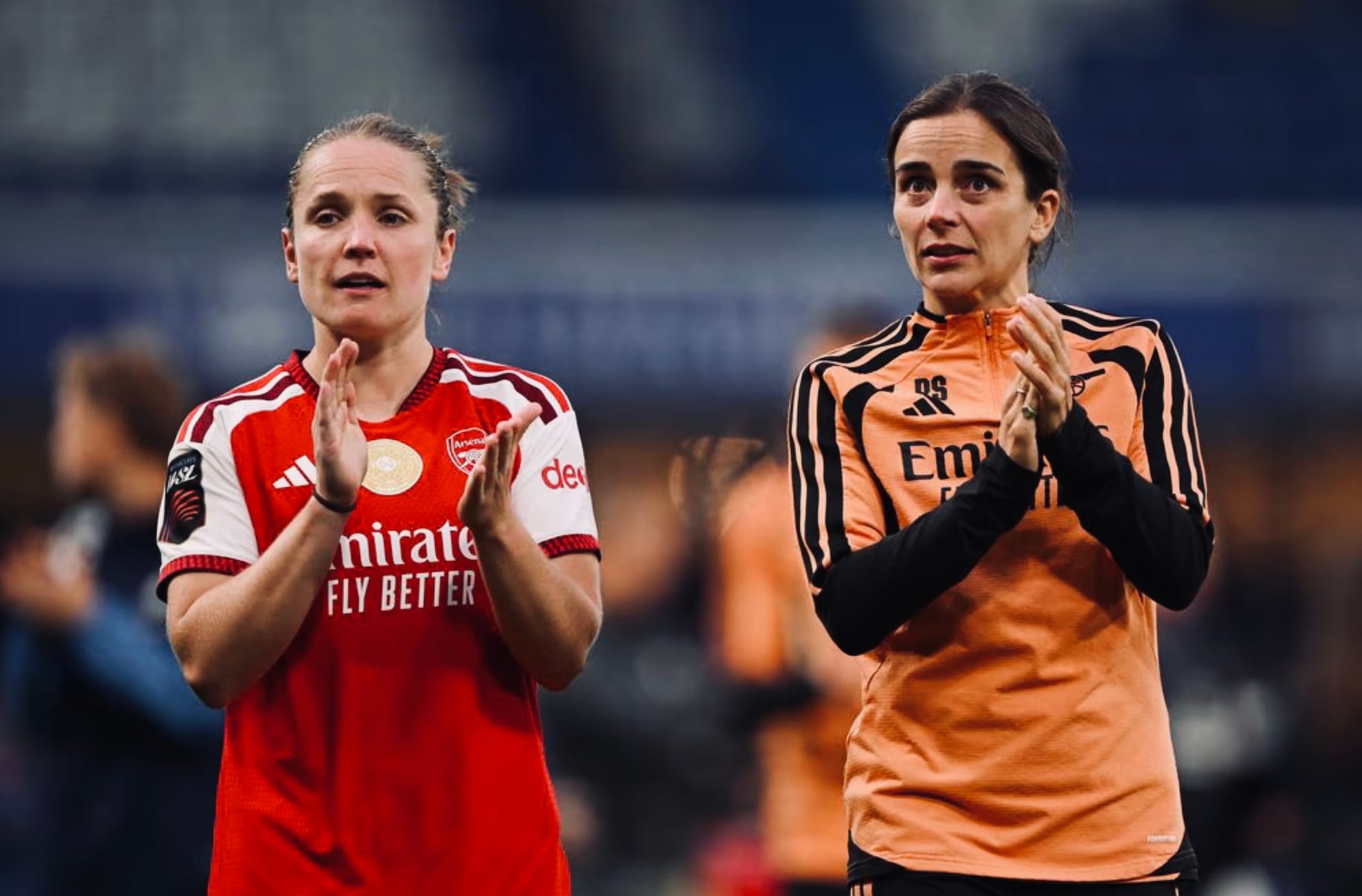
Is Renée beginning to lose the team?
Now this is where I want to be really careful with the language we use, because I've had messages from some of you saying this is beginning to feel like the end of the Jonas Eidevall era and I've seen similar comments appearing online.
I understand why people are making the comparison, but saying something feels familiar and saying Renée has lost the dressing room are two very different things, and I don’t think we have any evidence for the second.
What I do think we're entitled to ask is if we're beginning to see some uncertainty throughout this team, because that Kim Little moment matters to me, even with Renée's explanation afterwards.
If the situation was simply that Emily Fox was temporarily off the pitch and Arsenal needed one shape while they had ten players and then another when she came back on, then fine. That explains why there might have been some communication between the players and the bench at that moment. But it doesn't explain everything else that we're watching.
We've got an Arsenal team with an extraordinary collection of attacking players but just two goals from four league games.
We've got players taking an extra, often unnecessary touch when the shot is on.
We've made substitutions to supposedly make Arsenal more direct, but to my eyes at least, the team became less coherent afterwards.
We've got newer players who appear fully capable of offering something different, yet they either wait until the 81st minute or aren't used at all.
And now we've got the captain apparently having to ask the bench what her role is during a game at Stamford Bridge.
Individually, none of those things tells me Renée Slegers has lost her players, and in my heart I don’t think that’s remotely true. But put them all together, and I think it's a reasonable question to ask if the clarity that seemed to define Arsenal when Renée first took over is beginning to disappear.
Because that was one of the most striking things about the early Renée period post-Jonas; Arsenal looked liberated.
The football wasn't complicated; players seemed to know where they needed to be, what their jobs were and what the player next to them was going to do. They had a freedom about them, and eventually that took Arsenal all the way to winning the Champions League.
Now I watch this team, and I’m seeing almost the opposite - I see players getting into good positions and hesitating, the opportunity to shoot and another touch being taken. Some players receive the ball and then search for the next pass rather than immediately knowing where it's going, and that lack of vision invites the press, causing us to lose possession or completely waste a potential goal-scoring action.
And that's why I've been thinking about this idea of Arsenal becoming “tactically neutered”. Not because I think Renée is standing on the training pitch telling everyone to take an extra touch or not to shoot; of course she’s not. But can a team become so concerned with finding the right position, making the right pass, and creating the right chance that some of the instinct eventually disappears?
Because look at the attacking players we're talking about here: Alessia Russo knows how to score goals, Olivia Smith isn't naturally what you’d call a cautious footballer, and neither is Chloe Kelly. Selina Cerci's first instinct when she sees space is to attack it, and Mariona Caldentey is one of the most intelligent footballers in this team.
So when that collection of players starts looking indecisive around the penalty area, I think it's fair to ask why, and this is where responsibility begins to shift towards the coach.
Renée said after the game that Arsenal need to keep working, keep creating situations and become better at exploiting the momentum when they have it, which all makes sense, but we're four league games in now, and we have just five points from a possible twelve. And we’ve only scored two goals.
And yet again the problem we're discussing today is basically the same problem we were discussing after the Crystal Palace game.
At some point, saying “we need to be better in those moments” stops being an explanation and becomes something the coaching staff has to get on top of and solve.
That's why I don't think the question the day after this defeat is whether or not Renée should be sacked. Let me be crystal clear: I am in no way, shape or form anywhere near trying to make that argument.
I'm not prepared to say she's lost the dressing room based on a shouted question from Kim Little, a bunch of journalists who’ve pounced on it for guaranteed clicks and engagement, and a few frustrated performances.
But I am starting to question whether the players are completely clear on what this version of Arsenal is supposed to be, and what they’re meant to do in it.
Because if they aren't, that’s a much bigger problem than missing a few chances, and Renée needs to solve it quickly.
So where do Arsenal go from here?
The difficult thing is that Arsenal don't have time to sit around working this out.
Paris FC away is next in the Champions League, and then a few days later next weekend we go to Manchester City in the WSL.
So whatever is happening with this team, Renée and her staff have to start finding answers very quickly.
I don't think the answer is ripping everything up, because we saw enough in the opening half hour today to know the frightening, dominant, and dangerous version of this team is still there, and that’s important to hold onto.
If Arsenal had gone to Stamford Bridge and been completely outplayed for the 90 minutes, I'd be sitting here having a very different conversation with you, but they weren't.
For much of that first half, Arsenal were the better team against Chelsea at Stamford Bridge. We controlled the game, got into good positions, hit the woodwork twice and gave Chelsea problems.
So all the ingredients are there; what Arsenal aren't doing is turning those dominant periods into something meaningful.
When you're on top, don’t hesitate, trust your instincts; when the killer pass is there, pass the ball; when the shot on goal is there, just take it.
And when the game starts changing, the manager has to recognise what her team needs and use the squad she has at her disposal to change it again.
That's the bit I'm watching really closely now, because Renée has options.
If she wants directness, she has Selina Cerci.
If she wants someone who sees and uses space intelligently, let's find out what Reuteler can give her because at some point we have to stop talking about the player Arsenal signed and start seeing her play football, not just the few minutes at the end of the game that she had yesterday. In which, by the way, she immediately started to find spaces, but her teammates weren't looking ahead, so they didn't know she was in space to pass to.
If Renée needs energy and width, Smilla Holmberg has already shown time and again what she can do.
And of course Caitlin Foord and Stina Blackstenius have roles to play within this team. I'm not suggesting we chuck two experienced Arsenal players in the bin because we lost at Stamford Bridge.
But selection has to be about what the game needs, not simply who has historically been trusted in these situations.
The same applies to the starting eleven; if Kyra Cooney-Cross is playing well, keep playing her. If someone else is struggling, it shouldn't matter what their name is or where they sit in the squad hierarchy.
This squad is so good, and there is so much competition for places that Arsenal can't be predictable.
And maybe in trying to find positives for you, that's one I'm trying to take out of yesterday. I don't think Arsenal are miles away, which is why a lot of us are so frustrated.
We're not watching a bad team! We're watching a very good team repeatedly get to the point where a game can be decided, and then we fail to decide it.
Today Chelsea did, not Arsenal, and now Renée has to work out why, and she needs to work it out quickly, because while five points from twelve isn't a total disaster in September, the window for the excuse for these problems that “it’s still early in the season” is rapidly disappearing.
Paris FC away gives Renée another chance to show us something different, and as we saw in the pre-season friendly, they aren't a team that gives anything away.
Then a few days later, Manchester City will ask another very serious question of this team.
So no, I'm not sitting here saying Renée Slegers has lost the dressing room, but for the first time since she took this job, I'm looking at Arsenal, and for the first time I’m asking some serious questions about the manager and coaching staff rather than just the players on the pitch.
I know I’m not the only one, and I really hate feeling like this. But I can’t help it now, and I’m guessing some of you can’t either.
What about the title race?
There is one other thing we probably need to talk about before we finish, and that’s where we are at with the league having dropped 7 points already.
Chelsea have now beaten us, and we've dropped points against Crystal Palace and Manchester United. People are looking at the table and have decided the title race is over.
I'm not doing that. It's September, there are 22 league games still to play, and we've already seen enough strange results in the WSL over the years to know it would be ridiculous to declare anything finished after just four matches.
But Arsenal have made life unnecessarily difficult for themselves. Again. And that's the distinction for me.
Because if you want to win the WSL, you have to stop leaving yourself needing other teams to do you favours.
The Palace draw really hurt because Arsenal absolutely dominated that game against a newly promoted team and should have won. Manchester United was another game where we had so many opportunities to take more than a point, and then today, for the opening half hour at Stamford Bridge, Arsenal put Chelsea under real pressure and didn't make the most of it.
So we've now got this bizarre situation where Arsenal have conceded only two goals in four league games but somehow have only five points.
That tells you where the problem is; the defence isn't collapsing. We're not getting torn apart every week.
We're losing points because Arsenal aren't scoring enough goals, and that's why I keep coming back to the same question. How does a squad containing this much attacking talent score just twice in four league games?
Because eventually we have to find a better answer than “they need to be more clinical”.
Of course they do! The question is: why aren’t they?
Why are so many players hesitating in similar situations? Why does that extra touch keep happening? Why aren't we seeing more instinct around the penalty area? When it isn't working, why aren't the changes from the bench changing it?
Those are coaching questions as much as they’re player questions, and I think that's probably where I am today.
I'm obviously frustrated by the result. I'm frustrated because Arsenal could have got something from that game and, especially during that opening half an hour, I thought we were watching a performance that would prove my 2–1 Arsenal pre-match prediction right.
Instead, we left Stamford Bridge with nothing.
But probably my biggest concern is what happened once the game shifted away from us, because that's when you need the manager, that's when you need the substitutions to make sense.
That's when everybody on that pitch needs to understand exactly what their job is in that type of situation.
And that's where, for the first time in Renée’s time as manager, I'm beginning to have some doubts.
I’m not drawing conclusions, but I do have some questions.
And they're questions she and this Arsenal team now need to start answering.
A tricky away fixture next
Chelsea 1, Arsenal 0.
And thinking back to my match preview where I argued that Chelsea might give Arsenal the space they needed, I don't think I was wrong.
We saw it in that opening half hour; Arsenal found space, and they got into really good positions. Arsenal caused Chelsea big problems.
We just didn't do enough with it.
And once Chelsea scored, and the game changed, Arsenal couldn't find another way, which is the bit that concerns me more than losing 1-0 at Stamford Bridge because we would have expected this one to be very tough regardless; our record against Chelsea isn’t exactly historically brilliant, even if we did beat them twice last season.
But this isn't one game anymore.
It's Palace. It's Manchester United. It's Køge. And now it's Chelsea.
Different opponents, different games, different circumstances, and we're still coming back here afterwards talking about Arsenal getting into attacking positions and not doing enough with them.
So now the questions have to get a bit bigger.
Why are we hesitating, why are we taking that extra touch? Why are players who we know can play instinctively starting to look like they're hesitating over what they're supposed to do rather than just doing it?
Why does it look less clear when Renée changes the team? And why, with all of these different options sitting on the bench, do we keep seeing the same old solutions tried out first?
I don't know the answers to any of those questions yet. And I definitely don’t want anything to do with the #ReneeOut brigade calling for her to go four league games into the season.
But I am also tired of explaining every disappointing result by saying Arsenal just weren't clinical enough, and I don’t want to spend the next few weeks doing that.
This squad has too much talent for that to be the end of the conversation.
So, we go away to Paris FC next, and we go into that game wanting to see one thing: Arsenal looking like a team that knows how to score goals again.
Because right now, I'm not completely sure they do.