Kyra Cooney-Cross: Football, Family and Finding Her Way Back
Kyra Cooney-Cross was playing professional football at 15, became a Matilda at 19 and joined Arsenal Women at 21. But to understand the person behind Arsenal’s No.32, you have to go back much further, to Australia, her mum Jessica and the family story that helped make everything else possible.

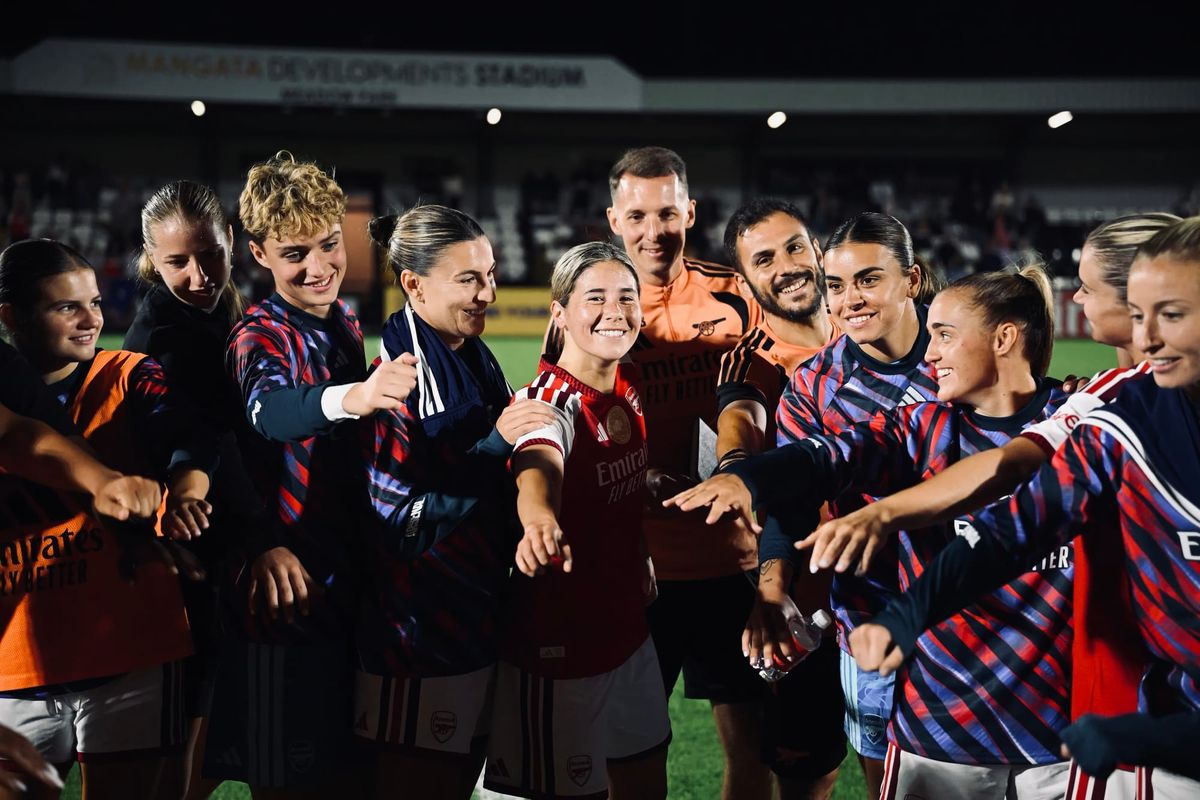
There are some player profiles that are quite easy to put together because you start with where somebody grew up, follow the football through their career, talk about how they eventually arrived at Arsenal and then spend a bit of time wondering what might come next.
I thought that was what this essay focusing on Kyra Cooney-Cross was going to be like to prep.
But as I went deeper into researching her life, particularly the part about how a young mother in Australia sacrificed so much to help her little girl become the footballer we now watch at Arsenal, I realised I couldn’t tell you Kyra’s story the traditional way, because the football and the person outside of it are far too closely intertwined, especially after everything that’s happened to her this year.
So this is still the story of Kyra Cooney-Cross, the footballer, and we’re going to go all the way back to the little girl who was playing senior football at 15, through Melbourne Victory, the Matildas, that extraordinary World Cup in Australia, her journey to Sweden and eventually on to Arsenal.
But it’s also the story of Kyra and her mum, Jessica.
And I really feel we need to give both of those stories the time and effort they deserve.
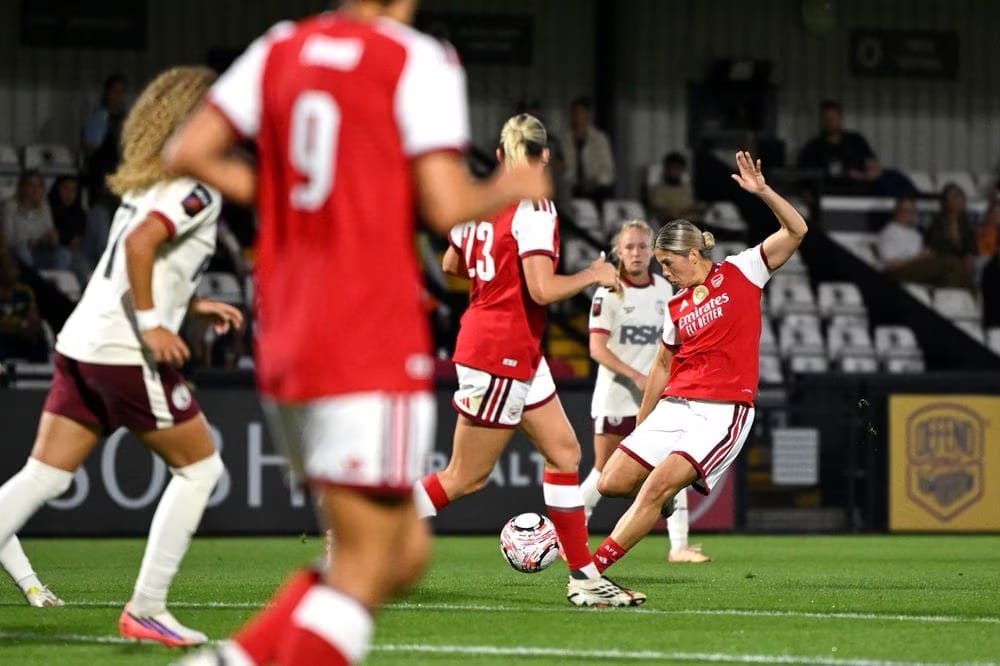
There was a moment at Meadow Park, in a pre-season friendly against Charlton Athletic the night of Wednesday the 26thof August 2026, when the ball rolled towards Kyra Cooney-Cross, somewhere around 25 yards from goal, and in the moment I don’t think there was an enormous amount of mystery about what she was going to do with it. She hit it, and I mean properly hit it. The ball flew into the top corner, Meadow Park absolutely erupted and I was right there in front of her thinking, “that’s one heck of a way to announce that you’re back”.
It was a spectacular goal, one of those goals where for a few seconds you don’t care that it’s pre-season, or that it’s Charlton, or that, as someone covering Arsenal Women, I’m supposed to be analysing systems and rotations and whatever else. Kyra Cooney-Cross, our young Gunner, has just absolutely leathered the ball into the top corner and sometimes you’re allowed to simply enjoy a thing like that.
I’ve been thinking about that goal a lot since, and not really because of the goal itself.
But because we’re going to talk about Kyra Cooney-Cross today, and when I first started thinking about doing this profile, I assumed we’d begin in the obvious place. We’d talk about this wonderfully talented Australian midfielder who was playing senior football at 15 years of age, who scored one of the most ridiculous, amazing championship-winning goals you’re ever likely to see, who became a Matilda at 19 years old, went to the Olympics, played every match of a World Cup in her own country, moved to Sweden, won a trophy there, joined Arsenal at 21 and is still now just 24 years old. We’d look at what sort of footballer she is, why Australians have been excited about her for years, why Arsenal supporters perhaps haven’t yet seen the very best of her often enough, where she fits into Renée Slegers’ midfield and if that goal against Charlton might tell us something about the season ahead.
We’re still going to talk about all that, of course, because it’s part of her story and she’s really footballer, which is pretty important when you host a podcast and write articles about women’s football.
But I don’t think we can understand Kyra’s story properly if we just begin with the football.
I think we have to begin with her mum.
Most people came to know Jessica Cooney in January 2026 when she became ill, and the more I’ve read about Kyra over the last few days, the more wrong it feels to introduce her at that moment. Jessica was there long before Arsenal or most of us knew who Kyra Cooney-Cross was, long before the Matildas and Hammarby and Melbourne Victory. Jessica was there when she was a young mother to a little girl who loved kicking a football around Australia and somebody had to find a way of helping her to keep doing it.
Kyra was born in Queensland on the 15th of February 2002 and football was all around her from very early on. Her dad, Jai Cross, played semi-professionally, and Kyra has said she practically had a ball at her feet from the time she could walk. After her parents separated, 8-year-old Kyra moved with her mum and siblings to Alice Springs; they spent around three years there and then moved again to Ballarat in Victoria, partly because the opportunities for Kyra to play football were better. She played with older girls and boys, progressed through increasingly serious football environments, and by 13 she was with the Football Federation Victoria National Training Centre. A year later she was trialling for the Junior Matildas.
Now, I can give you all of those places and ages and programmes, and it very quickly starts sounding like the standard biography of a talented young footballer. You know how these things go. Talented child discovered young, moves through the development system, sacrifices are made, a professional contract follows. A nice straight line from childhood to elite sport.
Except life doesn’t happen in straight lines like that, particularly when you don’t have much money.
I found something from 2014 that hit me for a moment, because Kyra was 12 years old and had been selected to represent Victoria’s under-15 girls in a tournament in Fiji. Jessica set up a fundraiser - they would need as much help as possible to have any hope of being able to pay for Kyra to go. The target was 2,700 Australian dollars (roughly £1500) and Jessica wrote:
My 12 year old daughter, Kyra Cooney-Cross, was scouted and invited to play for Victoria's U15 girls soccer team in the Ultimate Fiji Soccer Cup. The GoFundMe campaign has been set up to help pay for Kyra's travel expenses and additional costs.
The Fiji Cup is a FIFA & FFA Sanctioned international event and will be held on the 6th to the 14th of December.
Countries that are entering include USA, Canada, Hong Kong, New Zealand (U17G & U15G National Teams) and National states from NSW, QLD, ACT and the hosts FIJI.
This is a great opportunity for Kyra to challenge herself and play at a more serious level of competition. Any contributions made will be a tremendous help!
Please share & thank you for your support!
Forty-four people donated and they ended up raising 2,470 dollars.
That’s Kyra Cooney-Cross before Kyra Cooney-Cross.
Before Arsenal. Before the Matildas. Before World Cups and the Olympics and thousands of people wearing shirts with her name and number on the back.
A young mum is trying to find enough money to send her 12-year-old daughter to a football tournament nearly two and a half thousand miles away.
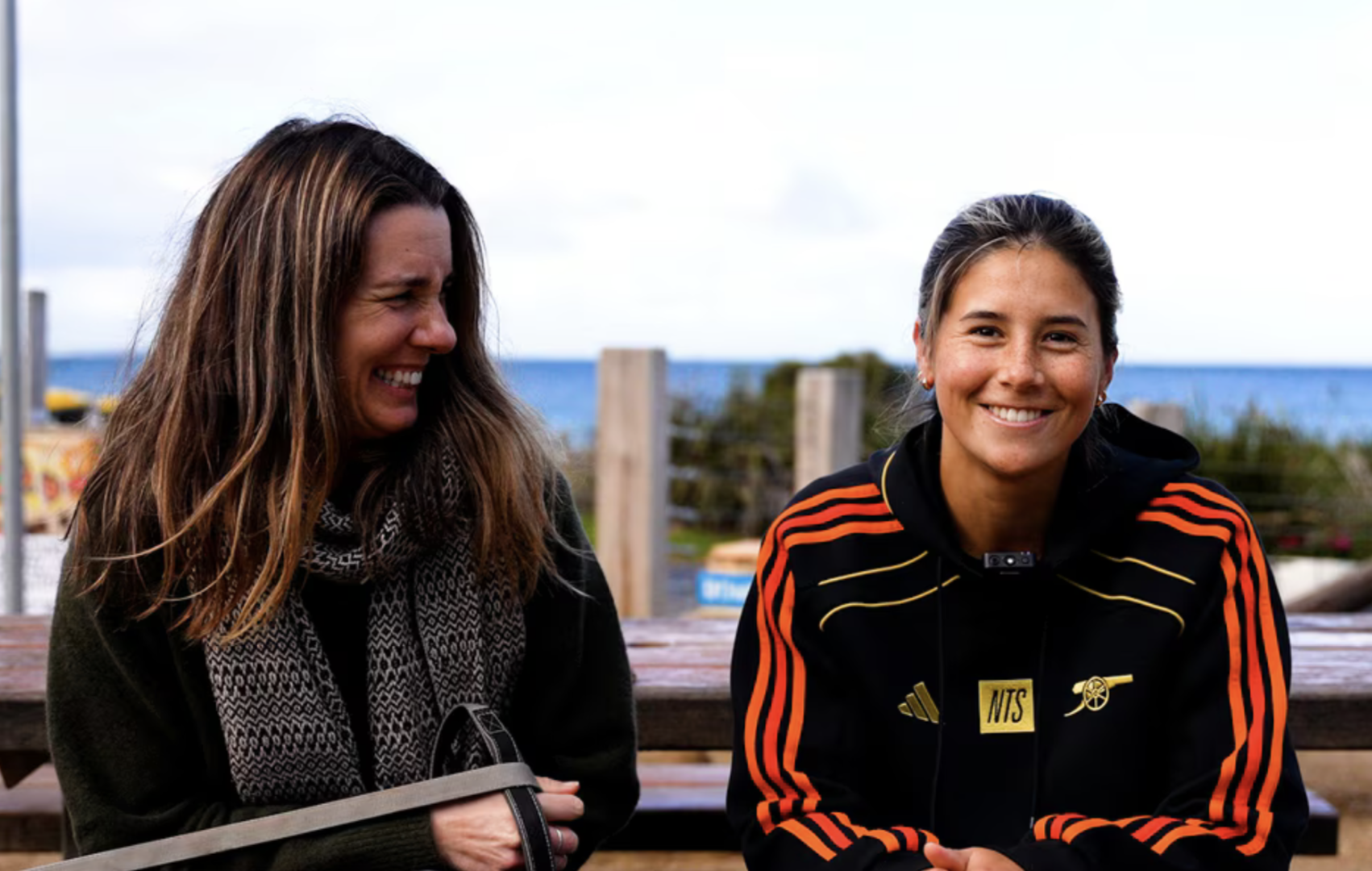
Years later, in an interview published in October 2025, Kyra was asked who had inspired her most in life. She struggled to name a footballer because, ironically, she hadn’t really grown up watching much football. Eventually she talked about her mum, who was sitting there with her during the interview. Kyra became really emotional. She talked about the sacrifices Jessica had made, the journeys to training, and the frequent times when money was so tight there wasn’t enough for petrol.
I keep coming back to that because when we talk about sacrifice in elite sport, we nearly always end up talking about just the player themselves, and of course they do sacrifice a lot, but none of that happens in isolation, particularly when you’re talking about a child who’s still dependent on someone else to get them to where they need to be. There’s usually a parent or grandparent or somebody else in the background doing the less glamorous part of all this, driving long distances, worrying if there’s enough money for petrol, to pay for kit and tournaments, filling in forms, rearranging work, sitting around waiting for training to finish and then getting up a few days later and doing the same thing all over again… these things don’t often end up in the career highlights but without them there probably wouldn’t be any career highlights.
Kyra’s childhood became increasingly nomadic as she progressed and the football became more serious. By 16 years old she left her family to join the Future Matildas programme in Sydney, attending Westfields Sports High School and living away from home, staying with other families. She’d already moved around Australia several times and changed schools repeatedly. At an age when most of us were still having to tell our parents roughly where we were going to be on a Saturday afternoon, she was already learning that if she wanted this badly enough, home and football weren’t always going to be in the same place.
The football, meanwhile, was moving very quickly.
Melbourne Victory gave her a professional contract when she was 15. Fifteen years old. I keep checking that because 15 is an absurd age to be doing anything professionally. At 15 I had no idea what I wanted to do, but Kyra Cooney-Cross was playing senior football.
She made 12 appearances in that first W-League season and scored twice. There was a move to Western Sydney Wanderers for the 2019/2020 season and she scored on her debut there with a free-kick in the 92nd minute, which, as we’ll discover, is a very Kyra Cooney-Cross way to do things. She returned to Melbourne Victory for 2020/2021, scored five times during that season and then Victory reached the Grand Final against Sydney FC.
The Final went all the way into extra time without a goal, and by the time they reached the 120th minute, everyone must’ve been thinking about penalties. Everyone that is, except for young Kyra, who apparently had other plans. She took a corner and somehow scored directly from it, right at the very end of extra time, to win Melbourne Victory the championship. It’s one of those highlights of someone’s career where you read it once and then read it again because it sounds absolutely ridiculous, especially when you remember how young she still was, but maybe it also tells us something about why Australia had already become so excited about her by then.
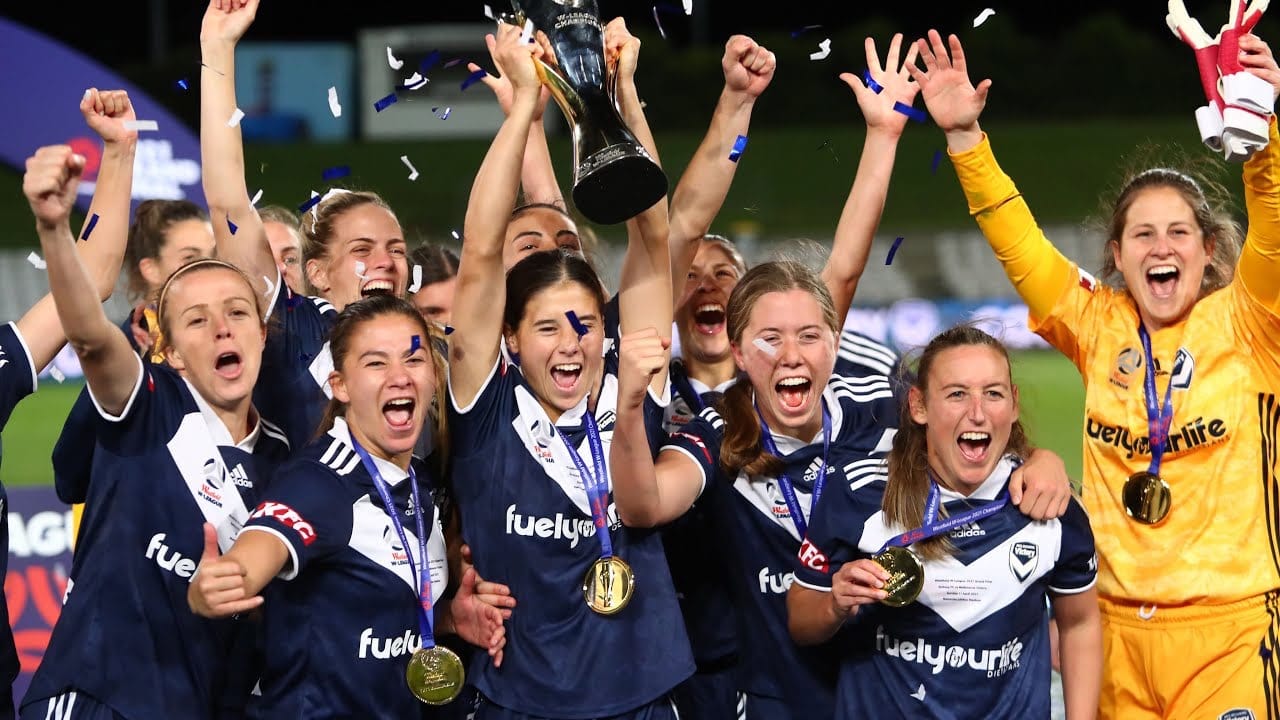
That goal made Melbourne Victory champions, Kyra was named Young Footballer of the Year and now the senior Australian national team came calling. She made her Matildas debut against Denmark in June 2021, at 19. She came on at half-time and made enough of an impression that she then started their next game against Sweden, playing the full 90 minutes. Within weeks she was going to the Tokyo Olympics. This wasn’t someone being gently introduced to international football over a couple of years. She was 19 and suddenly playing against some of the best teams in the world.
But even that slightly understates how long Australia had known about her, because she’d travelled to the 2019 World Cup as a standby player and trained with the senior squad when she was still a teenager. By the time she actually made her debut, the Matildas had already been watching her development for years. Coaches had talked about her explosive speed, her ability with both feet, her creativity and her versatility. She’d played as a midfield playmaker, a winger and further forward. The version of Kyra Arsenal supporters know best as a central midfielder came from a much broader footballing education.
After another championship with Melbourne Victory, Europe came calling next and Kyra, alongside her Melbourne Victory teammate Courtney Nevin, was set to sign for Hammarby in Sweden.
Apparently, Europe didn’t get the memo, and someone forgot the welcome mat when she travelled over.
Kyra arrived in Sweden without the correct paperwork, spent around a day at the airport being questioned and ended up being sent all the way back to Australia before the situation could be sorted out. I have so much sympathy for her because I’m capable of becoming slightly anxious when someone at passport control stares at my passport for three seconds longer than I think they should, so imagine being 20 years old, arriving on the other side of the world to begin the biggest adventure of your football career to date and then getting deported - perhaps not the ideal welcome.
But instead of calling it a day, she went back. Maybe I’m reading too much into it, but it’s a little aspect of Kyra’s make-up that we will see again and again in the future – resilience, determination and strength in the face of adversity.
Hammarby eventually sorted things out; Kyra flew back and settled in Sweden to become a regular starter and a very popular player. In 2023 she helped Hammarby to win the Swedish Cup, their first trophy in 28 years, playing 80 minutes in the 3-0 final victory over BK Häcken. It was another stage in the education of a player who had already experienced an unusually large amount of senior first-team football, and she’d barely reached her twenties.
Then came 2023.
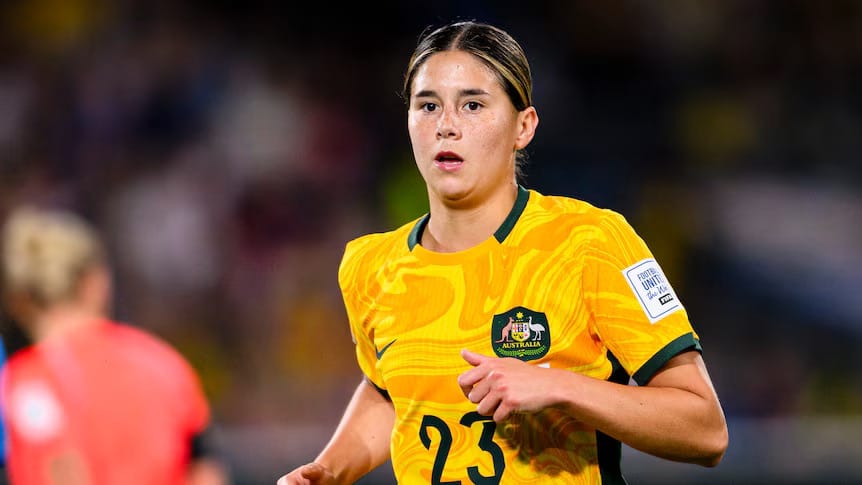
If you’re Australian, I probably don’t need to tell you what the 2023 Women’s World Cup meant. In fact, you could probably tell me so much more about it than I could ever tell you, and that’s partly why I wanted to do this player profile after Nicki Reeves wrote to me from Australia, because I realised there’s a version of Kyra that Australian supporters have known for years that Arsenal supporters haven’t necessarily experienced in quite the same way.
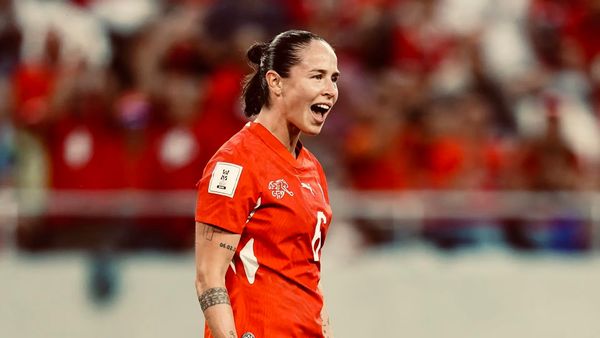
Kyra started every single match for Australia at that World Cup.
Australia went all the way to the semi-finals and Kyra Cooney-Cross, still only 21 years old, was right in the thick of it alongside Katrina Gorry, playing with a composure that made people outside Australia sit up and take notice. Her vision, passing range and defensive work were suddenly being seen on the world’s biggest stage, in a tournament that transformed women’s football in Australia and turned members of that Matildas team into household names all over the globe.
Arsenal legend Ian Wright was watching too. During Australia’s group-stage victory over Canada he posted, simply, “Cooney-Cross bro ???????”
Which is not the most detailed piece of tactical analysis Wrighty’s ever produced, but I think we all can understand what he meant.
There’s another moment with Australia that I want to mention here, though we need to jump forward to October 2024 for it, because if you saw Kyra’s goal against Charlton and wondered whether shooting from ridiculous distances is something she’s always had in her locker, the answer is yes. On her 50th appearance for the Matildas, away against Germany, Australia won the ball back in midfield and Kyra looked up, spotted goalkeeper Stina Johannes off her line and scored from somewhere close to the halfway line. It was her first senior international goal, which seems absurd when you consider the number of games she’d already played for Australia, and it helped the Matildas to a 2-1 win, their first victory over Germany since 2005. The goal was later voted Football Australia’s Goal of the Year and I think, having now watched her stick one into the top corner from 25 yards at Meadow Park, the rest of us are beginning to understand something Australian supporters have known for much longer than we have: if Kyra Cooney-Cross looks up and there’s even the slightest suggestion of a sight on goal, you might want to pay close attention.
But going back to the summer of 2023, only a few weeks after that extraordinary World Cup, Kyra Cooney-Cross joined Arsenal Women Football Club.
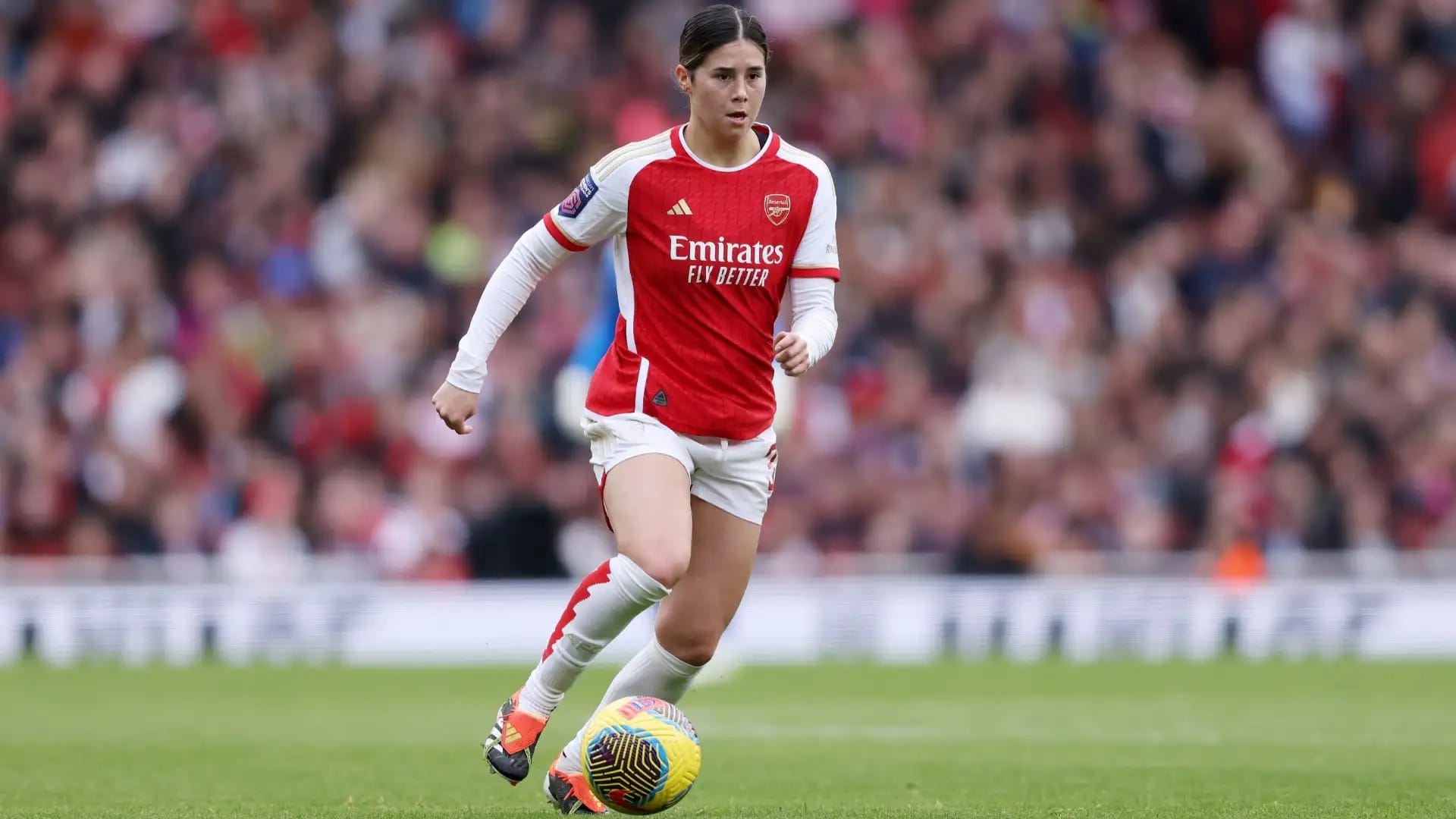
She arrived that September, just 21 years old, with this massive reputation coming out of the World Cup, and this is maybe where the story becomes a little less straightforward again because if you’d watched Kyra play for Australia, watched what she’d done at Hammarby, been watching her playing senior football since 15, you might have assumed she’d just walk into Arsenal and simply carry on where she left off in Sweden.
But she didn’t.
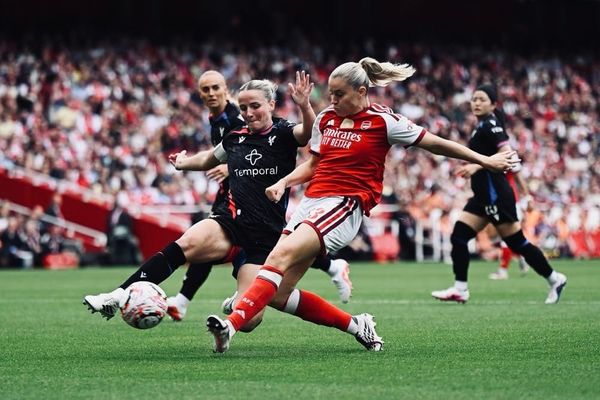
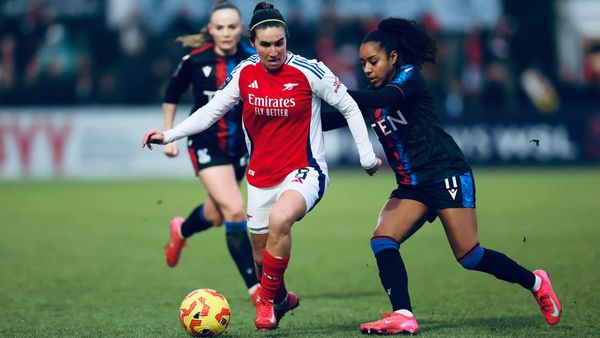
In her first season, she had 14 WSL appearances, but Arsenal’s midfield is no easy place to establish yourself, and Kyra had gone from playing regularly to fighting for minutes in a squad full of experienced internationals. She was adapting to a new home in England, adapting to Arsenal, adjusting to a different level of competition, and to the slightly unpleasant discovery every talented young player eventually makes when they arrive at an elite club: that everyone else is very talented too.
I think that’s worth remembering because hindsight can do strange things to a player’s career. We can look at the player Kyra is now and assume a smooth progression from Australian prodigy to Arsenal midfielder, but Kyra herself has talked about how difficult that transition was. In her interview with The Australian last year she said Arsenal had been harder than she’d expected, particularly because she wasn’t accustomed to not playing regularly. She had to learn patience as much as the football, build her confidence, and accept that development at Arsenal wouldn’t be like it had been elsewhere for her.
Then things did begin to move.
During 2025 she made 29 appearances for Arsenal across all competitions, starting 19 games and playing over 1600 minutes, with one goal and three assists. At the start of that year, she said she finally felt more comfortable, understood what the Arsenal coaching staff wanted from her, and could take more from the players around her. There was a sense that she was shifting out of the adjustment period and about to power on.
And this is where, if this were an ordinary football profile, we’d probably settle into a discussion about the next stage where Kyra got even more starts, built up the consistency in her performances and upped her contributions to the team in goals and assists. Maybe it was the season when Kyra properly established herself.
But instead, as 2026 began, football suddenly stopped mattering so much.
On January 8th, Kyra announced that her mum, Jessica, had been diagnosed with stage-four cholangiocarcinoma, a rare and incurable cancer of the bile duct.
Jessica was terminally ill. Kyra went back home to Australia.
I want to be very careful from this point because, as I’ve touched on before, there’s a temptation when writing about someone in sport experiencing something terrible to turn what happens next into part of their sporting journey. We love narratives in sport. A big setback, the adversity, finding courage, the comeback and eventual triumph. We know the shape of that type of story before it’s even happened, and if our hero then scores a goal after losing somebody they love, the headline almost writes itself.
I won’t do that to Kyra, because this wasn’t a setback in her footballing career.
Her mum was dying.
Those are not the same thing.
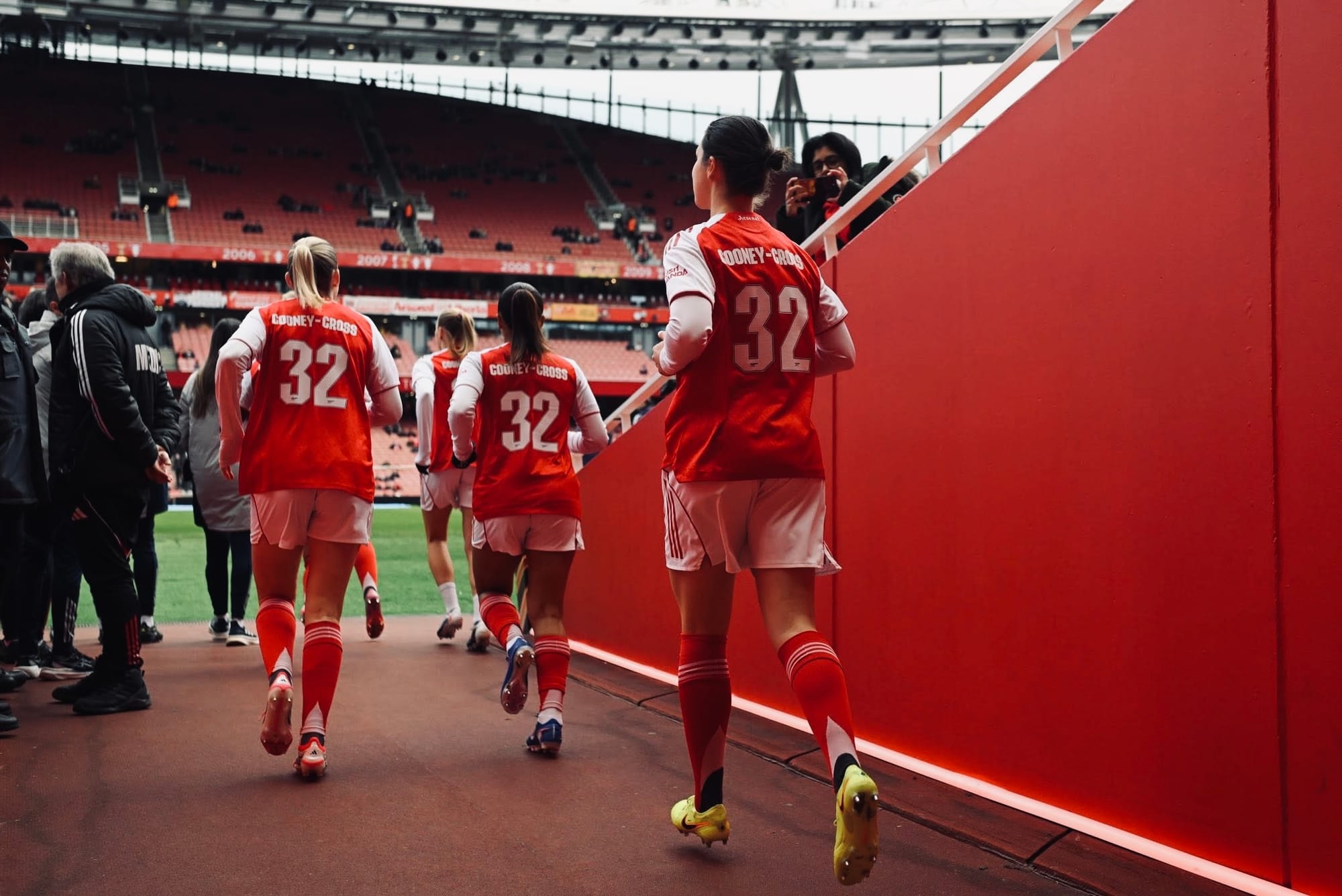
Arsenal were due to play Manchester United shortly after the news became public, and Kyra’s teammates came out at the Emirates Stadium to warm up, wearing shirts all carrying her name and her squad number, 32. Supporters showed their love and support; messages came from teammates, the club and the wider football community. It was one of those occasions where all the tribal nonsense that football can produce becomes completely irrelevant because there’s a 23-year-old woman on the other side of the world who has just been told that her mum has terminal cancer.
Kyra did return to football for a period. She represented the Matildas at the Asian Cup which was held in Australia in March 2026 and she started in the Final against Japan, but after the tournament ended she stayed on. On the 28th of March, Renée Slegers confirmed that Arsenal had granted Kyra indefinite compassionate leave so she could remain with her family, which meant her club season was over.
There was no timetable, no “return to play” date. No question of getting her back in time for some important match.
It was, rightly, family first.
I don’t know Kyra. I don’t know what those months were like and none of us could claim to imagine that we do. As Kyra wrote herself, you do not truly know grief until it is your own.
Jessica died on the 10th of July 2026 with Kyra at her side.
When she wrote publicly about her mum afterwards, she described Jessica as her biggest inspiration and the person she aspired to be. There’s one sentence I can’t get out of my head.
“Mum, my favourite part is knowing that I’m a little piece of you.”
I think that’s probably where we pause and reflect for a second.
You hear those words, and you start looking back over everything that came before in a different way, through Jessica’s eyes. From Queensland to Alice Springs and then Ballarat, all the training sessions and long drives, the times when petrol money was tight, the fundraiser because 12-year-old Kyra had an opportunity to play in Fiji and the family needed help, hope for the kindness and generosity of strangers to get her there.
Then moving again because the football opportunities were better, watching her daughter leave home at 16… Melbourne Victory, Western Sydney, the Matildas, Tokyo, Sweden and the challenges of her little girl getting deported, dusting herself off and making the journey all over again, Hammarby, a World Cup on home soil in Australia and eventually on to the UK and signing for Arsenal.
We put all those things on Kyra’s CV because they’re her achievements, but when you trace the journey all the way back through them, Jessica is there in the background of all of it, helping her daughter get from one opportunity to the next, long before anybody knew where all of this was eventually going to take her.
That interview from October 2025 feels almost unbearably poignant now, because Kyra was asked about her inspiration before anybody knew what was coming. Her mum was sitting there with her; Kyra became emotional talking about her.
Inspiration wasn't some footballing legend… her Mum was her inspiration.
Jessica said something else in that interview when she talked about what Kyra had given up to pursue football from such a young age. She said that there were moments when she felt as though Kyra had lost her youth.
I read that and let it sit with me for a little while.
Jessica herself was still a very young woman when she died. We don’t need to know her precise age to understand that. Kyra wrote after her death that her mum should have had another 45 years of life ahead of her.
45 years. Kyra is 24.
There are certain things in life for which there isn’t a clever footballing analogy - losing your mum at 24 is just simply, tragically, losing your mum at 24.
The word “comeback” kept drifting into my mind while writing this, because that’s the word sport almost always gives us for what happened next. Kyra’s comeback. Her big return. Back from compassionate leave. Back in Arsenal training. Back at Meadow Park.
All factually accurate – but I’m not sure they really describe it.
Kyra returned to Arsenal training on the 17th of August, a little over five weeks after her mum died. Exactly one week later, against Paris FC at Meadow Park, she came on in the 63rd minute alongside teammate and fellow Matilda, Steph Catley. It was her first football in more than five months, with her previous match being that Asian Cup final back in March.
The reception from the Arsenal supporters was, unsurprisingly perhaps, huge.
I think that’s worth dwelling on as well because we do spend an awful lot of time talking about what supporters expect from players. Perform, improve, win. Be available. Fight for the badge. Justify your transfer fee, your contract. Give us everything.
I hate that I have to use the word ‘sometimes’ because, in my view, it should work both ways all the time, but sometimes the relationship needs to work in the opposite direction. Sometimes the player needs something from us.
The applause Kyra received that day couldn’t change what had happened; of course it couldn’t. But perhaps it could communicate something very simple to her.
Kyra, we’ve missed you. We love you. Welcome home.
Then, because football has this habit of continuing to happen regardless of everything else that might be going on in somebody’s life, she was involved in the move that eventually led to Olivia Smith scoring Arsenal’s winner in the 91st minute, the dying seconds of injury time as the final whistle was about to blow.
Three days later she was back at Meadow Park against Charlton and I’m so glad I was there for this one.
She came on after half-time as Renée Slegers made seven changes, and if you’ve listened to the Charlton episode you’ll know I spent most of that second half becoming increasingly fascinated by the way Arsenal could change so many players without changing what they were trying to do. The roles we assign to individual players in our minds or on paper- right back, left back, the 6, the 10, the wingers kept swapping around, but there was little to no drop-off, and the style of play Arsenal is developing remained completely recognisable.
Caitlin Foord caused havoc on the left hand side, sending a dangerous pass into the area, for Selina Cerci to shoot. The Charlton keeper palmed the ball away and Alessia Russo had the presence of mind to sort of shield it from the defender with her and let it continue running out.
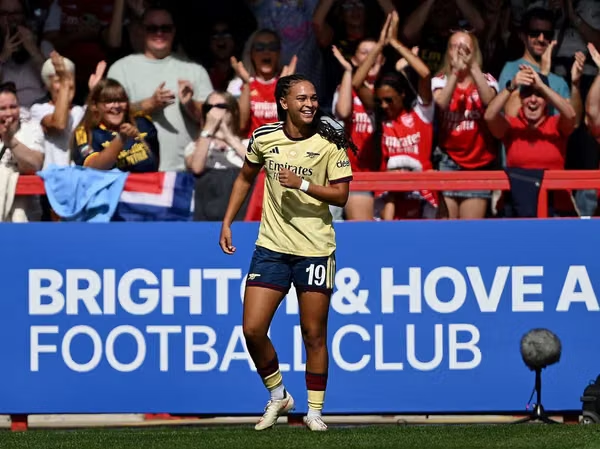
Kyra Cooney-Cross drove through midfield to meet the ball outside the penalty area.
Bang! She hits an absolute rocket.
Top right corner.
Meadow Park erupts like it’s never done before.
If I wanted to turn all of this into a neat little sporting story, then this would be the point where I told you that “Kyra Cooney-Cross was back!”, especially after a goal like that. But I’m not sure that’s something any of us can really say just yet. What we can say is that she’s playing football again; she looked really sharp, the goal was – very Kyra Cooney-Cross – but also absolutely magical and for those few seconds at Meadow Park we could all enjoy watching Kyra doing something she’s so very good at doing, without needing it to mean anything more than just that.
I can also tell you that Renée said immediately after the game that shooting from around the edge of the area was something Arsenal had been discussing, which means there was footballing intent behind it rather than Kyra simply deciding she’d quite like to separate the net from the goalposts.
I can’t tell you what “back” means for somebody whose mum died seven weeks ago.
None of us can.
Kyra probably can’t yet either.
Grief doesn’t operate on a schedule or a football calendar. Grief doesn’t care that Brighton are waiting on September the 6th, or that Arsenal have two players for every position, or that there are training sessions, another behind-closed-doors friendly, match plans and team selections.
Some days, being back with her teammates is exactly what Kyra needs. There might be days when football is a wonderful distraction. There might be days when it isn’t a distraction at all. There might be a perfectly ordinary Tuesday six months from now when some tiny thing reminds her of her mum and the whole thing feels just as raw as it did in July.
That’s not me telling you how Kyra feels, because I don’t know. What I do know is how my own grief has been operating over that same time period, how for the first few weeks nothing made sense, the tears came flooding frequently, the memories of Emily played back in my head from the time she was a puppy, to all the moments of her life and the final minutes when she left us. The deep, painful desire to want her back, to have those last days again. The dark moments where you never want to wake up, because your dreams are the place where that loved one you’ve lost exists. And when you do wake up the raw emotions, feelings of loss and the pain in your heart are there once more and you don’t know how you’ll pull yourself together enough to get through another day.
You can spend days, weeks, months feeling lost and bereft, unable to function anywhere near the level you normally do – and it is different for everyone, but I marvel at how Kyra has found the strength to return and perform at the level she has. My admiration, pride and love for this young woman could never be expressed properly in words.
There’s been some talk about the coming season in relation to Kyra and if she can now cement her place in Arsenal’s new-look squad and “fulfil her potential”. I’m slightly uncomfortable with this.
I totally understand there’s a natural football conversation to be had about this, of course. She’s an Arsenal player, she wants to play football, and we want to see her play. She doesn’t need to be treated like a porcelain doll or be given special consideration when it comes to competing for her place because something awful happened in her life. I expect Kyra herself would find that quite strange.
But maybe we can hold two thoughts at once.
Kyra Cooney-Cross is a 24-year-old midfielder with 67 appearances for Australia, major-tournament experience, a World Cup semi-final behind her, a championship winner in Australia, a Swedish Cup, three seasons of experience at Arsenal and a huge amount of ability.
She’s also a 24-year-old daughter whose mum died in July.
One doesn’t cancel out the other.
Footballistically, and yes, I’m aware that’s probably not a word, but I’m keeping it, I’m fascinated and excited to see what Renée does with Kyra.
Because if you go back to the teenage Kyra rather than simply looking at the Arsenal version we’ve grown to know and love, you find a player with a broader range of qualities than we’ve yet seen in North London. She was praised as a youngster for being able to use both feet, for having explosive acceleration, for her creativity and for her ability to play in different attacking and midfield positions. She loves shooting from distance too, which really wouldn’t have surprised any of us that Wednesday night against Charlton, because she was talking about her love of long-range goals when she was still a teenager.
At the 2023 World Cup we saw her passing range and composure from deeper positions. With Australia she’s had the responsibility of helping to control the midfield in major tournament games at a very young age. At Arsenal, she’s had to learn patience because Kim Little, Mariona Caldentey, Frida Maanum and the other midfield options aren’t exactly people you politely ask to move out of the way because you’d like to have a go.
The squad has changed again now. Renée has talked throughout this pre-season about connections, players understanding each other, versatility and having different qualities available while maintaining the game model. We’ve already watched Georgia Stanway come into this midfield and operate right the way through from defence to attack. We’ve seen Mariona Caldentey and Lisa Baum used from the wings and drifting inside. We’ve seen different combinations revolve around Kim Little. We’ve seen Arsenal press with fierce intensity, constantly rotate and ask their midfielders to look for and find spaces rather than simply stand and occupy one single zone.
Where does Kyra Cooney-Cross fit into all that?
Right now, I don’t know.
That’s not me being evasive - I actually think it’s a really exciting and intriguing question to ponder.
Maybe she becomes someone Renée trusts in a deeper role, receiving the ball under pressure and progressing Arsenal through midfield. Maybe we see more of the player who can pick the ball up and travel at pace with it. Maybe those vicious shots from outside the box become another useful weapon against teams sitting in deep. Maybe her role changes depending on who’s around her. Maybe she starts 25 games this coming season and maybe she doesn’t.
Maybe that’s another reason not to try and put some big narrative around this season before it’s even begun.
When you look back at Kyra’s career, she’s spent most of it doing things earlier than you’d normally expect. She was playing professionally at 15, made her Matildas debut at 19 and went to the Olympics that same year, moved to Europe at 20 and by 21 she’d played in a World Cup semi-final in her own country and become an Arsenal player. That’s an incredible amount of football, travel, change and, quite frankly, life to have squeezed into such a short period of time, which makes me wonder if this is the point where we stop looking at Kyra and asking what she needs to do next or how quickly she needs to do it. She’s spent most of her life being way ahead of whatever schedule football might normally have set for her, so perhaps for a while there doesn’t need to be one.
I’ve been trying to work out why Kyra’s story has affected me as much as it has while researching this. Obviously the part about Jessica is heartbreaking, but I think there’s something else in it too. We watch these players every week and, as fans, turn them into football problems that need to be solved. Should Kyra start? Is she good enough? What’s her best position? Why isn’t she getting more minutes? Should Arsenal loan her out? Does Renée rate her? Would she be better off somewhere else?
In a way they’re all perfectly legitimate football questions and we’ll carry on asking them because that’s part of following a football team, but every so often something happens that makes all of that feel much less important for a while and you’re reminded that there’s a real person inside the shirt and behind the squad number we spend so much time analysing.
I think Arsenal supporters understood that when Kyra came back against Paris because nobody particularly cared what her pass completion percentage was, or whether she’d played well enough to start the next match. They were simply pleased to see her walking onto a football pitch again. Out of everything that’s happened since she returned, even including that screamer against Charlton, the thing I’ll remember most is probably the reception she got when she came on and the applause around Meadow Park, because for that moment at least nobody was asking Kyra to give Arsenal anything.
Kyra’s relationship with football began with people helping her get to where she was trying to go. Her mum driving her to training, games and tournaments. Her family moving around. People donating a few dollars to try and help a 12-year-old get to a competition in Fiji. Coaches giving her a chance and putting their faith in her. Other families giving her somewhere to live when football pulled her away from home.
Then, all these years later, after football had taken her from Australia to Sweden to London and given her championships and World Cups and an Arsenal shirt, something happened that football couldn’t fix.
So when everything changed, Kyra went home and Arsenal gave her the time and space to stay there with her mum and her family for as long as she needed, while her teammates and the supporters did what they could from this side of the world to let her know that she is loved and they were thinking about her. Then, when she eventually felt ready to come back to London and come back to football, she walked onto the pitch at Meadow Park and found thousands of Arsenal supporters waiting to welcome her back, not really expecting anything from her at that point other than, I suppose, letting her know that she was still very much part of this Arsenal family.
There’s something I find quite beautiful about that, although I’m slightly wary even saying it because I don’t want to turn something so deeply painful into a nice football story where the club and the supporters somehow make everything better. They can’t, and football certainly can’t heal grief, but maybe there are moments when a football club can actually be what the word ‘club’ is supposed to mean: a group of people who are there for one another when somebody needs them. Kyra needed to go home, so Arsenal let her go, and when she was ready to come back, everybody was still here waiting with open arms.
Kyra will obviously carry Jessica with her for the rest of her life, and she said that herself far more beautifully than I ever could when she wrote that her favourite part was knowing that she was a little piece of her mum. Knowing everything we know about Jessica now, everything she did to help Kyra become the young woman and the footballer she is, I feel we’ll see little pieces of her too, although I don’t mean that in some mystical football sense where every goal suddenly has to be “for Jessica” or every win needs to carry some deeper emotional significance, because that’s not a narrative for anyone to be imposing on Kyra.
What I mean is that we’ll see pieces of Jessica in Kyra herself, in the person Jessica helped raise and in some of that determination we’ve already seen throughout her life, because this is someone who left home at 16 to chase football, went back to Sweden after her first attempt ended with her being sent all the way home to Australia from the airport, who stuck at Arsenal when playing here turned out to be considerably tougher than she had expected, who went back to Australia when her family needed her and then, when she felt able to, came back to London and eventually back onto a football pitch. I don’t know what any of that means for what happens next and I don’t think we need to really find any meaning for it. For now, maybe just being back with her teammates and playing football again is enough.
The WSL starts in under a week, and eventually football will do what football always does. We’ll vigorously discuss team selections, performances and results. We’ll argue about midfield combinations and where people should play. Someone on Instagram will tell me with considerable passion that Kyra Cooney-Cross absolutely has to start and someone else will tell me why I’m completely wrong about something completely mundane and trivial. Renée Slegers will make decisions, Kyra will play and she’ll have great games and possibly some not-so-great ones, because she’s a footballer and a young woman who has been through so much pain, and this is real life rather than some scripted feel-good movie.
I hope we allow her some grace. I hope we allow her to have a brilliant game without concluding that she’s completed some inspirational comeback.
I hope we allow her to have a bad game without asking what’s gone wrong and trying to psycho analyse what might be going on in her head.
I hope we allow her to be 24.
Because somewhere in all of this, behind the Australian international and the Arsenal number 32 and the girl who can apparently score a wonder goal from ridiculous distances whenever she feels like it, there’s still the daughter of the woman who once needed to raise 2,700 dollars to get her little girl to a football tournament.
Jessica got her there - not just to Fiji, but all the way here.
And perhaps when Kyra Cooney-Cross walked back onto the pitch at Meadow Park that Sunday in August in a friendly against Paris FC, and Arsenal supporters all stood up and applauded her, the most important thing wasn’t that one of Arsenal’s midfielders had returned for the new season.
It was that Kyra Cooney-Cross had found her way back to something she loves.
Whatever happens next can take as long as it needs to.