Arsenal 1–1 Birmingham City: What's Going Wrong Under Renée Slegers?
Arsenal Women dropped more points against Birmingham City, but the result is only part of the problem. From Alessia Russo's position to Renée Slegers' decisions, we examine what's going wrong and why changes are needed.

I walked away from the Emirates yesterday following the draw with Birmingham City feeling something I really didn't expect to feel at this stage of the season: a mixture of frustration, sadness, and, if I'm being completely open with you, a growing sense of worry about where this Arsenal team is heading.
Because we drew 1-1 with Birmingham City. At home. And I know that Birmingham deserve respect; I know they've got some very good players, and we'll absolutely be talking about one of them in particular because I thought she was outstanding, but we are Arsenal.
We’ve got a squad full of international footballers, we've invested heavily in bringing players to this club, and yet here we are, once again, trying to understand how we ended up dropping points from a game we should have been able to win.
And the thing that's really bothering me isn't just the result. It's that I keep seeing the same problems, game after game, and I'm finding it increasingly difficult to understand why we're not doing more to address them.
I don't want to sit here calling for people to lose their jobs. I have so much respect for Renée Slegers and what she's achieved with this team, and I don't think anyone should forget that. But respecting someone and believing they're getting everything right are two very different things, and I think we've reached a point where we have to start asking some difficult questions about the decisions being made.
Because I look at this squad and I see solutions. I see players who could make a difference, players who could give us what we're missing, but some of them are sitting on the bench while we keep struggling with problems that have been staring us in the face for weeks and weeks.
And I keep coming back to one question.
Why?
Why are we making things so difficult for ourselves?
I'm not going to make this a long-winded complaint about everything that's wrong with Arsenal. That won't help you, and it definitely won't help me. What I want to do is work through what happened against Birmingham, look at the decisions that were made, give credit where it's deserved, and then consider what might actually help us move forward.
And I can't promise that we'll finish this conversation feeling like everything's going to be fine, because I don't know that it will be. None of us does.
What I can promise you is that I'll tell you what I saw, explain why I've reached my conclusions, and hopefully give you a few things to think about as you have those conversations with other Arsenal supporters in the coming days.
Right. Let's talk about Birmingham.
Why This Result Hurts So Much
I want to start with Birmingham City because I think it's important we don't fall into the trap of assuming that, because we're Arsenal and they’ve just been promoted, all we had to do was turn up and collect the win.
Football doesn't work like that, and Birmingham certainly didn't come to the Emirates simply to make up the numbers.
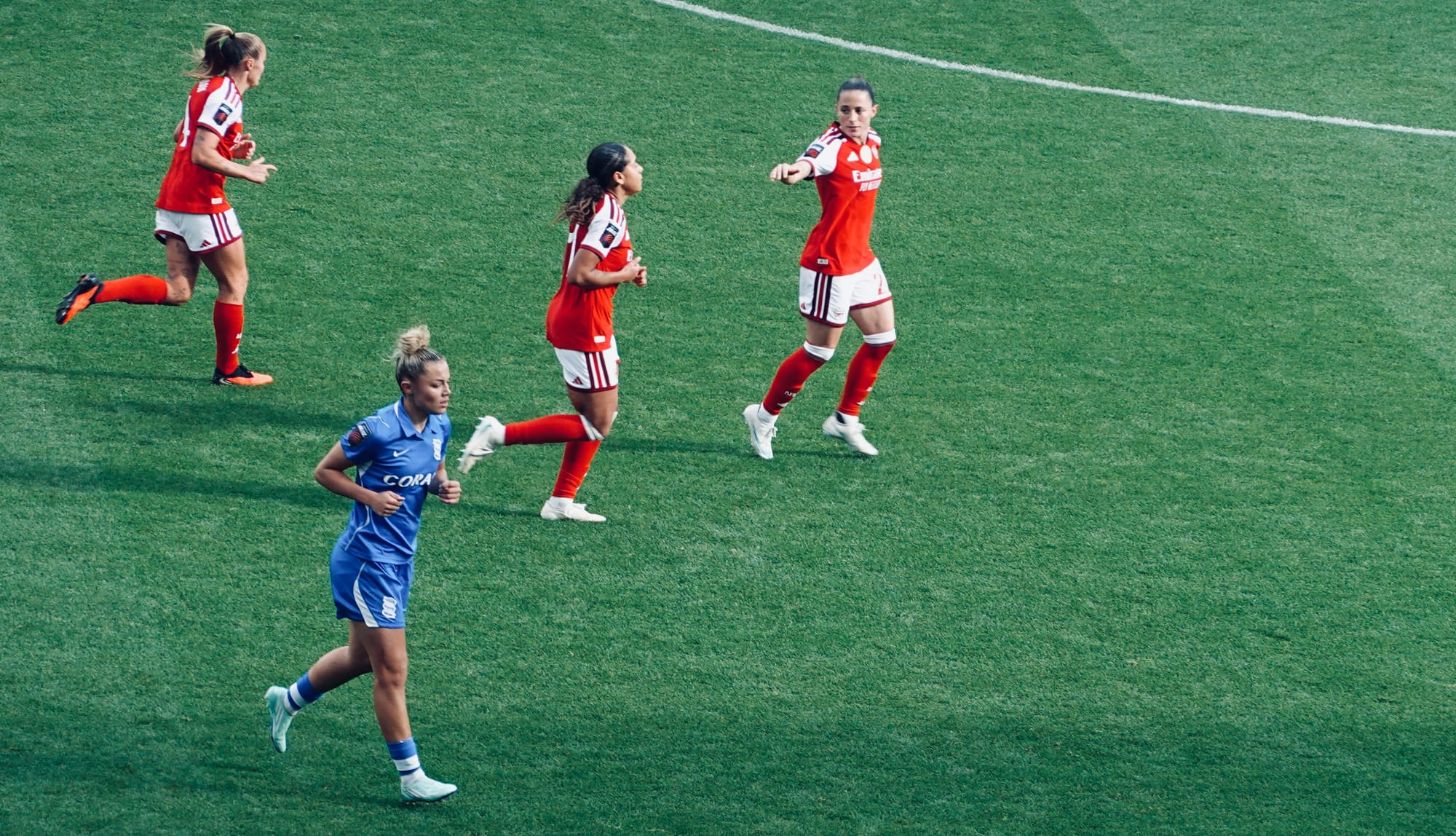
They were organised, worked incredibly hard, defended in numbers when they needed to, and had a clear idea of how they wanted to hurt us when they got the chance. In Océane Hurtré, they have a player who caused us massive problems, not just because of the goal she scored, but throughout the game, because her movement and willingness to run into the spaces we left behind our defence gave Arsenal something to worry about every time Birmingham got forward.
So I want to give Birmingham credit before we start on Arsenal, because I think they earned their point.
But giving Birmingham credit doesn't mean we should pretend Arsenal couldn't have done better.
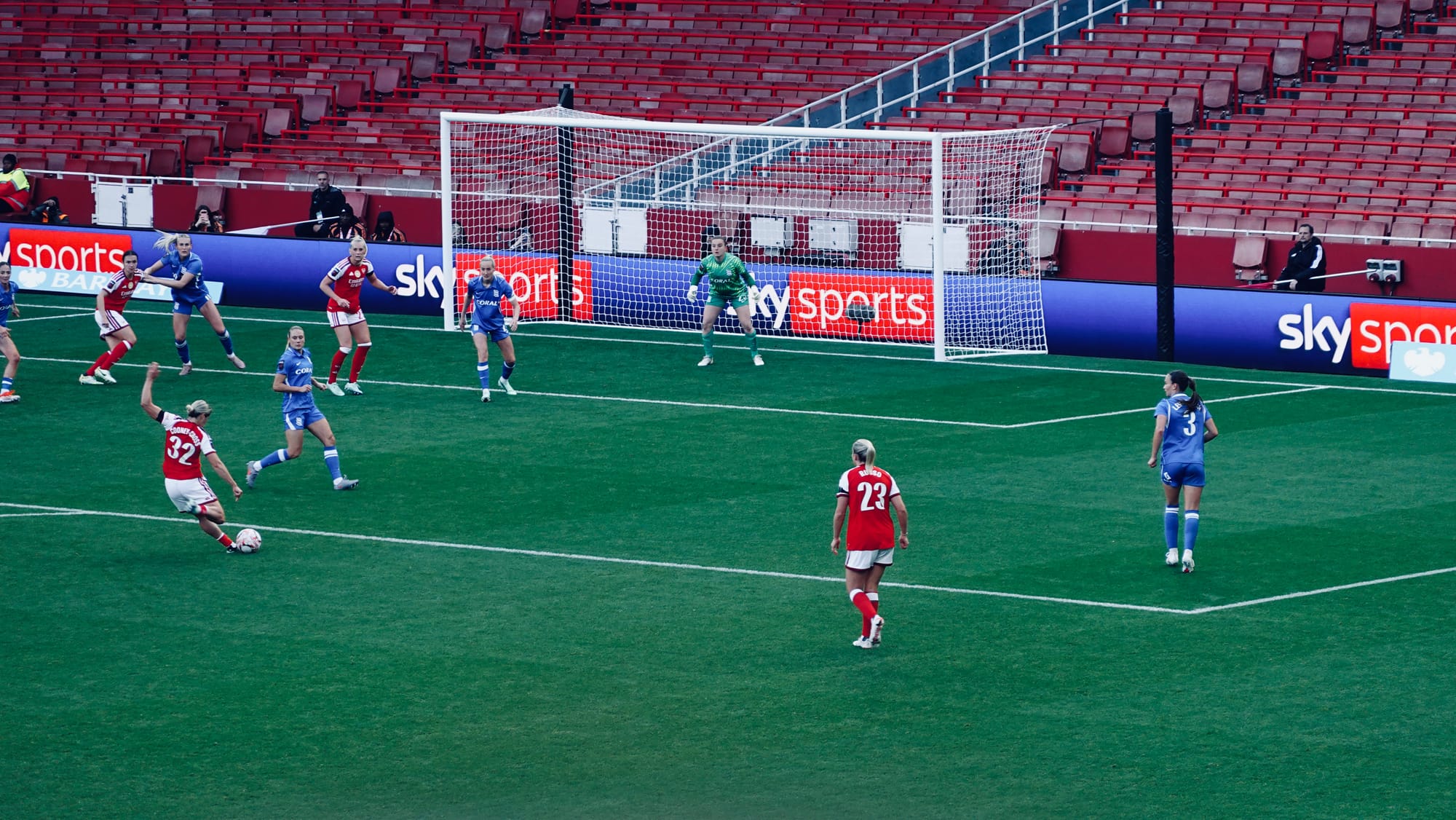
We hit the woodwork twice, created opportunities, and controlled possession for long periods, but once again we struggled to turn that time on the ball into the goals we needed.
And here's where I think we have to be careful about the way we talk about these games, because it's very easy to look at possession statistics and the number of shots and conclude that Arsenal played well but were simply unlucky.
Sometimes that is what happens. Sometimes you do everything right, the opposition goalkeeper has the game of her life, the ball hits the post instead of going in, and you walk away wondering how on earth you've not won.
But I don't think that adequately explains what happened yesterday.
Because when I look at Arsenal right now, I see a team that can spend a lot of time attacking without necessarily looking as dangerous as all that possession suggests.
We move the ball around, we get into promising areas, we have players who are technically capable of doing amazing things, but too often the final pass isn't quite right, the movement isn't there, or the player you really want at the end of the opportunity is somewhere else on the pitch.
And while we're trying to work all of that out, we're leaving spaces behind us that opponents are increasingly willing to exploit.
That combination is now a big, big problem.
Because it means we're working incredibly hard to score our goals while making it far too easy for the opposition to create chances at the other end.
Against Birmingham, that was especially frustrating because I could see the danger developing from where I was sitting.
For those of you who don't know, I sit in Club Level behind the dugout at the Emirates, directly in line with Renee, and when I watch football, I spend a lot of time looking away from whoever has the ball.
I know that might sound strange, because naturally your eyes tend to follow the action, but I'm always interested in what the other players are doing. Who's moving into space? Who's watching their opponent? Who's making a run that nobody has spotted? And most importantly, who's supposed to be covering an area of the pitch that suddenly seems empty?
And yesterday, there were times when I was almost tearing my non-existent hair out watching how much space Birmingham were finding down our left side.
I'd see Hurtré moving into space, look at where our defenders were positioned, and I'd be thinking, “One of you, please look up! Please see what's happening over there!”
That didn't suddenly appear out of nowhere when Birmingham scored.
It had been developing.
That is why, when I listened to Renée's comments afterwards and found out the coaching staff had recognised Birmingham's decision to move Hurtré across to that side of their attack, I became even more frustrated.
Recognising a problem is one thing, doing something about it is another.
That distinction will probably come up a lot as we work through this game.
Now, before we get into the defensive problems in detail, I want to talk about something that I think is just as important, because if Arsenal had made better use of the opportunities they created, we might be having a different conversation this morning.
And that something is Alessia Russo.
Alessia Russo: Our Best Player, But Is She Playing In The Right Position?
I want to start by saying that Alessia Russo was my player of the match yesterday. I thought she was absolutely outstanding, and I know she's our main goalscorer and she didn't get on the scoresheet, but I don't think anyone can question her effort, her commitment or the amount of work she put in for the team yesterday.
She was everywhere, and I really do mean everywhere.
There was one moment in the second half when Alessia made a fantastic recovery run, chasing all the way back towards what was effectively our left-back position to help deal with a Birmingham attack, and I remember watching her and thinking, firstly, “Is that Alessia making that recovery?!” and then, “thank god for Alessia Russo.” She's our centre-forward; she's meant to be the player we look to when we need a goal, but there she is, practically playing left-back because someone has to get back and deal with the danger.
And while I admired her for doing it, I was also asking myself a rather obvious question.
“Where on earth was Ona?”
We'll come back to Ona Batlle and what's happening on that side of our defence a little later, because I think there's a bigger conversation to have, but that moment with Alessia summed up something that's been bothering me for a while.
We're asking her to do a lot for this Arsenal team, and she's so good at so many of them that I think we sometimes forget what we actually need her to do.
Scoring goals.
Now, I don't mean that Alessia should stand in the penalty area waiting for someone to get the ball to her. Anyone who's watched her play regularly knows she’s not that type of striker, and it's one of the reasons I love watching her. She's brilliant at coming towards the ball, receiving it with a defender behind her, holding that defender off and bringing other players into the attack. She's got quick feet, she's strong, she's intelligent in her movement, and she can create opportunities for others as well as finish them herself.
But there's a difference between a centre-forward who occasionally drops deeper to help build an attack and one who spends so much time doing everybody else's jobs that she's not where you need her when the ball finally arrives in a dangerous area.
And I think that's what's happening with Alessia. Just like last season.
Yesterday, Renée decided to start Stina Blackstenius as our number 9, with Alessia playing behind her at number 10, and I wasn't happy when I saw the team sheet.
Not because I've got anything against Stina. She's scored some really important goals for Arsenal, and she has qualities that can make life very difficult for defenders, especially when she can run into space behind them. Give Stina a ball to chase while a defender tries to keep up, and she can cause all sorts of problems.
But that's not the same as asking her to play against a team that's sitting deep, with defenders packed together and very little room to run into.
This is where I think the difference between Stina and Alessia becomes really important.
Stina is at her best when she can play on the shoulder of the last defender, waiting for that opportunity to get in behind. Alessia can do that too, but she offers so much more when the opposition defends in numbers because she can receive the ball onto her feet, turn, combine with the players around her, and help create an opening where there doesn't seem to be one.
Against Birmingham, we needed that sort of movement and imagination in and around their penalty area.
Instead, Alessia did a lot of work further from goal, while Stina struggled to make much of an impression.
I remember Stina having a headed opportunity that went off target, but apart from that, I didn't feel she contributed much to the game. She wasn't getting into positions where she could make a difference often enough, and when the ball came to her feet, she couldn't do the things Alessia does so naturally.
Now, some of that is down to the service she was receiving. I don't want to make Stina the scapegoat for what was a disappointing team performance, because that wouldn't be fair, and it's worth remembering that a striker can only do so much if the players around her aren't creating the right opportunities.
But I do think we have to ask whether this was the right game to start her, since it meant moving Alessia away from her best position.
And this is where we need to look back at England in the past week.
When Alessia plays for the Lionesses under Sarina Wiegman, I feel she has a much clearer understanding of what her role is and what the team needs from her. She still comes towards the ball, still helps build attacks, and she doesn't spend 90 minutes standing around waiting for something to happen, but she knows where she's expected to be, and the players around her work to create opportunities for her.
And we've seen what she can do when that works.
She's been such an important player for England, scoring big goals and helping create some of the most memorable moments we've enjoyed with the Lionesses, and I can't help but wonder why we're not consistently getting that same level of goalscoring output from her at Arsenal.
I know international football and club football are different, I keep saying it myself, and I know you can't simply take what Sarina does with England and expect it to work exactly the same way with Arsenal. The players are different, the opposition is different, and the coaches have different amounts of time to work with their squads.
But surely we can learn something from how Alessia is being used for England, because I don't believe she's suddenly a different footballer when she puts on an Arsenal shirt.
She's the same player, with the same intelligence, movement, and ability to score goals.
So maybe we need to spend less time asking why Alessia isn't scoring enough for Arsenal and more time asking if we're giving her the best possible opportunity to do so.
And I want to be very clear about something here, because I think it's important.
I'm not criticising Alessia Russo. I'm questioning the role she's being asked to play.
There's a massive difference.
If anything, the fact that she was my player of the game, despite being asked to play in a position I don't think best uses her abilities, shows just how good she is.
But football isn't about asking your best players to do as many different jobs as possible just because they're capable; it's about putting them where their abilities can make the biggest difference to the team.
And when you're Arsenal, when you're creating as many opportunities as we are but struggling to score enough goals, I would have thought one of the first things you'd want to do is make sure your best centre-forward is playing AT centre-forward.
That seems pretty straightforward to me.
Of course, that raises another question, because if Alessia moves back into the number 9 position, someone has to play behind her.
And this is where I think we have an opportunity to make a change that could improve the way our entire attack functions, because we've got a player sitting on the bench who I believe has the intelligence, movement and creativity to help connect everything together.
Somebody who can find those little spaces between defenders, receive the ball under pressure and bring the players around her into the game. Somebody who doesn't necessarily need to score the goal herself but would have made a massive contribution to creating it.
And before anyone tells me we don't have an alternative to playing Alessia at number 10 because Mariona Caldentey, Frida Maanum, and Kim Little weren't available, I'd like to remind you that Géraldine Reuteler was sitting right there.
On the bench. AGAIN.
And I think it's about time we had a proper conversation about that.
Géraldine Reuteler: How Much Longer Does She Have To Wait?
I want to start this section by making something clear: I've spoken about Géraldine Reuteler quite a lot on this podcast since she arrived at Arsenal, and I don't want anyone to think I've decided she's the answer to every problem we've got.
She's not. No single player will fix everything happening with this team, and it wouldn't be fair to put that expectation on her shoulders anyway.
But what I find increasingly difficult to understand is why we've brought a player of her quality to Arsenal and are still waiting to see what she can do when she's given the chance to start and make that position her own.
This isn't some young player who's just arrived from the academy and needs time to get used to senior football. Géraldine is an experienced international footballer. She's played at the highest level in Germany, represented Switzerland at major tournaments, and shown she's an extremely intelligent, creative, and effective attacking player.
I watched her closely during the European Championships this summer, long before she arrived at Arsenal, because I was fascinated by the way she played for Switzerland. She was one of those players who seemed to understand where the ball was going to be before everyone else had worked it out, and I remember being really impressed by how she could find a little pocket of space, receive the ball and suddenly create an opportunity that hadn't looked to be there a few seconds earlier.
She wasn't always the one making the final pass or taking the shot, but so often she made it all possible.
And that's something I think Arsenal could really benefit from right now.
Because when you're playing against teams defending with eight or nine players behind the ball, it's not always about having someone who can run faster than everyone else or hit the ball harder. Sometimes you need someone who can spot a pass nobody else has, move a defender a couple of yards out of position, or know when to slow things down for a second before suddenly speeding up again.
And Géraldine has shown that she can do those things.
Now, does that mean she'd automatically have been brilliant if she'd started against Birmingham? Of course not. She might have struggled just as much as everyone else, and there's no guarantee that starting her would have changed the result.
But I'd quite like us to be given the chance to find out, because what are we waiting for?
And this is where I want to tell you something that I noticed yesterday, because I was sitting directly behind the Arsenal dugout and had a great view of what was happening with the substitutes.
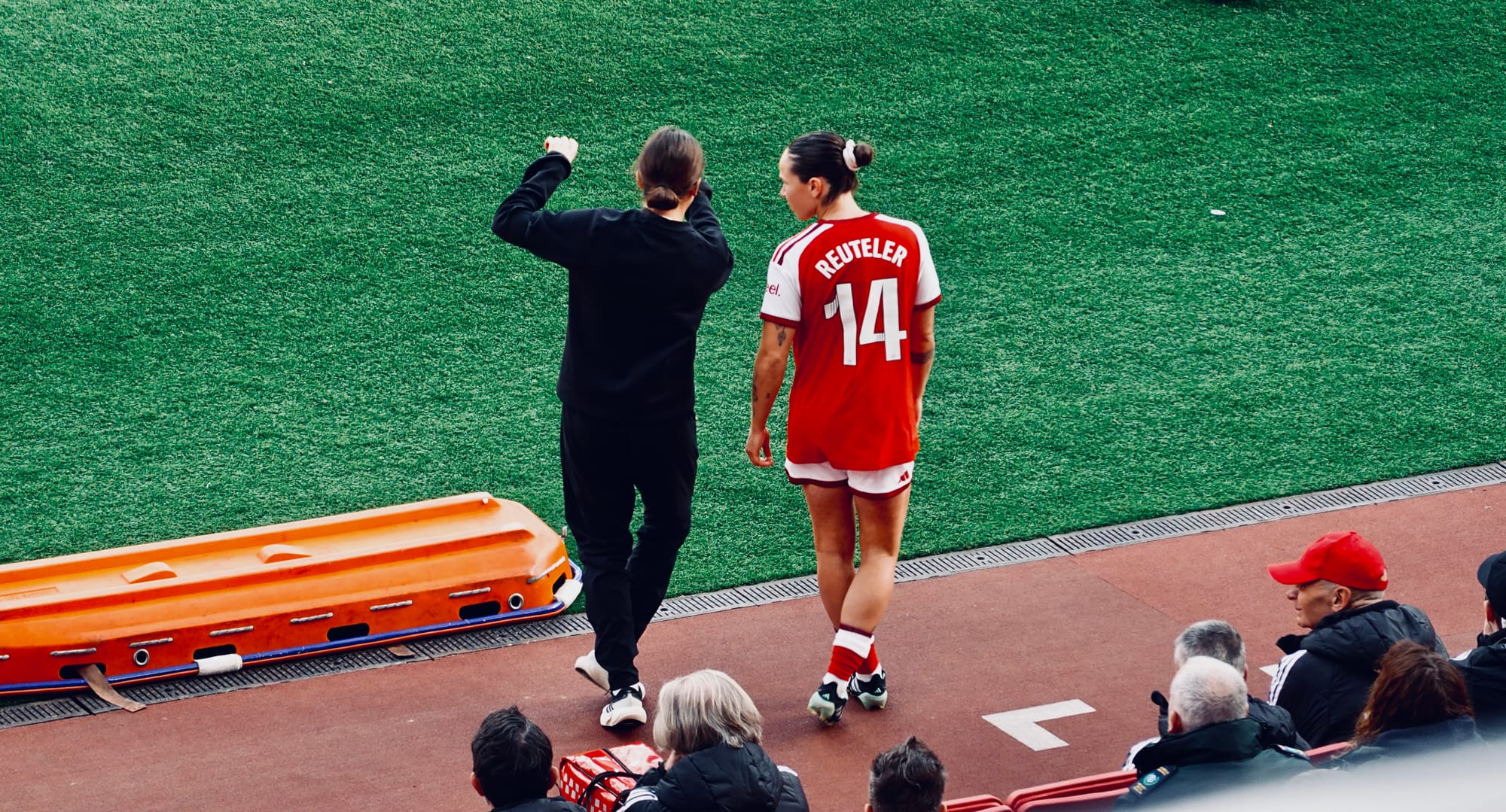
At around the 61st or 62nd minute, I saw Géraldine being told to get ready.
At that point, Birmingham led 1-0, Arsenal were struggling to find a way through, and I felt so relieved because I thought, right, we're finally going to try something different.
I was expecting her to come on pretty quickly.
But then, in the 66th minute, Olivia Smith produced a magical moment of individual brilliance to level the score.
And then the substitution didn't happen.
Géraldine stayed on the sidelines, and it wasn't until around the 77th minute that she finally came onto the pitch alongside Emily Fox.
I can't tell you exactly what Renée was thinking because I wasn't standing next to her and I obviously couldn’t hear the coaching staff's conversations, but from where I was sitting, I felt Olivia's goal changed the decision.
It was like we'd scored, things were looking a bit better, and Renée wanted to give the players already on the pitch a bit longer to see if they could find the winner.
So, on one hand, I can understand that thought process.
When you've just equalised, there's always a temptation to let things continue because the goal might lift everyone, the opposition might start to panic, and the players you've already got out there might suddenly find another gear.
But here's my problem with that.
Olivia's goal didn't solve the problems that had made life difficult for us throughout the game.
It was a wonderful individual moment from a player capable of producing something special, and thank heavens she did, but it wasn't the result of Arsenal suddenly discovering how to play through Birmingham's defence.
We hadn't spent the previous ten minutes pulling Birmingham apart and creating chance after chance until eventually they caved under pressure.
Olivia made something happen, and I think it's dangerous to confuse the two.
If your team is struggling to create the opportunities you want, and you've already decided you need to make a change, surely one moment of brilliance from one player shouldn't automatically convince you that everything has suddenly started working?
For me, in that moment, Renée needed to stick with the decision she looked like she was preparing to make.
Bring Géraldine on. Give her time to influence the game. Let her try to create something different.
But instead, we waited.
When she finally came on, alongside Emily Fox, I thought the difference was immediate.
I want to be fair here because Birmingham were getting tired by that stage; they'd spent much of the game defending, and Arsenal had already equalised, so several things could have contributed to the change in momentum.
But from where I was sitting, I thought Géraldine Reuteler and Emily Fox gave us something we'd really been missing.
Fox was excellent. Absolutely brilliant.
She was positive, wanted to go forward, was prepared to take players on, and kept trying to force the game toward Birmingham's penalty area. She had a real sense of purpose, and I thought that made a massive difference because we suddenly had someone who wasn't just looking for the safest pass but was willing to try to make something happen.
And Géraldine found those little spaces, looked to combine with the players around her, and helped Arsenal keep the pressure on Birmingham.
For those last fifteen minutes or so, it really felt like Birmingham were hanging on for dear life, clinging on to that point, and that's what made it so frustrating.
Because I kept thinking, what if we'd made those changes fifteen minutes earlier?
What if Reuteler and Fox had been given half an hour rather than thirteen minutes plus stoppage time?
Would we have won?
Nobody knows.
But I'd have liked us to give ourselves the opportunity to find out, rather than waiting until so late in the game that every attack starts to feel like our last chance.
And this brings me to something we've talked about before on Trailblazers, because I'm increasingly concerned about how Renée uses her substitutes.
Sometimes it feels like we treat the players on the bench like one of those emergency boxes you see on the wall with a little hammer next to it.
BREAK GLASS IN CASE OF EMERGENCY.
And I don't understand why.
We've got a squad full of talented footballers. We've invested heavily in bringing players to Arsenal because they're supposed to give us different options, different qualities and different ways of approaching games.
But those options are useless if we only turn to them when we're running out of time.
And I think that's especially true of someone like Géraldine Reuteler, because the things she does well aren't the sort of things you can demonstrate in five minutes when everybody's desperately trying to get the ball into the penalty area.
She needs time to understand how the game is developing, find spaces, build rapport with the players around her, and influence what's happening.
If you bring her on with ten or fifteen minutes remaining and ask her to rescue a result, you're giving her a very different job from the one I believe she's capable of doing for this team.
And then there's Caitlin Foord.
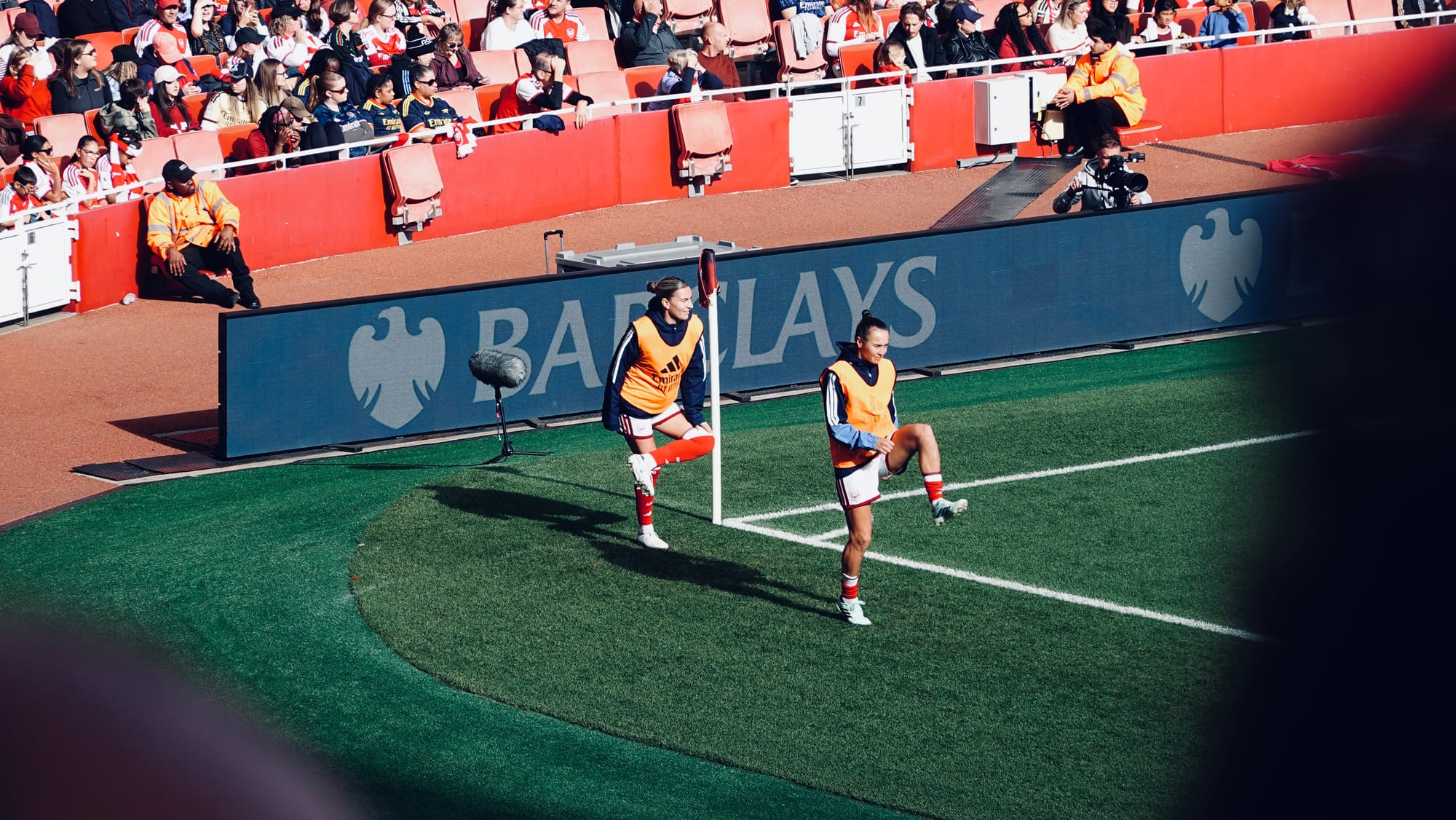
I know Caitlin has her critics, and I know she's had some difficult moments recently, but I don't think bringing her on in the 86th minute, yet again, helped her or Arsenal.
By that stage, we're desperately chasing a winner, everyone's trying to force something, and there's very little time for a player to settle into the game.
Caitlin can be one of those players who, when she's confident and everything's flowing, is absolutely brilliant, but when she's trying to make something happen too quickly, she rushes her decisions, loses possession and ends up giving the opposition exactly what they want, which is a chance to get the ball away from their goal and run a few more seconds off the clock.
I don't think that's the best way to use her.
Looking ahead to Tottenham, I wouldn't be against starting Caitlin and seeing what she can offer, especially because I've got a few concerns about how Lisa Baum is playing on the right at the moment.
I really like Lisa. I think she's an exciting player and has already shown us what she's capable of, but I've noticed she tends to come inside a lot, which often leaves us without anyone staying wide on the right.
Now, that might be exactly what Renée is asking her to do, so I'm not automatically blaming Lisa for it, but when everyone starts moving towards the middle of the pitch, it makes life much easier for defenders because they don't have to spread themselves out to cover the full width of the pitch.
And that's something we need to seriously look at.
But coming back to Géraldine, because she's the player I really want us to focus on here, I think we're reaching the point where the argument for giving her a start is becoming stronger with every game.
Not because she's guaranteed to score or create three goals, not because she's somehow better than every other attacking midfielder we've got.
But because she has qualities that could help us address something we're struggling with, and we haven't given her a proper chance to show what she can do.
I find that especially difficult to understand when you consider Renée's explanation for moving Alessia Russo into the number 10 position; she talked about the absence of Mariona, Frida, and Kim, and I understand those missing players create problems because they can contribute in different ways.
But Géraldine was available and sitting on the bench. And if she's not ready to start, I'd really like to understand why.
Is it something she's doing in training? Is Renée concerned about her understanding of the system? Does she feel Géraldine isn't quite ready physically? Or does she simply see her as a player who's more useful coming on later in games?
I don't know the answer to all of those questions, but I do know the answer to at least one. I promise you, Géraldine Reuteler is fit and ready to play, ready to start for Arsenal. She has been for some time.
When you sign a player with Géraldine's experience and ability, and your team is struggling to find the creativity it needs, it's only natural that supporters will start wondering why she isn't getting a chance.
And I don't want this to become a situation where every time Arsenal struggle, we all start shouting for Géraldine to come on as though she's some sort of miracle worker; that's not fair on her.
I want her to have the chance to establish herself, build relationships with the players around her, and show us what she can contribute over a full game, instead of being judged on what she manages to do in the final few minutes.
I see Géraldine playing behind Alessia Russo, with Olivia Smith and Lisa Baum on either side, and an attacking combination that could be really different, fresh, and exciting.
You've got Alessia's ability to hold up the ball and bring people into the game, Géraldine's movement and creativity, Olivia's pace and willingness to take defenders on, and Lisa's ability to find space and create opportunities.
And with Georgia Stanway playing a bit further forward in midfield, rather than being asked to do so much of her work deeper on the pitch, I think we could start to see some really interesting, effective combinations developing.
Of course, that depends on having the right balance behind them, and we'll come to that because I think our midfield organisation is another area where Renée has decisions to make.
But first, I want to turn our attention to the other end of the pitch.
While we've been talking about how Arsenal might score more goals, something is happening defensively that I think is becoming just as worrying, and this one is really difficult for me because it involves a player I've defended, supported, and admired for a very long time.
Ona Batlle.
I think I've reached the point where I have to admit that playing her at left-back simply isn't working the way I hoped.
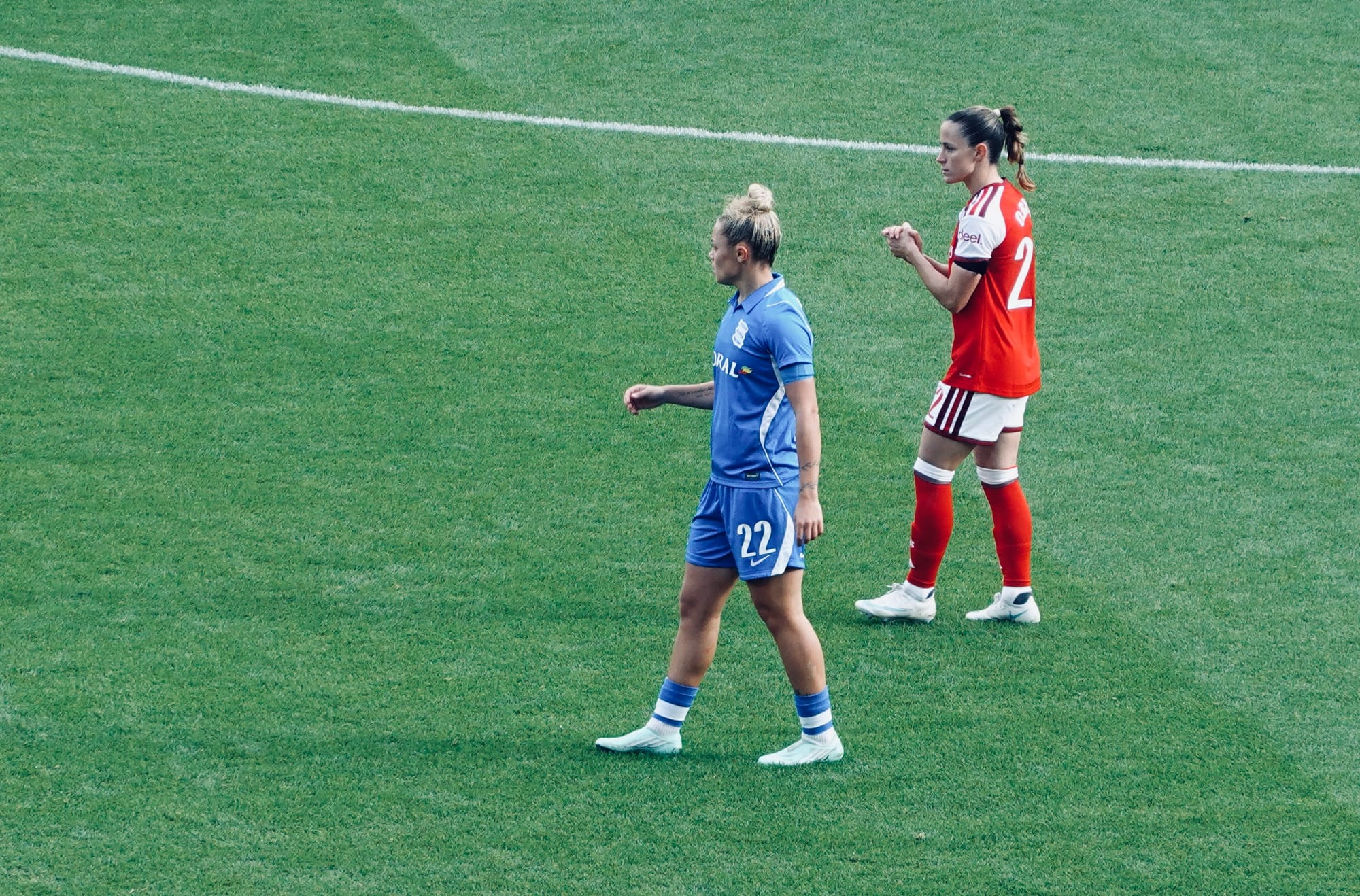
Ona Batlle: A Difficult Conversation We Need To Have
I never thought I'd find myself saying this about Ona Batlle, but I think it's time for Renée to take her out of the starting eleven at left-back, at least for a couple of games, because what we're seeing at the moment isn't working and I'm becoming increasingly worried about the damage it's doing to the rest of our defence.
And believe me, I don't say that lightly.
I've been one of Ona's biggest supporters since she arrived at Arsenal. I have our away shirt with her name and number on the back. I was over the moon when we signed her because we're talking about a player who's won just about everything there is to win at club level, who's played for Barcelona and Manchester United, represented Spain at the highest level and who's widely regarded as one of the best full-backs in women's football.
When people questioned whether or not she could play at left-back, I defended her. I pointed out that she'd played there for Barcelona, that she's comfortable using either foot and that a player with her experience and technical ability should be more than capable of adapting to a different position.
And I still believe Ona Batlle is an outstanding player.
But I also have to acknowledge what I'm seeing with my own eyes, and at the moment I don't think she's playing well enough defensively to justify continuing with her at left-back.
Now, I want to explain why, because I don't think it's fair to simply say Ona had a bad game, blame her for Birmingham's goal and move on.
There's more to it than that, and I think understanding what's happening on that side of the pitch helps explain why Arsenal so often find themselves in trouble.
When Ona gets forward, she's brilliant at joining attacks. She's technically excellent; she can combine with the players around her, and she's got the pace to cause problems when she runs into space. Those are qualities we've admired for years.
But the problem comes when Arsenal lose possession: if Ona goes forward and the opposition suddenly wins the ball, someone has to cover the space she leaves behind.
A full-back joining an attack is nothing unusual. Every top team does it, and when it works properly it gives you another player going forward and makes it much harder for the opposition to defend.
But it only works if the rest of the team understand what happens when that full-back isn't there; somebody has to cover.
That might be a midfielder dropping back, a central defender moving across, or the full-back herself recognising the danger early enough to get back into position. In pre-season, that would have been the left centre-back moving over to cover the left-back space.
Against Birmingham, I felt we were getting that wrong far too often.
Océane Hurtré was finding enormous amounts of space down Birmingham's right, which is Arsenal's left, and every time Birmingham looked to get forward, I found myself watching her movement because she was clearly looking for opportunities to get behind our defence.
And what really frustrated me was that she wasn't having to work hard to find that space.
At times, she was standing in areas of the pitch with nobody near her, and I was looking at our defenders, wondering who was supposed to be watching her.
Because this is something I think we sometimes forget when we're watching football.
You don't have to be standing right next to an opposition player for ninety minutes, but you do have to know where they are, especially when they're the sort of player who can hurt you with one good run.
Hurtré is exactly that sort of player. She's quick, intelligent with her movement, and she doesn't need many opportunities to make something happen.
Birmingham recognised that. They moved her to the right side of their attack because they saw the space Arsenal were leaving, and from what Renée said afterwards, our coaching staff recognised what Birmingham were doing.
Now, just think about that for a moment.
The opposition identify a weakness in our defence. They move their most dangerous attacker into the area they think they can exploit. Our coaching staff recognise the change.
And we still allow that player to get through and score.
I find that absolutely mind-boggling.
Because this wasn't a situation where Birmingham suddenly produced some extraordinary piece of tactical genius that nobody could possibly have anticipated.
The danger was there for everyone to see.
I could see it from my seat, and I was practically shouting myself hoarse trying to get our players to look up and recognise where Hurtré was moving.
If I can see it from a vantage point behind Renée and her assistant, I'm struggling to understand why we couldn't do more on the pitch.
Now, let's talk about the goal itself, because it's important to separate what happened from what didn't, rather than pointing the finger at one player.
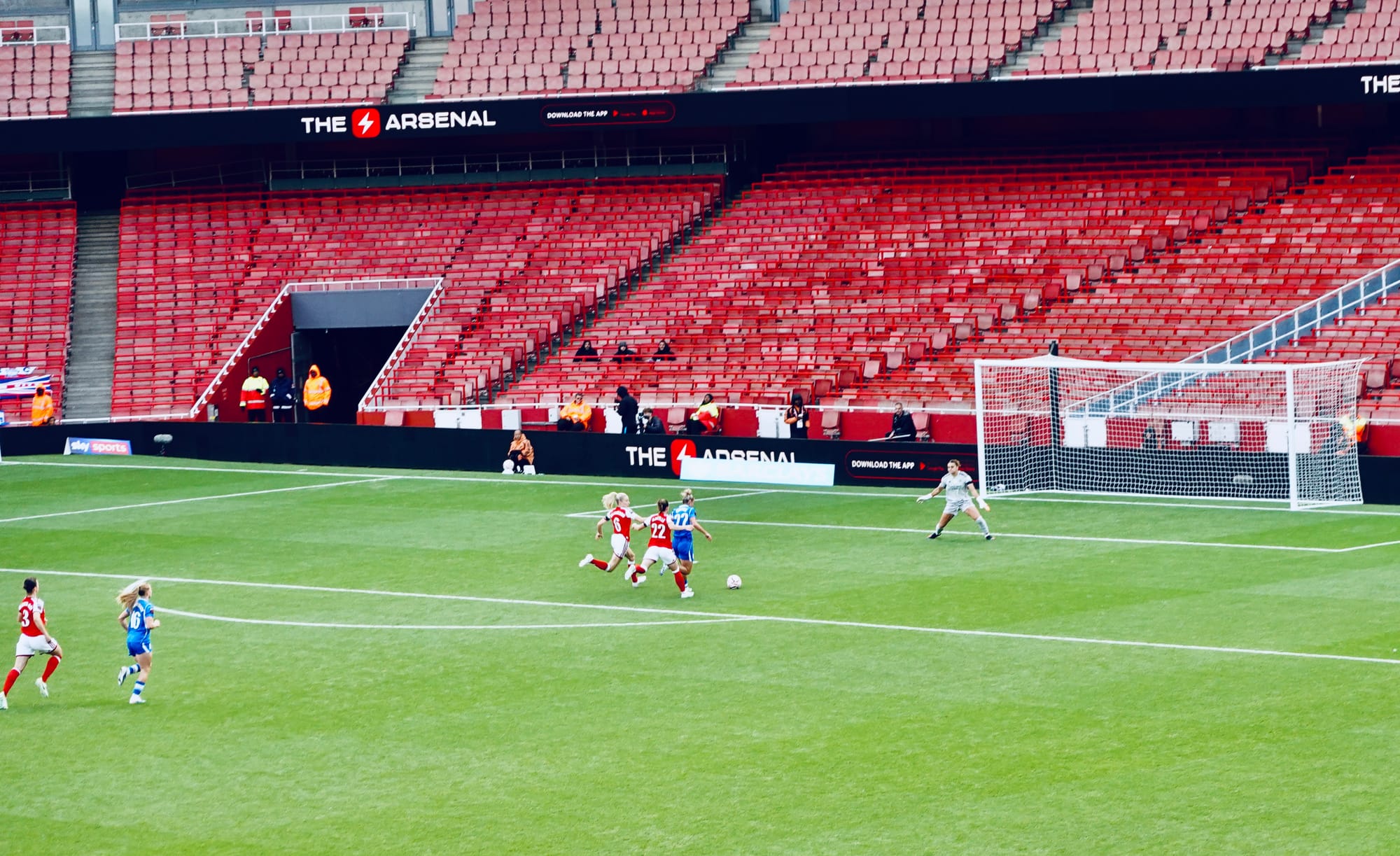
Lotte Wubben-Moy gets caught out as Hurtré breaks through, loses her footing, and suddenly Birmingham has a player running towards goal, with our defenders desperately trying to recover.
Leah Williamson chases back and tries to put Hurtré under pressure, and Ona uses her pace to get back too.
But by that stage we're reacting to a problem that should never have been allowed to develop in the first place, and that's the bit that bothers me.
Because once Hurtré is running toward goal, with defenders chasing her and very little time to decide, she's already got the advantage.
Leah is trying to get close enough to challenge her; there's contact as she reaches toward her, and Ona is desperately trying to recover the ground she's lost.
Then Hurtré produced a finish that I thought was absolutely brilliant.
I thought Misa Rodríguez had positioned herself really well. She stayed close to her six-yard line, slightly to her right, trying to make the angle as difficult as possible for Hurtré and anticipating where the shot was likely to go.
That's what made the finish so impressive: Hurtré was travelling at full speed, with defenders chasing her and Leah tugging her shirt, and she still had the presence of mind to produce that little flick rather than simply smashing the ball towards goal.
It was a lovely, brilliant, wonderful, sublime finish.
And I want to give her all the credit she deserves for that because I thought she was one of the best players on the pitch yesterday.
In fact, I'll go a little further.
I'd love Arsenal to seriously consider signing Océane Hurtré next summer.
Imagine an attack with Hurtré, with Smith or Baum, with Alessia Russo or Selina Cerci playing through the middle. The pace, the movement, the different ways those players could create problems for defenders. I think that could be so exciting.
Now, I'm not suggesting Arsenal are interested in signing her or that Birmingham would be willing to sell her. That's just me watching a player and thinking she'd be a fantastic addition to our squad.
And before anyone accuses me of getting carried away because she scored against us, it wasn't just the goal that impressed me.
It was her movement throughout the game, how she recognised where Arsenal were vulnerable and kept making those runs even when the ball wasn't coming towards her.
That's the sort of intelligence I love seeing in a footballer, especially one so young.
But let’s get back to Arsenal's defending, because I don't want us to lose sight of something important here.
I don't believe all of this is Ona Batlle's fault.
If Renée is asking her to push forward whenever Arsenal attack, then the rest of the team have to be organised to deal with what happens when we lose possession, and if that organisation isn't working, the coaching staff have to take responsibility for it.
But equally, Ona has to recognise when she can afford to go forward and when she needs to stay back. That's part of being an experienced defender, and I think she's too often getting that balance wrong.
At times yesterday, the space behind her was so big, and we left oceans of space for Océane.
Sorry, sorry, I couldn’t resist that one! I'll get my coat.
But joking aside, it's becoming a serious problem. I think part of the difficulty is that Ona is being asked to play a position that, although she's played there before, doesn't seem to bring out the best in her at Arsenal.
I know she played at left-back for Barcelona for good periods and I will always point to the success she enjoyed there, but Barcelona and Arsenal aren't the same team, and Liga F and the WSL aren't the same leagues either.
At Barcelona, Ona played in a side that regularly dominated possession and controlled games. That doesn't mean Barcelona never faced dangerous opponents or that defending in Spain is easy, but the demands can be different.
In the WSL, even teams that spend long periods defending against Arsenal have players who can break forward quickly and punish mistakes, and we're seeing that happen.
What worries me is that we keep doing the same things despite evidence showing it's causing problems.
And this is where I think Taylor Hinds comes into the conversation. We signed Taylor from Liverpool last season as a natural left-back, and she's got plenty of WSL experience.
So why aren't we giving her an opportunity?
I'm not suggesting Taylor will automatically be better than Ona in every aspect of the game, but I would like to see whether having a more natural left-sided defender in that position gives us better balance.
Someone who's more disciplined about when she goes forward, comfortable defending that side of the pitch, and who might let our central defenders focus on their own responsibilities rather than constantly worrying about what's happening out wide.
And that last point is important.
Because when your left-back is out of position, your left centre back can end up being pulled across to cover the space, which then creates another gap in the middle, and before you know it, one player being out of position has affected three or four others; that's how teams get pulled apart.
It's not always one big mistake. Sometimes it's a series of small positional problems that eventually create an opportunity for the opposition, and we're seeing that too often with Arsenal.
Now, another option we could consider is Steph Catley.
Steph has played left-back for years; she's got plenty of experience, and she knows what it takes to defend that position at the highest level.
But she's also spent a lot of time at centre-back in recent seasons, and I don't know if moving her back to the left would be best for her or the team, especially if she's still working her way back to full fitness.
So for me, Taylor Hinds would be the first option I'd like to see given a proper chance, and I don't mean bringing her on for ten minutes when the game is pretty much decided.
I mean starting her and giving her a chance to show what she can do.
We've reached a point where I think Renée needs to be willing to make a change, even if it means benching a player of Ona's quality and reputation.
And that shouldn’t be seen as punishment.
Sometimes players need a bit of time out of the starting eleven. They need the opportunity to reset, to work on things in training and to come back into the team with a clearer understanding of what's being asked of them.
And there's absolutely no reason Ona couldn't return at right-back, where she's spent much of her career and where I think she's much more comfortable and effective.
In fact, having Ona Batlle, Smilla Holmberg and Emily Fox competing for that position would give Renée another interesting decision to make, and that's exactly what having a strong squad is supposed to do.
It gives you options, but you have to be willing to use them.
There's one more thing I want to say about this, because I think I need to acknowledge something I got wrong.
When Katie McCabe left Arsenal, I wasn't concerned about our left-back options.
I looked at the players we had, Ona's experience in that position, and thought we'd be absolutely fine.
I didn't see it becoming the problem that it has, and I hold my hands up to that, because looking at where we are now, I think we may have underestimated just how important it was to replace Katie with someone who could give us that same level of reliability and understanding of the position.
That doesn't mean Katie McCabe never made mistakes or that everything was perfect when she was playing there, but we knew what she brought to the team, we understood her strengths and weaknesses, and we were familiar with how that side of our defence worked.
We've lost some, if not all, of that.
And while I think the recruitment decisions deserve examination, we also have to ask whether we're making the best use of the players we've already brought in.
Taylor Hinds is here, she's available as an option, and until we give her a proper opportunity, I don't think we can say we've exhausted the possibilities for improving that side of our defence.
So that's where I’m at right now with Ona Batlle.
I still think she's an outstanding player, and that she's got a massive amount to offer Arsenal, and I don't want to see her written off because she's struggling in a particular position. But I don't think we can keep selecting her at left-back simply because she's Ona Batlle.
The team has to come first.
And right now, I think the team would benefit from trying something different.
That brings us to another part of the pitch where I think we need to reconsider how we're using the players available to us, because we've talked about moving Alessia Russo back to number 9, giving Géraldine Reuteler a chance at number 10, and bringing Taylor Hinds into the defence at left-back.
But there's another player who I think could have a much bigger influence on our attacking football if we change where we're asking her to play.
And when you think about how we could use Georgia alongside Géraldine, and what Kim Little's return might mean for the team, I think we have an opportunity to give Arsenal something we've been missing.
A much better connection between the players winning the ball in midfield and the ones we're relying on to score our goals.
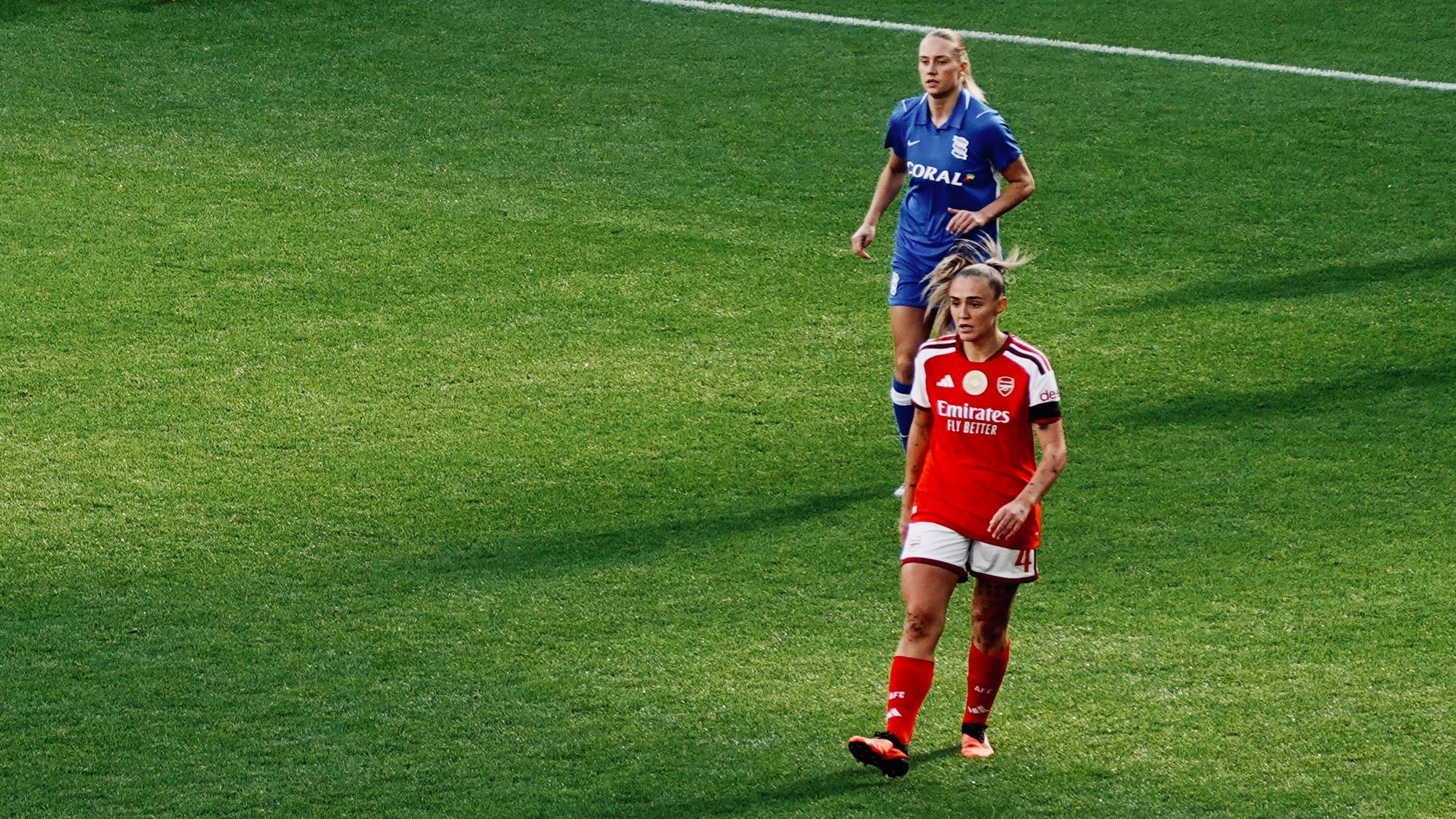
Georgia Stanway: Are We Getting The Best Out Of Her?
I want to talk about Georgia Stanway now because I think she's another player who's being asked to do a job for Arsenal that doesn't necessarily make the best use of everything she can offer us, and unlike some of the other decisions we've discussed, this one is a bit more complicated because it involves how our entire midfield works.
Before we get into it, I want to say that I've been really impressed with Georgia since she arrived at Arsenal. She's brought tonnes of experience, has that competitive edge I love to see, and isn't afraid to take responsibility when things aren't going well. She wants the ball, wants to influence what's happening, and can produce moments of real quality.
But I also think there's another level to her game that we're not seeing, and I wonder if that's because of where she's being asked to play.
When I watch Georgia, I don't see someone whose greatest contribution to Arsenal should be spending most of her time sitting just in front of our defenders, collecting the ball and passing it on to someone else.
She can do that, but I think we're missing an opportunity to get her involved much further up the pitch, where her passing, her ability to spot a run, and her willingness to take a shot herself could make a real difference.
Now, for anyone wondering what I mean by the different midfield positions, I know we have listeners who are still learning some of these things, so let me explain it in a way that hopefully makes sense.
When you watch Arsenal build an attack, you'll often see one midfielder stay a little further back, close enough to the defenders to help move the ball forward, but also in a position to protect them if we suddenly lose possession.
Then you've got the players ahead of her, the ones who are supposed to take that ball and help turn it into an attacking opportunity.
Those jobs require slightly different qualities.
The player further back needs to recognise danger, keep possession, and know when to move forward and when to stay put. The players ahead need to be comfortable receiving the ball in tight spaces, finding teammates making runs, and sometimes taking a chance themselves rather than always choosing the safest option.
Georgia Stanway can do both of those jobs.
But just because someone can do something doesn't necessarily mean that's where you're going to get the best out of them, and I think that's where we need to have a look at what we're asking her to do.
I'd really like to see Georgia play as our number 8, with the freedom to move further forward and help create opportunities, instead of spending so much time as one of the players responsible for starting attacks from deep.
And the reason I think that could work is because we've got someone who, when she's fit and available, is absolutely brilliant at providing the sort of control we need behind her.
That’s our captain, Kim Little.
I know Kim wasn't available against Birmingham as she is recovering from illness, so I'm not suggesting Renée could've simply selected her yesterday and everything would have been fine. But looking ahead to Tottenham, if Kim is fit enough to start, I would seriously consider bringing her back into that deeper midfield position.
Kim has something I think Arsenal have been missing at times recently: the ability to make everything around her feel a little less frantic, less chaotic, and there was a bit of that in the first half yesterday.
She doesn't need to be running around at a hundred miles an hour to influence a game. She's intelligent about where she positions herself, knows when to keep the ball moving and when to hold onto it for an extra second, and she has a wonderful ability to receive possession when an opponent is closing her down and still find a way to get the ball to a teammate.
When you're playing against teams happy to sit back and wait for a chance to catch you out, having someone who can help you keep control of the game is vital.
But playing Kim in that position comes with responsibility, because we can't simply ask her to protect the entire defence on her own.
If Georgia is going forward and Géraldine is playing ahead of her, they have to recognise when Arsenal are vulnerable and make sure they're helping Kim when we lose the ball, and that has to be something Renée works on with them, because the last thing I want is for us to solve some of our attacking problems and then find ourselves watching opponents running straight through the middle of the pitch every time we lose possession.
We've had enough of that, thank you very much.
Now, I know some of you will be wondering where this leaves Kyra Cooney-Cross, because I've spoken very positively about her on this podcast, and I still think she's been one of our best performers so far this season.
And I don't want anyone to take what I'm about to say as criticism of her overall contribution, because she's worked incredibly hard, shown real quality on the ball, and demonstrated she can compete at this level.
But I've also noticed something in her game that I think she needs to work on: she sometimes hesitates when the game gets tough, and she has an opportunity to move the ball forward.
There are moments when I want her to decide a little faster, trust what she's seeing, and play the pass rather than take another touch or look for a safer option.
Now, that doesn't make her a bad player, far from it. She's still developing, and I think she has huge potential.
But if Kim is available against Tottenham, and if we're serious about making changes that might give Arsenal a better chance of getting the result we need, then I think Kyra might be the one who has to make way.
And I know that's a difficult decision because she's been playing well in a lot of respects, but sometimes you have to look at what the team needs for a particular game rather than simply selecting the players who've performed well individually.
Against Tottenham, I think we need more control, more creativity, and more willingness to move the ball forward with purpose; that's what I'd want from a midfield of Kim, Georgia, and Géraldine.
Kim helping us keep possession and spot danger, Georgia moving between defence and attack, and Géraldine operating closer to Alessia Russo, looking for chances to create something. I think those three could complement one another really well.
Now, would it work immediately? I don't know. They haven't had the chance to develop that understanding together in competitive games, and there could be moments when things don't quite come together.
But I'd rather we try to build something that makes sense for the players we've got than continue with an arrangement that isn't consistently producing the football we know this squad can play.
Another reason I like the idea of Georgia playing further forward is that she's got a fantastic shot on her.
We've seen it for England, we've seen it throughout her career, and she's not afraid to have a go from outside the penalty area. When you're playing against teams that pack so many players into their own penalty area, you need someone willing to shoot from a little further out.
Even if the shot doesn't go in, it can force defenders to come towards the player with the ball rather than just standing in front of their goalkeeper waiting for Arsenal to try another pass, and once those defenders start moving out of position, spaces open up for our attackers to get behind them.
That's something I think Georgia could give us more of if she operated closer to the opposition goal, and when I imagine her working alongside Géraldine, with Alessia ahead of them, I can see how those different qualities might fit together.
Georgia has the strength and the ability to move the ball forward, Géraldine has that intelligence about finding spaces, and Alessia has the movement and technical ability to turn those opportunities into chances, and if you've got Olivia Smith on one side, with either Lisa Baum or Caitlin Foord on the other, suddenly you've got several different ways of creating problems for the opposition rather than relying on the same approach over and over again.
But I want to come back to something before we move on, which I think is important - none of these changes, if they happen, should be treated as guarantees.
I don't know if Kim will be available against Tottenham, whether Renée sees Géraldine as someone who can start in that position, or whether Georgia would be more effective playing further forward.
But I do know these are options available to Arsenal, and I think they're worth exploring.
Right now, I'm watching a team with a huge amount of individual talent, but it doesn't look like those qualities are coming together in the most effective way, and for me, that's where the manager and her coaching staff come into the conversation.
Not because every disappointing result is automatically their fault, and not because players shouldn't take responsibility for their own performances, but because one of the most important parts of managing a football team is recognising what your players do best and finding a way to make those qualities work together.
And that brings us to something I think we need to examine very carefully.
Renée Slegers herself.
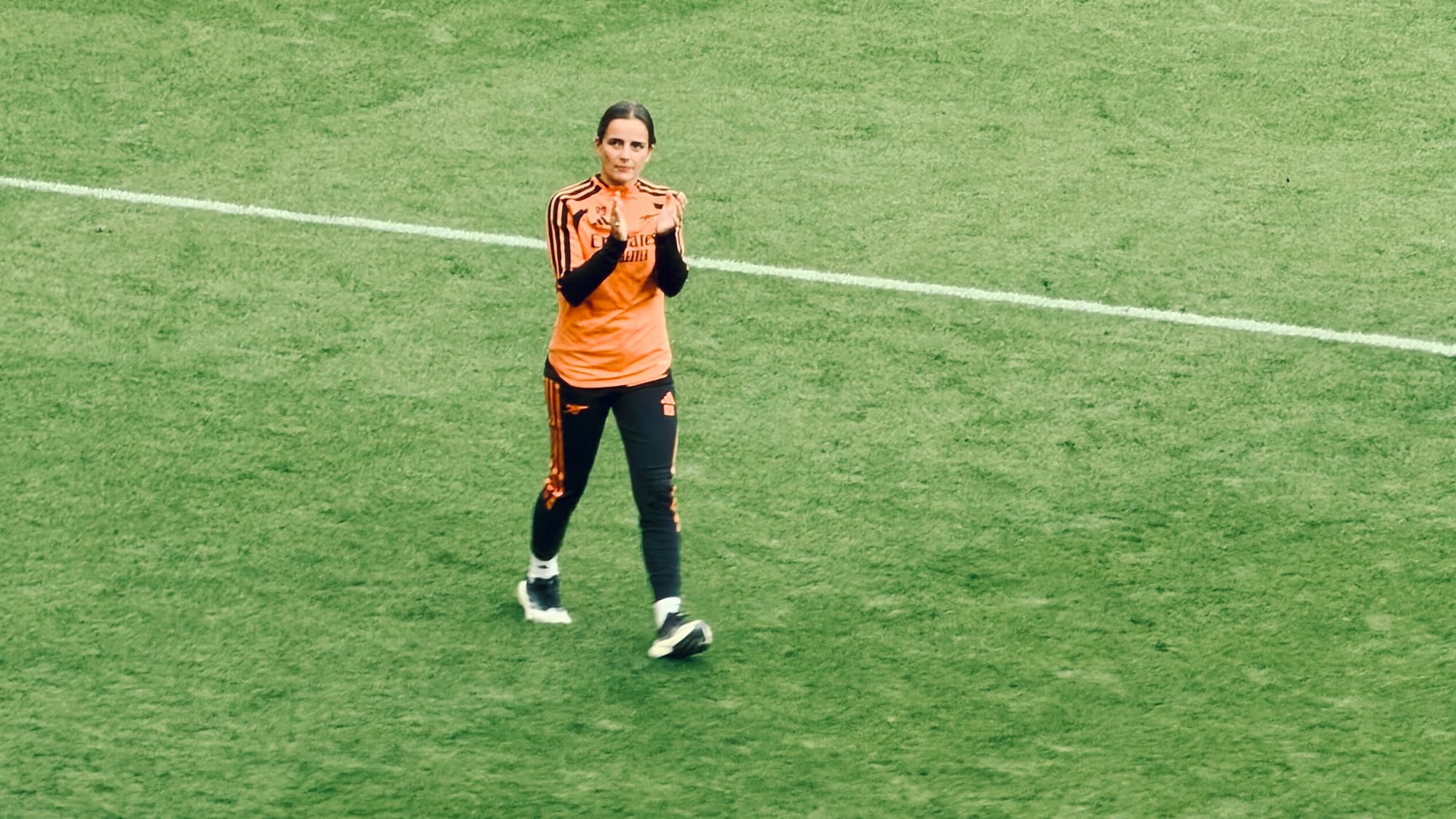
Renée Slegers: Has Something Changed?
I've been thinking a lot about Renée Slegers over the past few weeks, and I have to admit I'm finding it increasingly difficult to reconcile the manager we're watching now with the one who took over Arsenal and gave us some of the most wonderful memories we've enjoyed as supporters.
I remember what it felt like when Renée first stepped into the job. There was so much uncertainty around the club; we'd been struggling for consistency, and there were plenty of questions about where Arsenal were heading. Then this inexperienced member of the coaching team, who hadn't expected to be in charge of one of the biggest clubs in women's football, suddenly started getting results.
But it wasn't just the results that impressed me; it was how she seemed to understand the players, the confidence she gave them, and her willingness to make decisions that weren't necessarily the obvious ones.
Her approach felt refreshing, and I think many of us felt we'd found someone who really understood what this Arsenal team needed.
And then, of course, came that incredible Champions League victory.
I don't think any of us will ever forget what that felt like, and I don't want the difficulties we're experiencing now to diminish what Renée achieved - she deserves enormous credit for that.
But football doesn't stand still, and neither can the people managing football teams… and I think that's where we're starting to have a problem.
Because the Renée I'm watching now seems much more reluctant to change things than the Renée I remember from those early months, and I can't quite work out why.
Now, maybe that's unfair. Maybe things are happening behind the scenes that we're not aware of: conversations with players, decisions about fitness and training, or longer-term plans that simply aren't obvious to those of us watching from the stands.
But ultimately, we have to judge what we see on the pitch, and right now I'm seeing a team that keeps running into familiar problems without appearing to make enough, or dare I say any, progress toward solving them.
The Birmingham game is a really good example of that, not because everything Renée did was wrong, but because there were moments when I felt the game was asking her to make a decision and she seemed reluctant to do it.
We've already talked about the substitutions, so I'm not going through all of that again, but I want to look at what those decisions might tell us about the way Renée is approaching games, because I wonder if she's becoming too concerned about disrupting what she's already got on the pitch.
And I can understand why a manager might feel that way; you've spent the week preparing your team, worked on how you want them to play, selected the players you believe give you the best chance of winning and naturally you want to give them the chance to make it work.
But there comes a point when you have to accept that what you planned isn't happening, and when that moment arrives, I think a really good manager has to be willing to set the original plan aside and try something else.
Not because she's panicking, not because she's suddenly lost confidence in her players, but because she's recognised that the game in front of her is different from the one she prepared for.
That's part of managing, and I think we're seeing too many occasions when Arsenal continue doing something that isn't working for longer than they should.
I want to be careful here because it's easy for me, or any of us, to sit in the stands and talk about what Renée should and shouldn’t have done. We don't have to make those decisions with thousands of people watching; manage the personalities in the dressing room; or deal with the consequences if we get something wrong.
But Renée does, and I respect the pressure that comes with that responsibility.
But I also think we sometimes use the difficulty of a manager's job as a reason not to question their decisions, and I don't agree with that.
You can respect someone and still believe they're making mistakes. In fact, I think that's a much healthier way of supporting a football club than pretending everything is fine until the situation becomes impossible to ignore.
And there's something else that's been bothering me; I look at the players we've brought into Arsenal, particularly over the summer, and I wonder if we've got a clear enough idea of how they're all supposed to fit together.
Recruitment isn't simply about identifying talented footballers and signing as many as you can afford; you have to know what you'll do with them.
You have to understand what each player brings, where they're most effective, and how their qualities will complement the players you've already got, then give them the opportunity to develop those relationships on the pitch.
Otherwise, you end up with a collection of very good individual players who don't necessarily make a very good team, and I think Arsenal are in danger of becoming that.
Now, I don't believe we've reached the point where we can say that's definitely what we are, because there have been performances and moments this season that have shown what this group is capable of, but I do think we're seeing warning signs, and what concerns me most is that some of those warning signs were there last season as well.
Which brings me to something I think is really important when we're talking about Renée.
How long should we expect it to take for a manager to solve a problem that keeps coming back?
Because every team has bad games, every manager makes mistakes, and every season has periods when things don't go according to plan. That's football.
But when the same difficulties keep appearing, when the team struggles to create clear opportunities despite so much possession, when opponents keep finding space behind our defence, and when changes seem to come too late to influence games, I think we're entitled to expect more than an explanation of what went wrong.
We need to see what we're going to do differently, and that's where I find some of Renée's post-game comments increasingly frustrating.
I don't doubt for a second that she understands football better than I do; she's an experienced coach who's worked at the highest level, sees these players every day, and has access to performance information none of us will ever see.
So, when she identifies a problem, I believe she knows what she's talking about.
But knowing what the problem is and finding a way to fix it are two different things, and I want to see more evidence of the second.
There's another part of this we need to talk about, because I noticed it yesterday and it left me feeling a bit uncomfortable.
Leah Williamson.
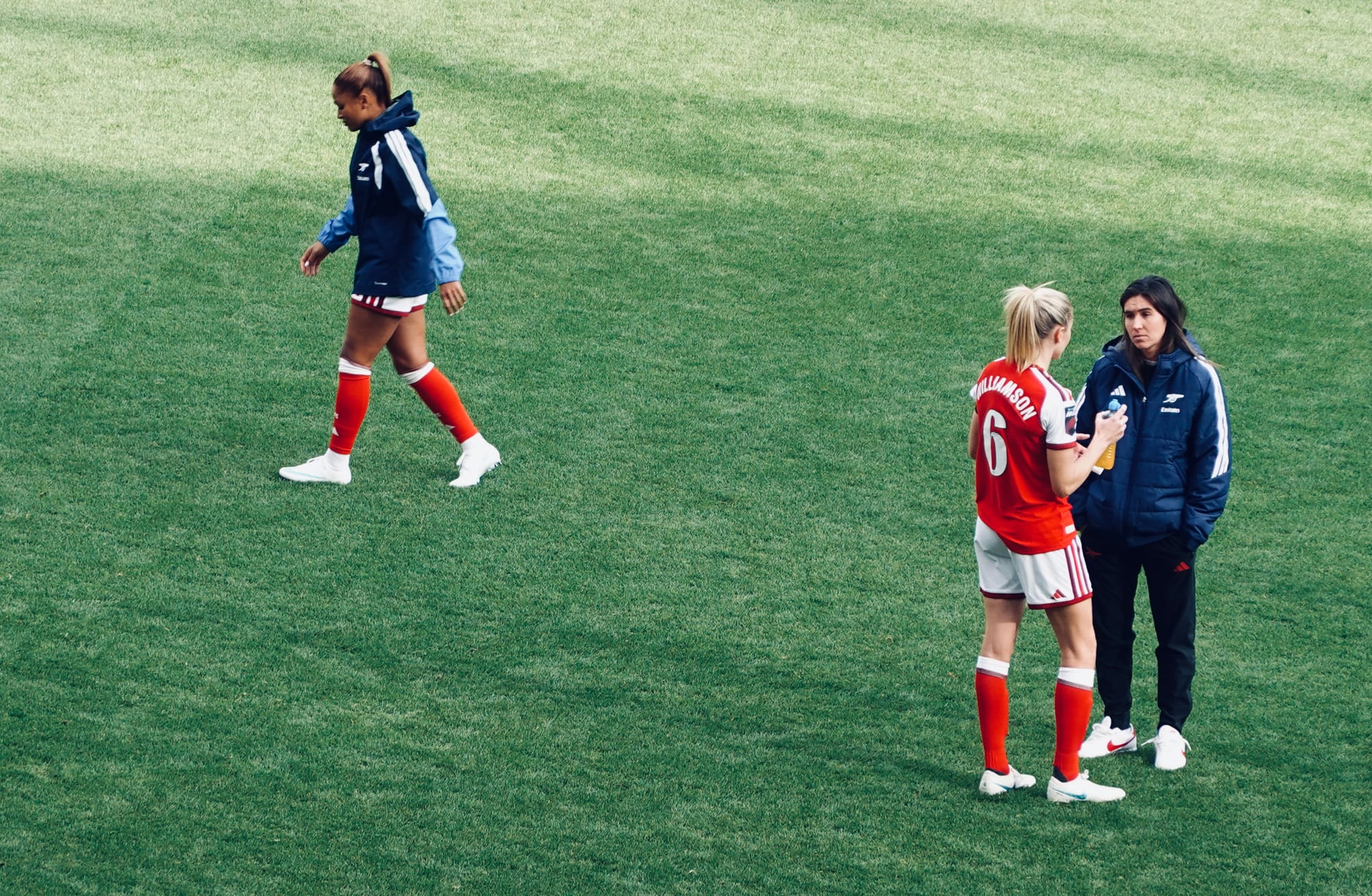
I watched Leah closely towards the end of the game, and there were moments when she looked incredibly frustrated, even angry.
I know Leah is a passionate player. She's Arsenal through and through; she cares enormously about this club, and she never hides how she feels when things aren't going well, and I don't think there's anything wrong with that.
In fact, I like seeing players visibly upset when Arsenal drop points, because it shows me the result matters to them.
But there was a moment, I think in the first half, when I thought I saw some frustration between Leah and Renée, and I want to stress that I'm not claiming there was an argument or some sort of disagreement because I couldn't hear what was being said and I don't know what was happening.
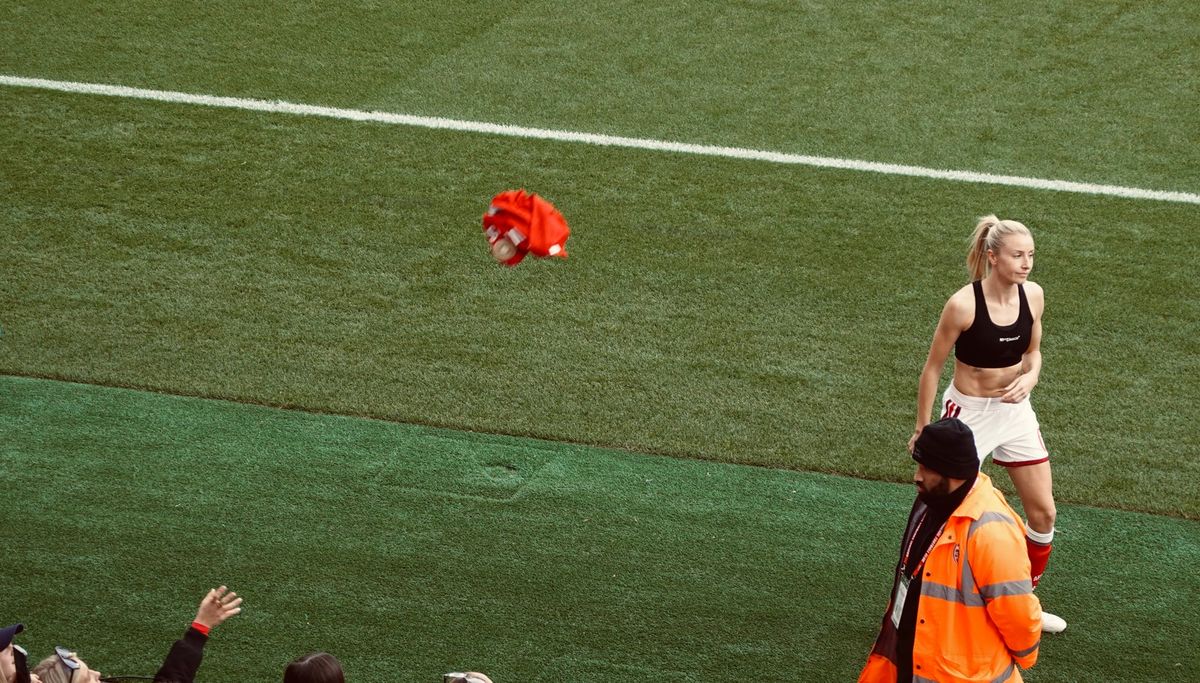
I'm simply telling you what I noticed from where I was sitting: after the game, I watched Leah throw her shirt into the crowd and walk away, and I saw her having a long, animated conversation with Mariona Caldentey.
Now, those things might mean absolutely nothing beyond the obvious disappointment of dropping points. Players talk to one another after games all the time; they talk to their managers, and they show their frustration in different ways, so I'm not going to invent stories about dressing-room problems based on a few moments of body language.
But I do think it's worth acknowledging how difficult this period must be for the players, because they're the ones going out there every week; they're the ones having to deal with the disappointment, and they're the ones who know better than anyone if the things they're working on in training are actually helping them when they get on the pitch.
And I wonder how they're feeling. I wonder if they're as frustrated as we are. I wonder if some of them are starting to question why certain things aren't changing.
And I wonder if Renée is finding it more difficult to keep everyone confident in what she's asking them to do.
I think those are reasonable questions when a team with this much talent struggles to produce the results and performances everyone expects.
And I want to say something here about the relationship between supporters and managers, because I think this is where conversations can become quite unpleasant, particularly on social media.
There seems to be this idea that you have to choose a side.
You're either completely behind Renée and believe anyone questioning her is being disloyal, or you've decided she's not good enough and want her replaced immediately.
I don't think either position helps.
I can be grateful to Renée for everything she's achieved, respect her enormously as a person and a coach, and still be deeply concerned about the direction Arsenal are heading.
Those things aren't mutually exclusive, and I think many true Arsenal Women supporters probably feel the same way. We don't want to turn against someone who's given us so much.
But we also don't want to watch this team keep struggling while convincing ourselves everything will eventually work out if we're patient enough, because patience matters, but it can't be unlimited.
And I think Renée knows that better than anyone; she's managing Arsenal Women Football Club, a club with enormous ambitions, a fantastic squad, and dedicated supporters who have every reason to expect us to compete for the biggest trophies.
With that comes pressure.
Not unreasonable pressure, not the sort of abuse some people seem to think is acceptable to direct at managers and players online, but a perfectly reasonable expectation that the team should improve and that problems should be addressed.
And right now, I'm struggling to see enough improvement.
Does that mean I think Renée should lose her job if we don't beat Tottenham next weekend?
No. I don't think football should work like that, and I certainly don't think one result should automatically determine someone's future. But I do think the Tottenham game is becoming incredibly important.
Not just because we need the points - of course we do - but because I want to see evidence that Renée is prepared to make the changes this team needs.
I want to see a team that looks organised, understands exactly what it's trying to do, and doesn't constantly rely on individual moments of brilliance to get itself out of trouble.
And if we don't see that, if we go into another game with the same problems and come away with another disappointing result, then I think the questions about Renée's future are inevitably going to become louder.
And I don't want that. I really don't.
I'd much rather be sitting here next Sunday talking about a brilliant Arsenal performance, praising Renée for making some brave decisions and feeling excited about where this team might be heading.
But we won't get there by hoping things improve; something has to change.
With Tottenham coming up, and by the way, as I write this on Sunday, Chelsea have just beaten them 6-2, I think we've reached a point where Renée can show us exactly what sort of manager she wants to be.
Because the players are there, the talent is there, the options are right in front of her. Now we need to see her actually do something with them.