Manchester City 4-2 Arsenal Women: What Happened to the Arsenal We Saw in Pre-Season?
Arsenal led Manchester City twice but left with nothing. We look beyond the 4-2 scoreline at Renée Slegers’ decisions, game management and the ideas Arsenal seem to have lost.

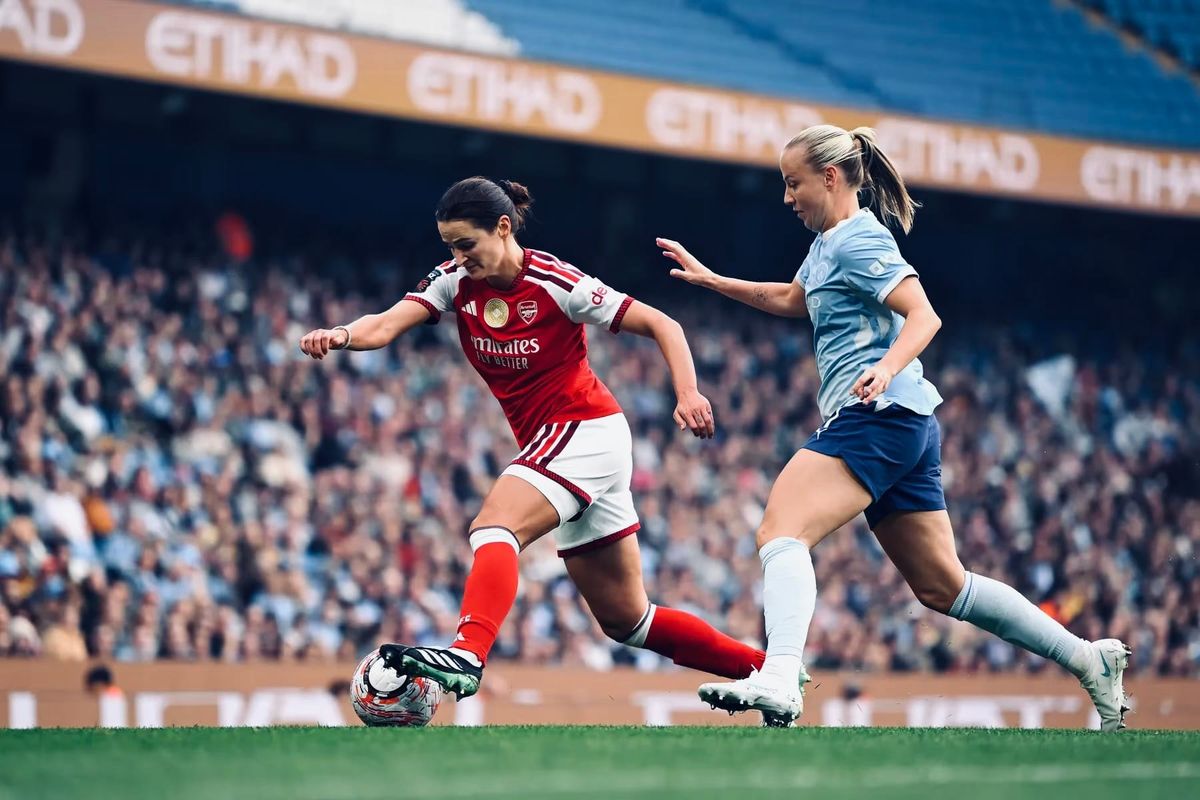
So, Manchester City 4, Arsenal 2 and, having had a night to sleep on this, I think the first thing I want to say is that I don’t think Arsenal played badly.
Which sounds like a crazy thing to say when you’ve just conceded four goals, but bear with me because I think that’s really important to everything we’re going to talk about today.
This didn’t feel like Crystal Palace, where Arsenal had 30 shots and nearly 80 percent of the ball but spent huge parts of the game trying to figure out how to get through a team that had basically built a wall across the pitch. It didn’t feel like Man United either, where we had lots of possession again but just looked like we were running out of ideas about what to actually do with it. And it wasn’t Paris FC, where Arsenal somehow managed to turn a 2-0 lead with eight minutes remaining into a draw and left me staring at my TV wondering what on earth had just happened.
For quite a lot of this game, I actually liked Arsenal.
There was an aggression to the way we started, we were pressing City high up the pitch, Lisa Baum was causing problems and, crucially, Arsenal looked capable of hurting them. This wasn’t possession for the sake of possession. When City had the ball we were trying to win it back quickly and when we did win it, there was an urgency about what happened next.
The first goal came directly from that.
Arsenal press aggressively, City can’t play through it and Alessia Russo does what Alessia Russo does. She anticipates what’s coming, gets herself into the right place and suddenly Arsenal are 1-0 up away at Manchester City.
At which point, I started mentally planning the most joyous episode of Trailblazers to date.
But this is also where the first problem appears because Arsenal score in the 43rd minute and, having done the difficult bit, all they need to do is get themselves down the tunnel at half-time with the lead.
But then City equalise in stoppage time and this is where we need to start talking about game management, because Renée herself said afterwards that Arsenal needed to shut the game down at that point, and she’s right.
And when I say shut the game down, I don’t mean everyone suddenly retreating to the edge of the penalty area and desperately hanging on. I mean recognising where you are in the game.
You’ve just gone 1-0 up away from home against City. There are only a couple of minutes until half-time. This is where maybe our full-backs don’t push up quite as high, the midfielders who’ve been making the forward runs hold their positions instead, any pass that isn’t quite on doesn’t need to be played. You don’t stop trying to play football, you just make the next two minutes really, really boring.
Because 1-0 at half-time changes the conversation in both dressing rooms.
But instead, City go in level and Arsenal have to do the work all over again.
To their credit, they do.
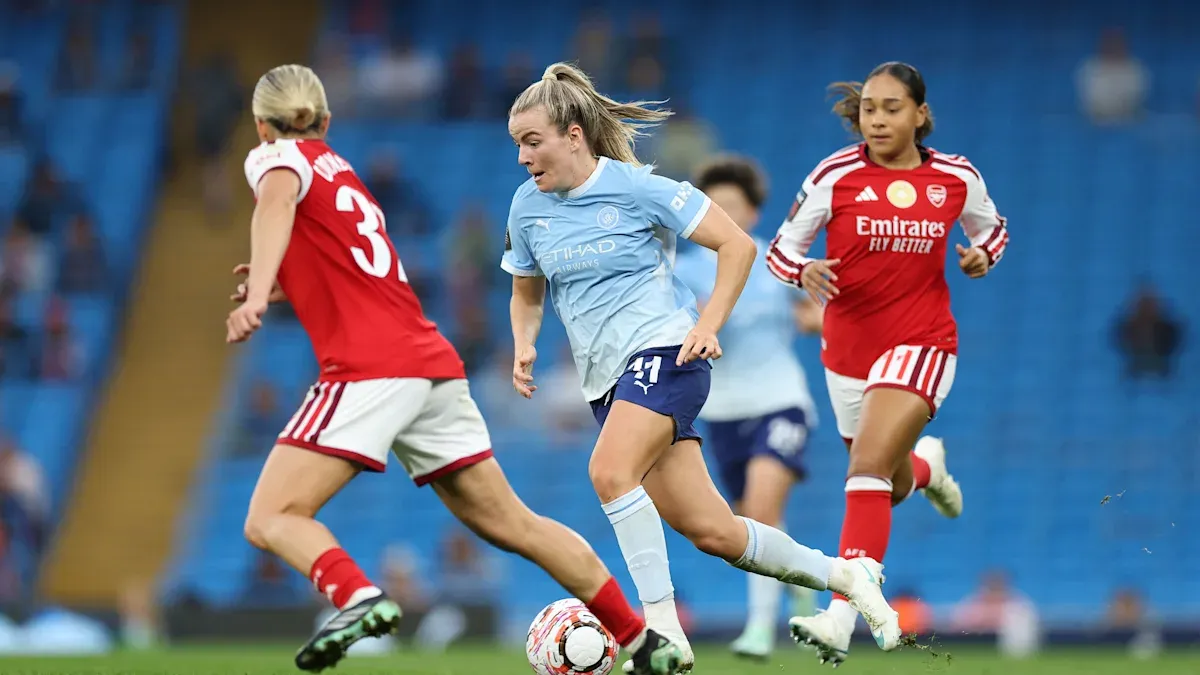
Four minutes into the second half Lisa Baum makes it 2-1 and I really don’t know how many more times I’m going to sit here this season talking about this 19-year-old, but she is now impossible to ignore.
There’s a fearlessness about her that I absolutely love. She’ll run at defenders, she’ll press, she carries the ball like a freight train. She’ll try something, sometimes she’ll lose it and then she’ll immediately go and try to win it back. She doesn’t seem to have any of the anxiety that creeps into this Arsenal team when games get difficult, she just plays.
There’s something quite interesting about that which we’ll come back to later, because in many ways Lisa Baum still looks like the player we were watching in pre-season. File that one away for a little bit.
But for now back to the game and Arsenal are 2-1 up.
This is where the game gets really interesting to me because City don’t just wait and hope something changes.
They go ahead and change it.
Andrée Jeglertz goes to his bench around the hour mark and brings on Mary Fowler, Iman Beney and Kerstin Casparij. He’s looking at the game in front of him and deciding that what City are currently doing isn’t enough, so he’s going to give Arsenal some different problems.
Sixty-five seconds later, Casparij scores.
And I’m going to save everybody a lot of tactical analysis here.
Sometimes you’ve just got to say that’s a ridiculous goal.
She’s miles out, she hits it beautifully and it flies into the top corner. I’m not going to freeze the footage, draw twelve imaginary lines across the screen and find an Arsenal player to blame because sometimes an opposition player does something absolutely brilliant.
Casparij had no right to score from there.
But she did, and now it’s 2-2.
So what happens next? Now we are in a similar situation as we were mid-week, being on top and suddenly pegged back to 2-2.
City have just changed the game from their bench, and, with plenty of time remaining, Arsenal now have to decide how they’re going to change it back.

When City Changed the Game, Could Arsenal Change With Them?
This is where the two managers start making decisions and, for me, where the game really begins to turn.
City have just made three changes and got an immediate reward from one of them, but it isn’t only Casparij’s goal that matters here. Mary Fowler starts giving Arsenal something else to worry about as well, City suddenly look energised and the momentum of the game is beginning to shift.
So Renée responds five minutes later.
Olivia Smith replaces Lisa Baum and Stina Blackstenius replaces Georgia Stanway.
I really disagreed with this decision but before I explain why, or we do what football supporters love doing and decide every substitution was obviously wrong because we know the final score, let’s just try to work out what Renée was trying to achieve.
Olivia for Lisa makes sense in isolation. Lisa had given Arsenal a huge amount up to that point and Olivia gives you fresh legs, pace and someone who can carry the ball when City are beginning to push higher. If Arsenal can win possession and get Olivia Smith running into the space City are leaving behind, there’s a very obvious threat there.
The Stanway change is more interesting because taking Georgia off and introducing Stina changes the structure of the team. Renée described it afterwards as going to two nines, so this isn’t simply fresh legs replacing tired legs, this is the manager actively trying to change the way Arsenal attack the game.
And that’s where I get completely stuck, because what problem are we trying to solve?
Arsenal aren’t chasing the game at this point. It’s 2-2. City have just taken some momentum away from us, they’ve changed their personnel and suddenly the game feels different, so surely the immediate problem is how Arsenal regain some control of it.
Instead we remove a midfielder and add another centre-forward.
Now maybe the thinking is that City are coming onto us, spaces are beginning to appear and two strikers can occupy their centre-backs while Olivia attacks the space around them. I can see the logic in that. But if that’s the plan, somebody still has to get the ball to them.
And that’s where this becomes really, really difficult for me, because putting another striker on the pitch doesn’t automatically make you more dangerous. In this game it just means you’ve got another striker standing there waiting for a ball that isn’t going to arrive.
Four minutes later, City score again.
This time it’s Lauren Hemp and suddenly Arsenal have gone from leading 2-1 to trailing 3-2 in the space of nine minutes.
That’s the specific period of this game I keep coming back to.
Not because Arsenal should somehow have stopped Casparij putting one into the top corner from miles out. Forget that goal for a moment. Look at what was happening around it.
City’s manager could see that his team needed something different, made three changes and the feel of the game changed immediately. Arsenal responded with their own changes, but Arsenal didn’t regain control. They lost it even more.
And Renée acknowledged something very important afterwards. She said City’s substitutes had an immediate effect and that Arsenal haven’t been getting enough impact from their own bench recently. She also said that substitute impact needs to be one of Arsenal’s “super strengths”.
She’s right. Just look at this squad.
If there’s one thing Arsenal should be able to do better than almost anyone else in this league, it is to look along that bench and find a completely different answer to the question that’s being asked on the pitch.
Which brings us, inevitably, back to Selina Cerci and Géraldine Reuteler.
And before anybody says I’m just obsessed with seeing these two new signings, that’s not my argument.
I want to understand what Arsenal bought them for.
Because Selina Cerci isn’t the same striker as Alessia Russo or Stina Blackstenius. She gives you something different. Géraldine Reuteler isn’t simply just some spare midfielder you throw into the rotation when someone needs a rest.
If the game has changed and the thing you’re currently doing isn’t working anymore, surely that’s exactly when having players who can give you something different becomes useful, vital even.
Selina Cerci and Smilla Holmberg eventually get onto the pitch in the 81st minute.
Yet again, Géraldine Reuteler doesn’t get onto the pitch at all.
And nine minutes isn’t really a tactical solution, it’s an emergency. It’s a Hail Mary.
“Here you go Selina, Smilla, the game has gotten away from us, see if you can do something!”
That’s very different from trusting someone to help change the game before it gets away from you.
This matters because we asked this question before City. We asked it before Chelsea. We were asking versions of it after Man United. So this isn’t me sitting here with the benefit of hindsight saying Renée should have brought on whichever player happened not to play.
There’s a pattern developing where Arsenal have recruited different profiles, Renée has those different profiles sitting right next to her and, when a game becomes difficult, she keeps reaching first for the same solutions.
That’s the bit I don’t understand, because we know she sees something in these players. She showed us that during pre-season.
And that’s where this conversation gets much bigger than what happened during ten minutes at Manchester City.
What Happened to the Arsenal We Saw in Pre-Season?
This is where I want to go back a few weeks, because there’s an argument I saw a lot since yesterday’s game that Arsenal have brought in a lot of new players, those players need time to gel and maybe we just need to accept that this is going to be a rebuilding season, a stepping stone towards whatever this team eventually becomes, and we’ll “go again next season”.
I fully acknowledge the first part of that, of course players need time together. You don’t sign seven new players, throw them into the squad and expect every combination to work immediately, especially when some of them are young, some have come from different leagues and they’re all learning how their new teammates move, where they want the ball and what Renée wants from them.
What I really struggle with is the idea that what we’re watching now is the unavoidable consequence of having lots of new players.
Because we all watched pre-season!
We watched Renée using these players together and we watched the beginnings of something really interesting and exciting. Not something finished, certainly not something perfect, but there was a clear idea developing about how this new-look Arsenal might play. The press was aggressive, Arsenal were trying to win the ball back quickly, players were rotating positions and those rotations were creating spaces for somebody else to move into. If a player moved forwards or sideways a team mate attempted to cover them by filling the space they left behind. The full-backs could provide width while the players ahead of them came inside, Georgia Stanway could drop incredibly deep to help Arsenal build from the back and the attacking players weren’t simply standing in fixed positions waiting for the ball to reach them.
Most importantly, we were seeing the new players.
Selina Cerci, Géraldine Reuteler, Lisa Baum, Misa Rodriguez, Ona Batlle and Georgia Stanway were all involved. Renée was mixing combinations and trying to understand what different players could give her, and we spent a lot of that pre-season talking about the crazy number of possible answers Arsenal suddenly appeared to have to any questions asked of them by any opponent in this league.
Then the league started and, for about 20 minutes against Brighton, there it was again.
Lisa and Olivia were swapping positions, Mariona was drifting around them, Ona Batlle and Emily Fox were providing width, Georgia was dropping so deep that at times she was almost becoming another central defender in the build-up and, when Arsenal lost the ball, two or three players were immediately hunting in packs to win it back.
I remember talking about it after the game because it was so recognisable. We’d spent weeks watching and following Renée’s experiment with these rotations and suddenly here they were in the WSL.
And Brighton really struggled with it…until they didn’t.
They started finding ways through Arsenal’s first press, they found the space that Ona was leaving behind when she went forward and suddenly we saw the other side of playing that aggressively. If you commit players forward and the opposition escapes that first pressure, there’s going to be space behind you.
That was the warning.
But the lesson from Brighton shouldn’t have been that this new way of playing didn’t work. The lesson was that Arsenal needed to get better at it.
They needed to learn when to press and when not to press, when Ona could fly forward and when she needed to hold her position, when everybody could rotate and when someone needed to recognise that maybe this wasn’t the right moment. We were talking after that game about Arsenal needing to learn to become boring for five minutes when a game needs it, because you can’t play every minute at 100 miles an hour.
The strange thing is that, a month later, I’m wondering where the 100 miles an hour went.
Because what we’ve seen since Brighton has increasingly looked safer. The possession has become shakier, the attacking build up more predictable and, when things haven’t worked, the solutions have increasingly involved players and combinations we already know from last season.
That’s where the rebuild argument some fans are using starts tying itself up in knots for me.
Lisa Baum makes this argument even weaker because she doesn’t look like a player who’s using this season to “settle in”
She’s 19.
She’s moved to a new country, into a new league and into an Arsenal team where the pressure is far greater than anything she’s ever experienced before, and yet she’s playing with a freedom that some of the more experienced players around her don’t seem to have at the moment.
AND she still looks like the footballer we saw in pre-season. She hasn’t become more cautious or more inhibited as the competitive games have started.
So I don’t agree that the problem is that Arsenal’s new players aren’t ready.
In my opinion, and based on the evidence we’ve seen so far, Renée has stopped trusting some of the ideas she was so willing to explore with those new players.
That’s a very different problem, because I’m not asking her to invent a completely new Arsenal in the middle of October. I’m asking what happened to the one she was already building in August.
And to be clear, I don’t want Renée to simply recreate pre-season football and pretend Brighton never exposed its weaknesses. Opponents adapt, that’s what good teams do. Once somebody shows everyone else in the league where your weaknesses are, you have to find the next version of your idea.
Develop it. Make it smarter. Give it another layer.
But do not retreat from it.
Because if Arsenal spent the summer recruiting players and working on a style of play and tactics to give this team more variety, more movement and more ways of hurting opponents, only to start the campaign reaching for the same solutions we were using last season, then we’re not watching the inevitable growing pains of a rebuild.
We’re watching an opportunity to rebuild just being left on the bench.
The Problem With Calling This a Rebuild
There’s another part of this that I want us stay with for a moment because I don’t want to dismiss fans who are saying we need to be patient. Patience isn’t a bad thing and five league games is obviously too early to decide that every idea has failed, every signing was a mistake and everybody needs to be fired into the sun. That’s not where I am with this team at all.
But patience and lowered expectations aren’t the same thing.
This is Arsenal. They won the Champions League less than 18 months ago. They’ve spent heavily, they’ve recruited established internationals alongside some of the best young players in Europe and they’ve built a squad where Renée can look at her bench and see players who would probably start every week for a lot of WSL teams. Nobody at Arsenal spent the summer putting this group together with the intention of writing off the season before Christmas so everyone could have a nice long getting-to-know-you period.
And some of these players don’t need teaching how to play football at this level.
Ona Batlle has played for Barcelona and Manchester United and won pretty much everything there is to win.
Georgia Stanway spent years at Manchester City and Bayern Munich and has more than 100 England caps.
Géraldine Reuteler has been playing senior level international football since she was a teenager.
Selina Cerci arrived after two consecutive 16-goal Bundesliga seasons, having been joint top scorer in the first and leading the league for total goal contributions in the second.
These are experienced footballers being integrated into a new team, not seven kids being introduced to professional football for the first time.
That doesn’t mean you stick them all on the pitch together and expect perfection. Of course there will be mistakes, combinations that don’t work and moments where somebody makes a run and the player with the ball hasn’t yet learned that she’s going to make it. That’s what developing a team looks like.
But you have to let them develop.
And this is where I keep coming back to Géraldine Reuteler, because at some point we have to ask what the plan is.
I spent a ridiculous amount of time researching Géraldine for you all when Arsenal signed her, and what became so fascinating about her wasn’t simply that she was a very good footballer. It was how many different things she could give this team. She can play centrally, she can move between the lines, she understands space, she connects play and she can arrive in areas that are difficult for defenders to track. At the Euros we saw a player full of confidence who was capable of affecting big games.
So when Arsenal are struggling to find spaces between compact lines, or when a game changes and the midfield needs something different, I naturally find myself looking at the bench and wondering why we’re not seeing her.
Not because Géraldine is definitely the answer.
She might come on and have an absolute shocker. That’s football.
But we can’t discover whether or not she’s part of the answer while she’s sitting down.
And the longer this continues, the more this becomes a recruitment question as much as a selection question. Arsenal identified this player, persuaded her to leave Frankfurt, had to wait for another year for her contract to expire, brought her to London and presumably showed her some sort of plan for where she fitted into this team. If we get to January and she’s still spending most matches watching from the bench, it wouldn’t exactly be a surprise if she starts wondering what happened to that plan as well.
How long is any ambitious, proven-herself-at-the-highest-level footballer going to stay patient?
The same applies to Selina Cerci. Again, this isn’t about demanding that she starts every game ahead of Alessia Russo, because Alessia has done plenty to justify her place and that’s not the choice Arsenal necessarily have to make. Selina was interesting precisely because she gave Arsenal a different kind of striker. So when you’re 3-2 down and you need to change the questions you’re asking Manchester City’s defence, giving her just nine minutes feels less like using that different player profile and more like pressing a panic button.
This is why I’m uncomfortable with writing the season off as a rebuild.
A rebuild is active.
You try things. You give new players opportunities. Some work, some don’t. You discover combinations you hadn’t expected, you abandon ones you thought would work and you gradually learn what this new version of your team can become.
What worries me isn’t that Arsenal are rebuilding and it hasn’t worked yet.
It’s that we’re five league games into the season and I’m not sure we’re still rebuilding at all.
Because if the new ideas become less visible, several of the new players become peripheral and the response when games become difficult is increasingly to return to the same players and the same solutions, then we’re not really asking for patience while something new develops.
We’re asking for patience while Arsenal go back to what they already know, what they already did.
And what they already know, what they already did… isn’t working.

Has Renée Lost the Dressing Room?
Now, inevitably, whenever a run of results looks like this, we reach the point where people start asking if the manager has lost the dressing room, are the players still playing for her and, increasingly over the last few weeks, if Renée should simply resign or Arsenal should make the decision for her.
I’m not there. Nowhere near there for the record.
More importantly, there is no evidence that the players are there either.
Lotte Wubben-Moy was asked about it after the City game and her answer was about as unambiguous as you could ask for. She said, “We fought for ourselves, we fought for Renée, we fought for the fans.”
Now, players publicly supporting their manager doesn’t automatically prove that everything behind the scenes is perfect. Footballers aren’t going to walk into a post-match interview, and announce that half the dressing room wants the manager gone. We have to be sensible about how much weight we give public comments.
But we also have to be sensible in the other direction.
If we’re going to claim that Renée has lost the dressing room, there needs to be evidence for it, and right now there isn’t any. What I can find is a senior Arsenal player voluntarily saying they fought for their manager, Renée saying she still feels the connection with the players and a performance against Manchester City where, whatever else went wrong, I definitely didn’t watch a team that looked like it had stopped playing for its coach.
They fought, they pressed, they took the lead twice.
They responded immediately after half-time having conceded at probably the worst possible moment before it.
That’s not what concerns me. What concerns me is that everybody can still believe in what they’re doing and it can still not be working.
Those two things can exist at the same time.
A manager doesn’t have to lose the dressing room before we’re allowed to question her decisions, and players don’t have to stop trying before coaching becomes part of the conversation. In some ways that makes the situation more interesting, because if the players still believe in Renée, the effort is there and the squad contains this much talent, then we have to look somewhere else for why Arsenal have only five points from their opening five league games.
This is also why I don’t want Renée to quit.
I’ve seen a lot of people calling for it and I understand the frustration behind it because this start is nowhere near good enough, but changing the manager now would mean throwing away everything Arsenal spent the summer trying to build before we find out if it can work.
We’ve already seen enough to know Renée has other ideas, that’s what pre-season showed us.
However, there is huge pressure now. There has to be. Arsenal cannot pretend that 5 points from a possible 15 is just one of those things that happens while everyone settles in, and Renée herself isn’t pretending that either. She’s spoken about a big review during the international break, looking not only at what happens during matches but at the training programme and everything going on around the team.
Good.
Because this break has arrived at exactly the right moment, and not just for my blood pressure’s sake!
Arsenal have a rare opportunity to stop, get everybody away from the noise for a little while and then look properly at what the first few weeks of this season have told them. Not simply which individual made a mistake for which goal, or whether or not a particular substitution worked, but if the version of Arsenal we’re seeing now is still the version they intended to build when they put this squad together.
And if it isn’t, why isn’t it?
Because there is a huge difference between changing an idea because it doesn’t work and losing confidence in an idea before you’ve given yourself enough time to make it work.
That’s the question I would want Arsenal answering during this break.
Not, does Renée still have the dressing room?
The question is, does Renée still trust the plan?
When Does a Critical Moment Become a Pattern?
This brings me back to something Renée said after the game, because she talked about Arsenal needing to become better in the “critical moments”, and we’ve heard variations of this before. Margins, moments, individual actions, those little periods within matches where something happens and suddenly the game looks completely different.
All of that is true, football matches are decided by moments. Sometimes Kerstin Casparij comes off the bench, hits a football from somewhere she has no business scoring from and there isn’t a great deal you can do other than admire it through gritted teeth.
But when the same type of moment keeps happening, eventually we have to stop treating each one as an isolated event.
Arsenal go 1-0 up in the 43rd minute against City and concede before half-time. They go 2-1 up four minutes after the restart and, within 23 minutes, they’re 3-2 down. Four days earlier they were 2-0 up against Paris FC with eight minutes remaining and somehow finished 2-2.
At some point a critical moment becomes a pattern.
And game management doesn’t mean Arsenal have to become negative every time they score. I don’t want to see eleven players immediately retreat towards their own penalty area desperately waiting for the inevitable. It’s about understanding what the match needs from you at that particular moment, because the answer isn’t always another attack.
Sometimes the best thing you can do after scoring is make absolutely nothing happen for five minutes.
We talked earlier about making the game boring for a few minutes after scoring, and this is why. Arsenal still don’t seem to recognise quickly enough when the match needs calming down.
Paris FC gave Arsenal a pretty good lesson in the other side of this. We’ve watched several teams do it to us already this season. When Arsenal begin finding dangerous areas, suddenly there’s very little room to do anything with them. One player engages, another protects the space behind and somebody else is already thinking about where the next pass might go. It isn’t glamorous, but nobody gets extra points for defending beautifully.
Which is why Bunny Shaw’s goal annoys me so much.
I’ve watched it back several times and the more I watch it, the less comfortable I am blaming one player for it, although Leah Williamson certainly has a problem because she’s watching the ball and doesn’t appear to recognise where Shaw is until it’s too late. Once she sees her, she’s already trying to recover rather than being in a position to control the danger.
But freeze the picture around Shaw and Leah isn’t alone.
There are three Arsenal defenders around one centre-forward.
Leah, Kyra and Smilla.
And somehow one of the best strikers in the world still has enough room to receive the ball, get herself into position and score.
That’s the bit I can’t accept as just another critical moment.
If Shaw beats three defenders with an amazing piece of skill, fine. Sometimes brilliant players do brilliant things. If someone sticks one into the top corner from 25 yards, we’ve already established that we have to (reluctantly) allow it.
But three defenders being close enough to surround a striker without any of them being close enough to stop her is something Arsenal can control.
It’s awareness. It’s communication. It’s recognising danger early enough that you aren’t reacting after the danger has already arrived.
And that’s the thread connecting some of these moments together. Arsenal aren’t necessarily being destroyed structurally for 90 minutes. They’re switching off, reacting late or failing to recognise when the nature of the game has changed, and at this level you don’t get very long to realise you’ve made a mistake.
That’s why the final score bothers me.
Manchester City 4, Arsenal 2 looks like a comfortable City victory when you see it written down, but I didn’t watch a comfortable City victory.
I watched Arsenal take the lead twice and cause City problems. I watched a City substitute score an outrageous equaliser and watched Arsenal still have plenty of time after that to get something from the game.
Then I watched Arsenal lose control of moments they could control.
Which leaves me with a very different feeling from some of the other disappointing results we’ve had this season.
This one was right there.
Maybe Arsenal win it, maybe they don’t. City are a very good team and pretending Arsenal were entitled to the three points would be ridiculous.
But Arsenal did not have to lose it, and that’s what makes this one hurt.
So What Needs to Change?
Which leaves us with the international break and, for once, I am extremely grateful to whoever put the fixture list together because Arsenal need it and, quite frankly, so do I. I think we all do right now.
Renée has said there will be a big review of the season so far, including what they’re doing in training, and I’d be fascinated to know what comes out of that because there isn’t just one big problem here that you can fix on Monday morning and suddenly everything is fine. There are several smaller things connecting with each other, and that’s probably why this start to the season has been so difficult to make sense of.
The answer can’t simply be to work harder. I don’t look at these players and see a lack of effort. It can’t simply be to finish more chances either, because that doesn’t explain how they surrender leads so easily. It can’t be give the new players time to gel if some of them aren’t even getting enough meaningful minutes (or any minutes) to develop those relationships, and it can’t be to change the manager because we already know Renée is capable of managing this team differently.
So use the break to work out what this Arsenal is actually supposed to be.
If the aggressive press is going to be part of it, commit to developing it properly. Work on what happens when the first press is beaten so one pass doesn’t suddenly leave big spaces behind. If the rotations we saw during pre-season are still part of the plan, bring them back and make them better rather than gradually making Arsenal easier to read. If Géraldine Reuteler and Selina Cerci were recruited because they give you different options, work out how those options fit before you’re asking them to rescue a game with just nine minutes left.
And please, for the love of God, work on what happens immediately after Arsenal score, because I would really love to enjoy a goal for longer than five minutes.
There also needs to be a conversation about control, because control isn’t the same thing as having the ball. Arsenal can have 70 or 80 percent possession and still not be controlling what the match feels like, while another team can spend ten minutes without much of the ball at all and be perfectly comfortable because Arsenal are doing exactly what they want them to do.
Real control is being able to change the speed of a match.
It’s knowing when to attack quickly because the opposition is stretched, when to keep the ball because they’re beginning to build momentum, when to press with five players and when the sensible thing is to drop back five yards and make sure there’s nowhere to go if that press is beaten. It’s being able to recognise that the game you’re playing in the 65th minute isn’t necessarily the same one you were playing in the 55th.
City showed us that. They weren’t getting what they wanted, so they changed the players and changed the problem Arsenal had to solve.
That’s the flexibility I want to see when Arsenal come back; not a completely different team, or another new formation, not seven changes to the starting eleven so we can say the new signings are finally getting minutes.
I want to see Arsenal become less predictable.
That’s what excited me during pre-season. It wasn’t simply seeing new players in Arsenal shirts. It was looking at this squad and having absolutely no idea what Renée might do with all of them.
That felt like a huge advantage, but right now, I’m not sure it does.
And perhaps that’s the biggest thing Renée needs to rediscover over the next couple of weeks.
Not last season’s Arsenal, not even pre-season Arsenal.
She needs to rediscover the courage to find out what this Arsenal team can become.
Maybe This Break Has Come at Exactly the Right Time
There is plenty wrong at the moment. Five points from five league games is nowhere near where Arsenal expected to be, the title conversation has disappeared into the distance before the season has even properly got going, and there are questions Renée needs to answer about how she’s using this squad, how Arsenal manage games when they’re ahead and why some of the ideas that looked so exciting a few weeks ago have vanished with our title challenge.
But the Manchester City game also reminded me why I’m not ready to give up on this team.
Not for 90 minutes and not consistently enough to win the game, obviously, but enough to remind me that the ingredients are all there. Arsenal went away to one of the best teams in the country, took the lead twice and caused them real problems. This wasn’t a team being completely outplayed and desperately hoping for something to happen. There were periods where Arsenal imposed themselves on City and looked capable of winning the game.
That’s why I’m feeling really frustrated rather than feeling completely hopeless.
If Arsenal were miles away, this would be easier. You shrug, accept that the team isn’t good enough and start talking about what needs to happen next season.
I don’t believe that’s what we’re looking at.
We’re looking at a very good group of footballers who aren’t functioning as the team they could be, with a manager who has already shown us glimpses of a more adventurous version of them but, somewhere between August and now, appears to have become less willing to trust it.
So use the break.
Take the noise away for a couple of weeks.
And when you come back, we don’t need perfection. We don’t need Arsenal to suddenly win every game 4-0 and convince us that everything we’ve spent the last few weeks talking about was some weird fever dream.
We just want to see evidence that they’ve learned.
Show us that when a game changes, Arsenal can change with it. Show us that going 1-0 up doesn’t immediately make us start worrying about when the equaliser is coming. Show us that the players brought in during the summer are part of the plan rather than emergency insurance policies for when the original plan isn’t working.
And show us some of that bravery we saw in August.
Because we’re still here, still behind you, still supporting you. But we need to start seeing some rewards for that support now.