Élisa de Almeida: What Kind of Defender Have Arsenal Signed?
Arsenal’s new No.5 brings 52 France caps, Champions League experience and the ability to play centrally or at right-back. So where does she fit in Renée Slegers’ defence?

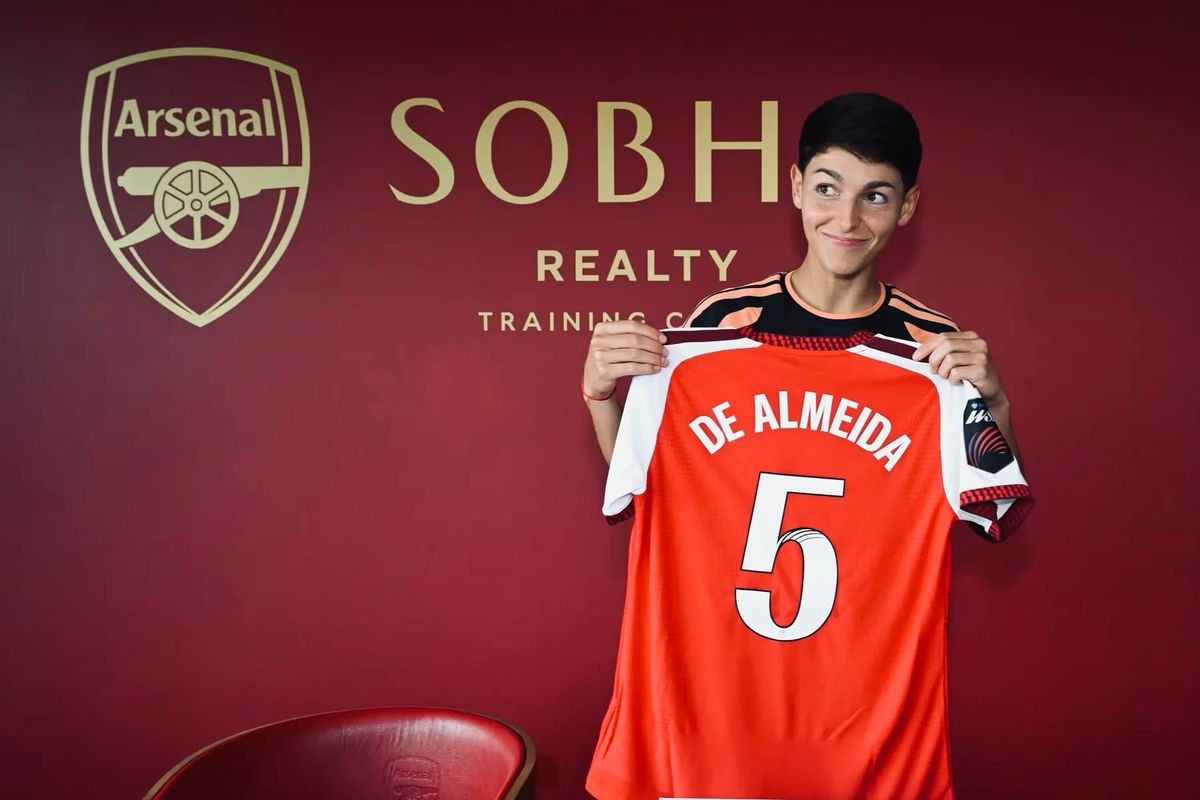
I expect quite a few of you were in about the same position I was when this transfer first started appearing, because I knew the name, I’d seen Élisa de Almeida playing for France and of course if you’ve watched Paris Saint-Germain in the Champions League over the last few years you’ll have come across her there as well, but I didn’t have that immediate picture in my head that I do when we say the names Leah Williamson, Lotte Wubben-Moy or Steph Catley, where you know the player well enough that you can picture what they’re going to do before they’ve done it.
So I’ve spent quite a lot of time looking at Élisa, and the first thing that sticks out is that Arsenal haven’t bought potential here.
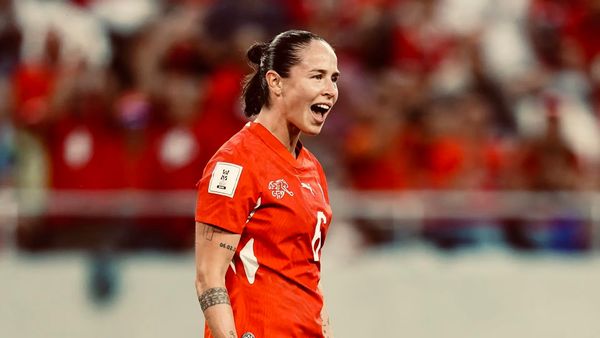
She’s 28, she’s played 52 times for France, 47 of those appearances have been starts, she’s represented them at the World Cup, Olympics and European Championship, she spent five seasons at PSG where she made 154 appearances, and she’s played regularly in the Champions League.
She also won the Coupe de France twice with PSG, in 2022 and 2024, so she’s spent a large chunk of her career in an environment where you’re expected to compete with Lyon domestically and go deep into Europe, while playing international football for France alongside that.
This is a very different signing from bringing in somebody at 20 or 21 and wondering what she might eventually become. At 28, Arsenal are getting someone who should be in her prime as a defender and who has already spent years dealing with the expectations that come with playing for a major club.
What interested me more once I started looking properly at her was trying to work out exactly what sort of defender Arsenal have bought, because that answer changes slightly depending upon whether you’re watching PSG or France.
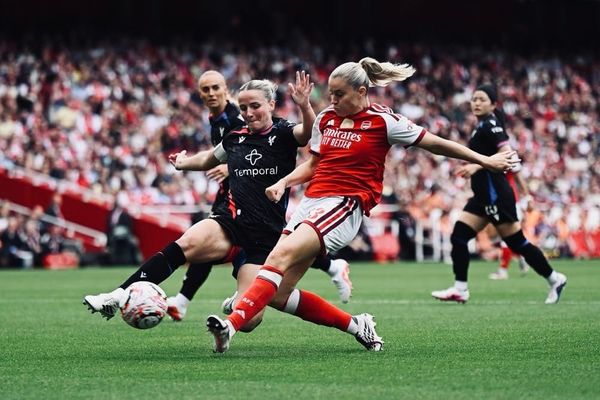
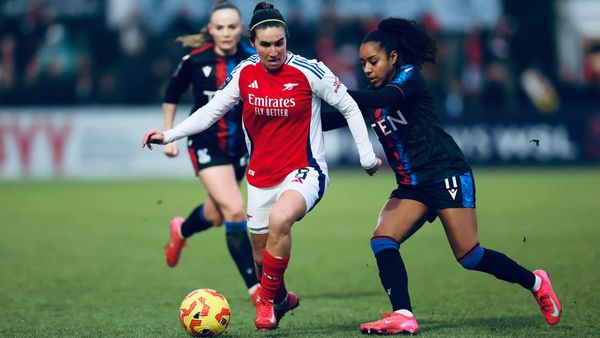
At club level she has principally been a centre-back, usually on the right side, and she’s right-footed, but France have increasingly used her at right-back, including at Euro 2025 where she started there against England, the Netherlands and Germany.
And I don’t mean right-back in the sense that somebody once put her there for twenty minutes because three other defenders were injured and there weren't really any other options.
This has become a proper part of her game.
Sakina Karchaoui, who knows her extremely well having played with her at Montpellier, PSG and with France, has spoken about how Élisa developed in that position because initially she was much more defensively minded when she played there, whereas over time she became more comfortable using the whole right-hand side and contributing further forward.
Griedge Mbock has described her as intelligent, technical and adaptable, which is probably as useful a three-word description as we’re going to get from someone who has actually shared a football pitch with her.
Suddenly you can begin to see why Arsenal were interested.
They’re getting a centre-back who is comfortable defending in wider areas and has enough experience at right-back that Renée Slegers can move things around without asking anyone to perform a role they’ve barely played before.
There’s a great example of the defender herself from the 2023 World Cup, which some of you will probably remember once I describe it.
France are playing Australia in the quarter-final, Pauline Peyraud-Magnin has come out of goal, and Mary Fowler gets the ball with what looks like an almost completely open goal in front of her.
Fowler shoots, and somehow Élisa gets herself across and blocks it.
It’s a wonderful piece of defending because by the time the shot comes, most people watching have probably already registered it as a goal. Élisa hasn’t. She’s read where the danger is going, carried on running and got herself between Fowler and the goal when France desperately needed somebody to be there.
The French Football Federation actually featured her in something called Passion Défense, which seems rather appropriate because one of the things that comes across when you start watching her is that she appears to actually enjoy defending.
And I know how ridiculous that sounds when we’re talking about a defender.
But you know what I mean.
We’ve all watched defenders who are wonderful footballers and seem happiest when they’re stepping into midfield or spraying passes around, while the actual inconvenience of an opposing attacker running towards their goal appears to have completely ruined their afternoon.
Élisa seems to relish that side of the game.
She’s mobile, she’s prepared to attack a defensive situation, and there seems to be a real instinct for reading where the danger is developing rather than waiting for it to arrive.
The numbers give us some evidence for that as well. Her interception figures in France last season were strong, and they remained strong in Europe, although I’m always a bit wary of taking one defensive statistic and deciding it tells us everything we need to know about somebody.
Football doesn’t work like that.
A defender playing for a team that spends most of the afternoon without the ball is going to be presented with very different opportunities from a defender playing for PSG, and that’s before we even start trying to compare one league with another.
What interests me is when the numbers support something you can also see in the player, and with Élisa the interceptions make sense because she does seem to want to anticipate what’s coming.
And that’s where my mind immediately goes to Arsenal.
We’ve watched Renée’s team push high up the pitch, we’ve watched our full-backs go forward, and we’ve seen those moments when an opposition team manages to get through the press, and suddenly there is an awful lot of green grass appearing behind somebody.
That’s where the mobility Renée mentioned when the signing was announced starts to make sense.
If you’re going to defend high, occasionally you’re going to have to defend backwards. You need somebody capable of turning, covering ground and dealing with an attacker who has suddenly found space rather than somebody who needs the entire defensive structure sitting neatly in front of her before she feels comfortable.
I think Élisa potentially gives Arsenal more protection in those situations, particularly because she’s spent so much time defending wider spaces at right-back for France.
And then we get to the squad itself, which is where I think this signing becomes even more interesting.
Katie Reid is recovering from an ACL injury, and we’ve already spoken about Arsenal needing another centre-back, although from everything we’ve subsequently learned, the club’s interest in adding one existed before Katie’s injury anyway.
Arsenal are trying to compete for the WSL, remain amongst Europe’s best and challenge in the cups, and you simply can’t do that assuming Leah Williamson and Lotte Wubben-Moy are going to play every minute between now and May.
But I don’t think Élisa is here merely so Renée can look along the bench and think, “Oh good, I’ve got another centre-back.”
Because Arsenal already have flexibility in that defence.
Steph Catley can play centrally or at left-back. Ona Batlle can play either side, and we’ve seen her come inside into midfield. Emily Fox gives Arsenal another type of full-back altogether; Smilla Holmberg has come in, and Taylor Hinds gives them another option on the left.
Now they’ve added a player who can operate as a right-sided centre-back, has experience in a back three and has played right-back at the highest international level.
It starts to look less like a conventional list of first choice, second choice, backup and emergency backup, and more like Renée assembling defenders she can combine differently depending upon what Arsenal need to do.
Ona is the player my mind keeps coming back to because she’s so technically important to what Arsenal can do with the ball. There may be games where having Élisa comfortable defending that right-hand channel gives whoever is playing ahead of her greater freedom to move somewhere else, whether that’s higher up the pitch or inside as we’ve already seen her do.
I’m not telling you that’s what Renée is going to do because I don’t have a secret line into the Sobha Realty Training Centre, unfortunately, and we haven’t even seen Élisa play for Arsenal yet.
What I am saying is that she gives Renée another way of constructing the defence.
That’s where the fee becomes interesting.
Arsenal reportedly haven’t spent somewhere around half a million pounds on a 28-year-old French international, on what has been reported as a three-year contract, simply because they wanted somebody to sit warming the bench, ready to come on whenever Leah Williamson needs a break.
She’s here to compete.
That doesn’t mean she automatically starts. She’s never played in the WSL, she’s spent her entire senior club career in France, and she’ll have to adapt to the speed and physicality of this league as well as to a completely new defensive structure.
I’m particularly interested to see how she deals with the more direct, physical forwards because at around 1.71 metres she’s not the tallest centre-back and there’ll be afternoons where Arsenal don’t control the game neatly enough for her anticipation and mobility to solve everything before it becomes a duel.
So I’m certainly not doing that thing supporters do where somebody signs at lunchtime and by dinner we’ve collectively decided we’ve bought prime Alex Scott.
She has to show us.
But I understand the transfer much better now.
The 52 France caps and 154 PSG appearances tell you she’s experienced. Watching her defend tells you why Renée mentioned mobility. Her time at right-back for France explains why Arsenal can trust her in wider areas, and her years playing Champions League football mean she’s arriving knowing what it’s like to be judged against the standards of a major club.
Which leaves us with a more interesting question than whether or not Arsenal needed another centre-back.
Who plays?
Leah Williamson isn’t being eased out of this team without a major injury flare-up or drop-off in form. Lotte Wubben-Moy had an excellent season. Steph Catley gives Arsenal something different, and Katie Reid will eventually return from injury with her own development to continue.
Now Élisa de Almeida has arrived for serious money, at 28, with more than fifty international caps.
Someone is going to be disappointed and possibly quite regularly.
Perhaps that’s exactly the point of this signing, because if Arsenal actually want to win the WSL and go deep into Europe again, Renée can’t spend the season hoping the same eleven players stay healthy, fit and in form from September through to May.
She needs choices that hurt.
Élisa de Almeida gives her another one.
This article is adapted from the latest episode of Arsenal Women: Trailblazers, where Roberto also looks at the wider conversation surrounding Élisa de Almeida’s arrival and separates what can actually be established from the allegations circulating online.
Listen to Arsenal Women: Trailblazers wherever you get your podcasts, and follow @ArsenalWomenTrailblazers on Instagram for more Arsenal Women coverage.